Diagnosis and Screening for Bowel Cancer
Early diagnosis and screening for bowel cancer is critical to improving survival rates. Since early stages often have no symptoms, regular screening is the most effective way to detect the disease before it spreads.
1. Screening tests
A. Faecal immunochemical test (FIT)
- A simple test that checks for hidden blood in the stool.
- Done annually or every two years in people over 50.
- Positive results lead to further investigation with a colonoscopy.
B. Colonoscopy
- A long, flexible camera is inserted into the rectum to view the colon.
- If polyps or suspicious areas are found, they can be removed or biopsied.
- Gold standard for diagnosing bowel cancer.
C. Sigmoidoscopy
- Similar to colonoscopy but examines only the lower part of the colon.
D. CT colonography (virtual colonoscopy)
- Uses CT imaging to assess the colon and rectum for polyps or masses.
2. Diagnostic confirmation
- If cancer is suspected, biopsy samples from a colonoscopy are sent for pathology.
- Imaging tests like CT scans or MRIs may be done to determine if the cancer has spread.
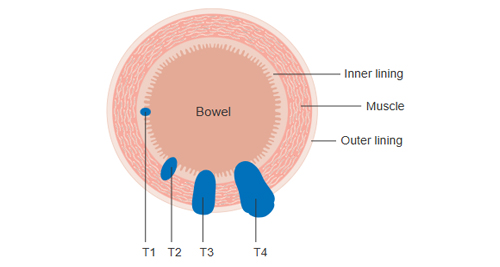
3. Staging the cancer
- Determines how far the cancer has spread and guides treatment:
- Stage I–II: Confined to the colon or nearby tissues
- Stage III: Spread to lymph nodes
- Stage IV: Spread to distant organs (e.g. liver or lungs)
4. Blood tests
- CEA (carcinoembryonic antigen) is a tumour marker sometimes elevated in bowel cancer.
- Full blood count may show anaemia caused by slow bleeding.
In South Africa:
- Public healthcare patients may face long waits for colonoscopy.
- Private medical schemes usually cover screening for people over 50 or with family history.
- NGOs and cancer advocacy groups are pushing for increased awareness and access to early screening.
Diagnosis and Screening for Bowel Cancer
If caught early, bowel cancer has a 5-year survival rate of over 90%, but this drops dramatically with late-stage diagnosis.
👉 [Next: Treatment Options for Bowel Cancer]