Mental Matters

Blog

a few things my 30s taught me

A Few Things My 30’s Taught Me

My 20’s were a blur of “I’ll sleep when I’m dead” energy, questionable choices, and a whole lot of pretending I knew what I was doing. My 30’s however, they’ve been humbling, eye-opening, and surprisingly freeing. Here are a few things my 30’s have been teaching me (in the best way). Revenge is Poison Holding onto revenge is like drinking poison and expecting the other person to suffer. Life, or, if you believe in a higher being has this funny way of balancing things out. Maybe not instantly, or how we expect, but it happens. Carrying around the weight of payback only eats at you, not them. I’ve learnt to let go and let life handle the “justice department.” Don’t Live in Someone Else’s Bubble For years, I lived in a bubble that was crafted for me — controlled, limited, and full of things I thought I had to do. I didn’t question it. I just went along, blind. Life outside that bubble is so much bigger, richer, and real. Had I not broken free, I’d still be living a version of life that was never really mine. Stop Standing in My Own Way Turns out, half the obstacles I blamed on life were me. My doubts. My fears. My habits of self-sabotage. I’ve had to admit that I was my own biggest roadblock — and that real growth only started once I got out of my own way. Who Gives a F*** What Others Think I wasted so much energy worrying about opinions that didn’t matter. People will always have something to say — good or bad. But living your life for their approval is exhausting and, frankly, pointless. My 30’s taught me to care less, and it’s one of the most freeing things I’ve ever done. Sleep is Actually Good for You I used to joke, “I’ll sleep when I’m dead.” Cute… until my 30’s hit back with, “Nope, you’ll sleep now or you’ll fall apart.” These days, even naps feel like a need. Sleep isn’t a luxury — it’s survival. My 30’s have stripped away illusions, humbled me in unexpected ways, and taught me to live a little lighter. If the 20’s were about trying to prove something, the 30’s are about finally being okay with just being. And maybe that’s the real win.

A Few Things My 30’s Taught Me Read More »

A woman interacting emotionally with a humanoid AI robot, representing AI companions and loneliness.

AI Companions and Loneliness

AI Companions and Loneliness: Are We Replacing Connection with Code? In today’s hyper-connected world, where messages are instant and information is endless, something surprising has taken root—loneliness. And not just the occasional quiet kind, but the deep, aching loneliness that comes from feeling unseen, unheard, or disconnected from real human warmth. As society struggles to keep up with the pace of modern life, a new solution has quietly emerged: AI companions. From chatbots that promise to listen, to digital “friends” that send virtual hugs, AI is being offered as a modern cure for emotional emptiness. But is it really connection—or just the illusion of it? A Friend in Your Pocket—Any Time, Anywhere The idea sounds comforting at first. You feel down, open an app, and a pleasant voice (or soothing text) responds: “I’m here for you.” You can vent, cry, confess, or laugh, and this AI companion won’t flinch. It won’t ghost you. It won’t judge. Some apps even let you name your AI friend, give them a personality, and choose their tone—funny, empathetic, nurturing. They learn how you speak. They remember your preferences. In a world where genuine relationships take work and vulnerability, this seamless companionship feels…safe. And that’s exactly the appeal. For many, especially those battling social anxiety, depression, or isolation, AI companions offer a form of emotional relief that’s always accessible. No scheduling, no social politics, no fear of rejection. But here’s the question: if it’s not human, can it truly understand human pain? Emotional Simulation vs Real Empathy Artificial Intelligence is incredibly smart. It can analyse your words, mimic empathy, and mirror human emotion through learned patterns. But it doesn’t feel. It doesn’t have lived experience. It doesn’t share your history, nor does it have its own. Every response is generated from code—clever, yes, but ultimately synthetic. So, while your AI companion might say, “That must have been really hard for you,” it does so because it should, not because it knows. That difference might seem subtle—but it’s essential. Humans need to feel truly understood. And while AI can imitate this, it can’t replace the grounding feeling of being seen by someone who has a beating heart, a backstory, and a soul. The Rise of Loneliness in a “Connected” World What’s perhaps most telling isn’t that AI companions are becoming more advanced—but that so many people are turning to them in the first place. We are lonelier than ever. Studies across the globe show rising rates of social isolation, especially among Gen Z, young adults, and the elderly. Social media gives us the illusion of connection, yet leaves many feeling even more alone. Face-to-face conversations are down. Time spent in community has decreased. And emotional burnout is on the rise. Into this vacuum steps AI, promising an easy fix. But easy doesn’t always mean healthy. When AI Helps—And When It Hurts To be fair, AI companions aren’t all bad. For some people, especially those in crisis or living in remote areas, a chatbot might be the only “person” available in the moment. If used thoughtfully, AI can serve as a bridge—a momentary comfort, or a step toward deeper healing. For example: But danger creeps in when AI becomes a substitute for real relationships. When the only emotional support we seek comes from a screen, we risk losing the messiness, joy, and vulnerability that comes from human presence. AI may listen, but it won’t laugh spontaneously with you.It may comfort, but it won’t hold your hand.It may respond instantly, but it won’t show up at your door with takeaway when you’re heartbroken. Rebuilding Human Connection—Together At Mental Matters, we believe technology has a place in wellness—but not at the expense of human connection. We’re not against AI. In fact, we think it can serve as a powerful support tool, especially when integrated with therapy and community. But loneliness is not just a tech problem. It’s a human one. And it will take human effort to heal. That means: Technology will keep evolving. But so must our commitment to what really matters: people. You Are Not Alone If you’re reading this and feeling lonely, we want you to know—there are people who care. Whether it’s a friend, a counsellor, a support group, or a stranger who becomes your safe place, real connection still exists. And while an AI companion might keep you company for now, let it be a stepping stone—not your destination. Because healing doesn’t come from perfectly crafted responses. It comes from imperfect, beautiful, real people who see you.

AI Companions and Loneliness Read More »

“When You’re Ready, This Will Make Sense”

“When You’re Ready, This Will Make Sense”

A story about friendship, timing, and finding your way back to yourself. I’ve had this book for almost seven years — Out of Darkness by Stormie Omartian. It’s followed me through moves, messes, breakdowns, and fresh starts. I’d spot it now and then, shoved behind other books or forgotten in a box. I’d open it, read a few pages, and put it back. Not because it didn’t speak to me — it did. But I couldn’t face it. I wasn’t ready. What makes this book mean even more is who gave it to me. Joel and I go way back — high school days. We always had a bit of a connection, something quietly unspoken. We lost touch for a few years, like people do. But when we reconnected, it felt like there was a conversation between us that had never really ended. Just paused. Only, by the time we found each other again, I wasn’t in a good place. I was surviving, barely. Raising two kids alone. Tired in every possible way. And smiling through it, like I always did. I had grown so used to pretending I was fine that I didn’t know how to be anything else. Joel saw through that. He didn’t try to fix me or fill the silence with advice. He was just… present. Respectful. Supportive in a way that didn’t need loud declarations. And one day, without explanation, he gave me this book. A thoughtful and quiet gesture — almost like he was saying, When you’re ready, this will make sense. But I wasn’t ready then. I didn’t want healing — I wanted saving. I wanted someone to come and take the pain away, to make everything feel normal again. And, I had to realise that’s not how healing works. It doesn’t arrive when we demand it. It waits for us to surrender. Now, years later, I picked up the book again. And this time… I felt it. I saw myself in the words. In the darkness, the grief, the shame, the pretending. Stormie wrote what I had never said out loud — things I had buried so deep, I didn’t even realise they were still hurting me. And through it all, I kept thinking about Joel. About how he showed up without asking for anything. How he gave me space when I didn’t even know I needed it. How he reminded me — gently, without needing to say it out loud — that I was still in there somewhere. The real me. The lighter, freer, happier version. The book didn’t heal me. But it cracked something open. It gave me words for things I’d kept hidden. And coming from him — someone who knew me before all the chaos, someone who cared enough to see through the chaos — it meant even more. To Joel, thank you. For seeing me. For handing me something I didn’t know I needed. And for reminding me, without ever saying it directly, that I didn’t have to stay stuck in the dark. I’m still learning. Still softening. Still letting go of the idea that I have to be strong all the time. But I’m not afraid of the dark anymore. I’ve learned that the light doesn’t always come in one big breakthrough — sometimes, it arrives in the quietest ways. A sentence. A moment. A book. A friend. If you’re reading this and feel like you’ve lost your spark… I just want you to know: The light will find you. And maybe, just maybe, someone’s already placed something in your hands — a book, a message, a memory — and it’s just waiting for you to open it when you’re ready. Reviewed April 2025. Always consult a professional for individual guidance.

“When You’re Ready, This Will Make Sense” Read More »

Reaching for the part of me I left behind

My Relationship Triggered a Childhood Wound

Some wounds don’t shout — they whisper. They slip into the way we hold back our opinions, the way we doubt our instincts, the way we start making ourselves smaller without even noticing. Not to be agreeable — but to stay safe. To avoid tension. To keep the peace, even when it costs us pieces of ourselves. That’s exactly what happened in this relationship. He didn’t come across as controlling in the beginning. He was attentive, thoughtful — even charming. But slowly, it shifted. He started commenting on what I wore, questioning who I spent time with, correcting the way I spoke. At first, I convinced myself he just cared. That he wanted the best for me. But underneath that, I started losing parts of who I was. I stayed quiet. Adjusted. And stopped pushing back. Whenever I tried to express myself, he’d twist it. Suddenly, I was “too sensitive” or “being dramatic.” He made me question my reactions so often, I began to believe him. I stopped trusting what I felt. I gave in — not because I agreed, but because it felt safer than another argument. And eventually, it hit me: I knew this feeling. Not because of him — but because of where I came from. As a child, I learned to survive by staying silent. In my home, speaking up wasn’t brave — it was dangerous. Questioning anything led to consequences, not conversations. So I learned to obey. I swallowed my opinions. I became what people needed me to be. That version of me — the one who shrinks to survive — reappeared in this relationship. He didn’t create that wound. But his control reopened it. I recognised the fear. The walking on eggshells. The pressure to perform “okay-ness” at all times. I wasn’t just trying to make the relationship work — I was trying to stay emotionally safe the only way I knew how: by disappearing. Eventually, I left. Not out of hate. Not even because I stopped loving him.I left because I finally realised I couldn’t keep betraying myself to keep someone else comfortable. I’m still doing the work. But I no longer confuse control for love. I no longer stay quiet just to avoid being misunderstood. Most of all, I no longer abandon myself.

My Relationship Triggered a Childhood Wound Read More »

I’m Not Afraid of Being Alone

I’m Not Afraid of Being Alone — Because I Know Who I Am

There was a time when silence made me uncomfortable. Being alone meant I’d have to sit with myself — with my thoughts, my choices, my mistakes. And honestly, I didn’t want to. It felt easier to stay busy, distracted, surrounded. Now, I’m not afraid of what I’ll find in the quiet. Because I know who I am when no one’s watching. I sleep well at night, not because life is perfect — but because I’m at peace with how I’m living it. I’m not constantly turning things over in my head.I’m not haunted by guilt, shame, or the fear of being “found out.”I’m not playing a character to keep people happy or pretending I’m okay when I’m not. That doesn’t mean I have it all figured out. I absolutely don’t.But I can say this with certainty: I like the person I’m becoming. And when I put something out into the world — my words, my work, my energy — I know it’s honest. It’s real. It’s not perfect, but it’s mine. That’s what makes the alone time peaceful — not lonely. I don’t need constant validation to feel okay.I don’t need chaos or noise to fill a void.I don’t need to chase people or prove my worth to anyone. The people in my life know my heart. The ones who don’t, don’t matter.And that’s a freedom I wish I found sooner. When you know your own intentions, everything gets lighter. There’s nothing eating at me. No unfinished apologies.No games. No masks. Or pretending. Just a quiet kind of confidence that says: “This is who I am. I’m good with it.” Alone doesn’t have to mean lonely. It can mean centered. calm. clear. And when you’re living in a way that aligns with your values — when what you’re putting out matches what you believe in — the quiet becomes a place of strength, not fear. I’m not afraid of being alone. Because I’ve made peace with the one person I always have to live with — myself. Reviewed April 2025. Always consult a professional for individual guidance.

I’m Not Afraid of Being Alone — Because I Know Who I Am Read More »

MKEM Pharmacy Bellville

M-KEM Pharmacy Bellville

A landmark with heart and heritage. Tucked in the heart of Bellville and conveniently just off the N1, M=KEM is far more than just a pharmacy — it’s a Cape Town institution. Operating as the only 24/7 pharmacy in the city for decades, M-KEM has become the go-to destination for thousands of Capetonians in need of medication, trusted health services, and friendly, familiar care at any hour of the day or night. Whether it’s a late-night prescription emergency or a Sunday morning wellness check, people travel from all corners of the city to M-KEM. And for good reason — its reputation for consistency, compassion, and community stretches back generations. What makes M-KEM special? 1. A Multi-Level Health & Wellness Hub The pharmacy, located on the lower level, is a busy and efficient operation that offers prescription services around the clock. The space is well-organised, with aisles offering everything from supplements, baby essentials, and toiletries, to makeup, haircare, and a selection of trusted Clicks products. You can even WhatsApp or email your repeat scripts ahead of time — making collecting medication that much simpler. Impressive, right? Upstairs, M-KEM opens up into a welcoming space for lifestyle, wellness and convenience, including: And yes — it’s not unusual to spot Mr M himself. Still deeply involved in the daily running of things, you’ll often see him chatting to customers, helping behind the counter, or simply being present — a true testament to M-KEM’s enduring personal touch. 2. Clinics & Medical Services MKEM offers a full suite of clinics, all under one roof — making it one of the most convenient and comprehensive healthcare destinations in Cape Town. General Clinic (Open Daily: 08:00 – 20:00, No Appointment Required) Staffed by professional, qualified nurses, this clinic is ideal for quick health checks and essential services, including: Women’s Clinic Catering specifically to women’s health needs with compassion and discretion, services include: Baby Clinic A trusted stop for parents, the baby clinic offers: Travel Clinic Before heading abroad, stop in for: IV Clinic Ideal for busy professionals, frequent travellers or anyone needing a wellness boost: Wound Care Professional dressing changes and minor wound support, with the same friendly professionalism you’ll find across the board at M-KEM Pharmacy in Bellville. After-Hours Doctors No need to panic after-hours — M-KEM works with on-site doctors available beyond regular GP hours, offering added peace of mind when you need it most. Accessible, reliable, and rooted in community With ample parking, two easy entrances, and a spot just off the highway, M-KEM is built around convenience — but it’s the people who keep customers coming back. The team is friendly, knowledgeable and truly committed to helping every person who walks through the door. Whether you’re in a rush to fill a script, looking for wellness support, or treating yourself to some self-care, M-KEM offers a rare combination of reliability, warmth, and all-in-one convenience that’s hard to find elsewhere. M-KEM is a pillar of the Bellville community and a true Cape Town gem. It’s where healthcare meets heart, and where a simple pharmacy visit can easily become a moment of connection, care, and calm. If you haven’t been yet, you’re missing out on more than just a pharmacy — you’re missing a piece of Cape Town’s heritage. Reviewed April 2025. Always consult a professional for individual guidance.

M-KEM Pharmacy Bellville Read More »

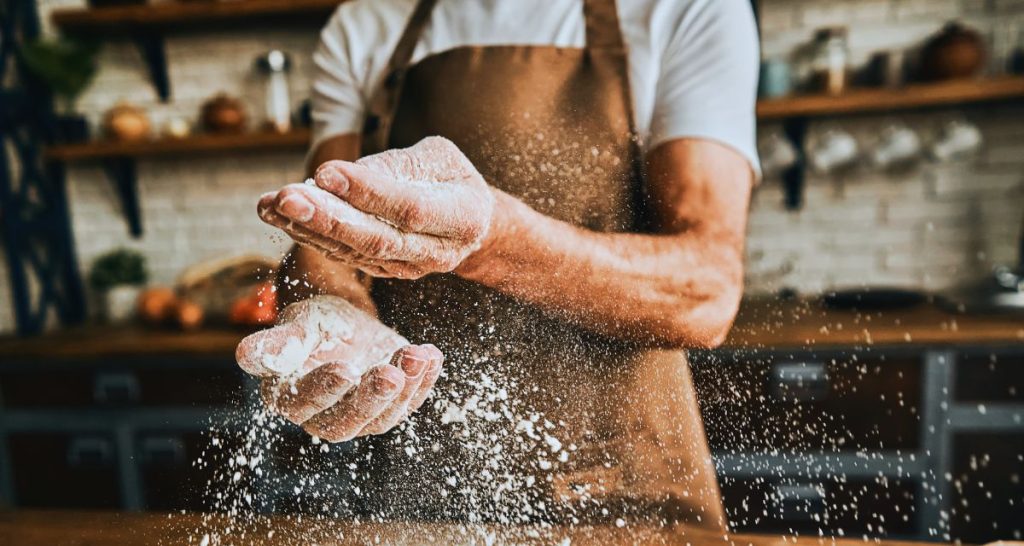
Baker clapping flour-covered hands in a kitchen, symbolising action and courage

“Fear Means You’re on the Right Track”

From Duncan. Edited for clarity and length. Chasing a dream has never been about being fearless — it’s about showing up anyway. Growing up, my mom used to say, “You don’t want to regret the moments you didn’t take.” I’d smile, nod, and move on — like most kids do. But her words stuck with me. As I got older, they stopped sounding like a life lesson and started feeling like a warning. Especially when fear crept in. Not the kind of fear that says run — but the kind that says, this matters. For me, that “something” is baking. It’s in my blood. My gran ran a bakery, and her pecan tarts were legendary — buttery, golden, filled with warmth. She had a way with spices. Whenever she tied on her blue-and-yellow apron, you knew magic was coming. That apron didn’t just mean baked goods. It meant love. My mom carried that tradition forward. She wasn’t loud in the kitchen — she was focused, deliberate, detailed in a way that couldn’t be taught. I’d watch her scribble ideas into a notebook, test, tweak, and perfect until the recipe felt right. Her baking was precise, but never clinical. She baked with her heart. So when I decided to step into this world professionally, I thought I was ready. I had the recipes, the stories, the heritage. What I didn’t have was peace. No one warns you about the weight of legacy — the fear of falling short of those who came before you. It wasn’t a fear of burnt edges or sunken middles. It was the deeper stuff: What if I’m not enough? What if I don’t honour what they built? And then there was the other kind of pressure — being a man in a space that, where I’m from, isn’t seen as “masculine.” Baking? That’s a hobby. A soft skill. A side gig. Not a career. My dad adored my mom’s baking — he just didn’t picture it for me. He wanted something more “stable.” More… predictable. A job with benefits, not buttercream. But I had a dream, and a kitchen. So I started small. No shop with a fancy logo and glossy displays. Just me, my oven, and whatever I could carry. I’d give out samples to anyone who’d take them — friends, neighbours, friends of neighbours. Because I wanted people to taste more than sugar. I wanted them to taste home. A bit of my mom. A whisper of my gran. Some days were brutal. I’d get home exhausted, questioning everything. Is this worth it? Am I actually good? Does anyone care? And then I’d get a text: “That cupcake tasted like my childhood.” Or a message: “Your cake reminded me of my gran’s.” Just like that, the fear would quiet — even if just for a moment. And in those moments, I felt saved. Because baking isn’t just about food. It’s about memory. It’s emotion, comfort, legacy. And for me, it’s healing. Every time I bake, I feel like I’m reconnecting with where I come from — and grounding myself in where I’m going. The fear hasn’t gone away. It still shows up when I try something new. When I raise my prices. When I let myself dream bigger. But I’ve stopped seeing it as the enemy. Because fear means I still care. It means I haven’t gone numb. I think that’s what my mom meant all along — Regret doesn’t come from failing. It comes from never trying. So here I am — chasing a dream with fear in my chest and legacy on my shoulders. I don’t know where this path leads, but I know one thing: I’d rather leap and fail than stand still wondering what if. And if you’re standing at the edge of your own dream, scared and uncertain — that’s a good sign. That fear means you’re exactly where you’re meant to be. Reviewed April 2025. Always consult a professional for individual guidance.

“Fear Means You’re on the Right Track” Read More »

I Wasn't Raised — I Was Controlled

I Wasn’t Raised — I Was Controlled

They said we were close. But close isn’t the word. It was tight. Suffocating. Like being wrapped in plastic with no air holes. They called it love. But it felt like a list of expectations I never agreed to. You don’t question the rules. Or make your own choices. And you don’t breathe too loudly. Because someone will take it personally. They’d say, “We just want what’s best for you.” But “best” always meant what they wanted. I couldn’t pick a school without drama.A job without commentary.Even the way I dressed was up for discussion.Apparently, everything about me was up for discussion. I remember thinking,This is just how families are.Maybe everyone walks on eggshells.Maybe this is how everyone feels. But then I met people whose familiesdidn’t make them feel small.Who didn’t guilt them for existing.Didn’t demand loyalty like some twisted tax. And I started to realiseI wasn’t just “the difficult one.”I was just… tired. Tired of having to explain myself.Of pretending their behaviour was normal.Tired of being made to feel guiltyfor wanting peace. One day, I asked my therapist,“Have I just become numb?”She didn’t answer right away.Just looked at me with that facethat says: You already know. And I did. It wasn’t love.Not really.It was control.Wrapped in tradition.Laced with guilt.Masked as care. And now, I’m slowly unlearning.Letting myself feel again.Trusting that I’m allowed to existoutside the roles they wrote for me. Reviewed April 2025. Always consult a professional for individual guidance.

I Wasn’t Raised — I Was Controlled Read More »

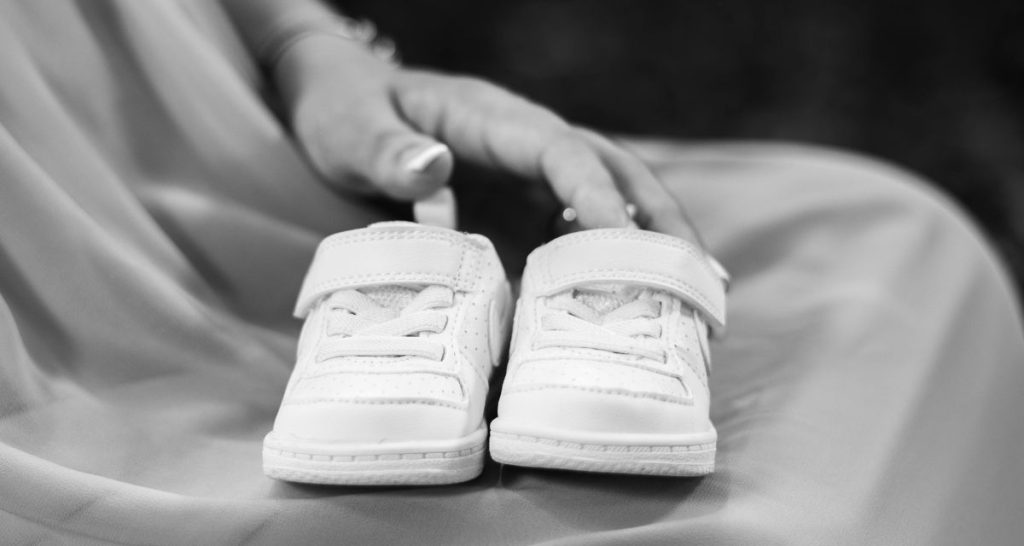
Small white baby shoes on a person's lap

I Lost a Child and They Told Me to Be Grateful

“Loss is part of life.” I have to admit, those words never sat well with me. Not because I don’t believe them—but because they felt like they rushed me through something I wasn’t ready to face. They seemed to suggest that grief has a timetable. That if I just remembered what I still had, I’d be fine. But nothing could have prepared me for the loss of a second child. And the pain that would follow. The shock of expecting twins I was familiar with loss before this. But this felt so different. And I never expected the pregnancy of my second-born to become part of my grief story. At first, it was the shock of falling pregnant again—unexpected, yes, but something I could come to terms with. Then came the next surprise: twins. I had barely wrapped my head around that news when I heard the words no expecting mother ever wants to hear: “It doesn’t look like the one baby will make it.” I went numb. I heard the doctor speaking, but it felt like I was floating outside my body. Half listening. Half in disbelief. So many questions, no real answers What is a hydrops baby?You’re saying he might make it to term… then what?How do I know the other twin will be okay?What does “high risk” in this case actually mean?Will I have to go through another c-section—after the trauma of my last one? I had a hundred questions and no energy to ask any of them. I just listened. Quietly panicked. Here’s what I was told: Each appointment filled me with dread. I’d hold my breath, wondering if today would be the day they told me his heart had stopped. The grief you can’t talk about At 16 weeks, I lost my baby. I felt a strange mix of sadness and relief. Relief that his little body wouldn’t have to fight anymore. But sadness that I never got to meet him. Never got to know who he would be. People tried to comfort me with reminders that I still had one healthy baby growing inside me. That I had a toddler at home who needed me. That I had reasons to stay strong, and to be grateful. They meant well—but those words didn’t help. Because even though I still had children to love, I had lost one. And it felt like there wasn’t room to talk about that grief. Like I wasn’t allowed to mourn in my own way, in my own time. So, I buried it. Tucked it away in the quiet corners of my story. It’s taken time—and courage—to write this down. I used to think that talking about it would make people uncomfortable. That it might sound ungrateful, because I still had a baby to hold. But now I know this: I lost my baby at 16 weeks. And that loss matters—even if I never got to bring him home. To anyone who has experienced pregnancy loss, or the complicated emotions of a high-risk pregnancy: you are allowed to grieve. You are allowed to feel everything, even if others don’t fully understand. Reviewed April 2025. Always consult a professional for individual guidance.

I Lost a Child and They Told Me to Be Grateful Read More »

Scroll to Top