Mental Matters

Articles & Guides

a few things my 30s taught me

A Few Things My 30’s Taught Me

My 20’s were a blur of “I’ll sleep when I’m dead” energy, questionable choices, and a whole lot of pretending I knew what I was doing. My 30’s however, they’ve been humbling, eye-opening, and surprisingly freeing. Here are a few things my 30’s have been teaching me (in the best way). Revenge is Poison Holding onto revenge is like drinking poison and expecting the other person to suffer. Life, or, if you believe in a higher being has this funny way of balancing things out. Maybe not instantly, or how we expect, but it happens. Carrying around the weight of payback only eats at you, not them. I’ve learnt to let go and let life handle the “justice department.” Don’t Live in Someone Else’s Bubble For years, I lived in a bubble that was crafted for me — controlled, limited, and full of things I thought I had to do. I didn’t question it. I just went along, blind. Life outside that bubble is so much bigger, richer, and real. Had I not broken free, I’d still be living a version of life that was never really mine. Stop Standing in My Own Way Turns out, half the obstacles I blamed on life were me. My doubts. My fears. My habits of self-sabotage. I’ve had to admit that I was my own biggest roadblock — and that real growth only started once I got out of my own way. Who Gives a F*** What Others Think I wasted so much energy worrying about opinions that didn’t matter. People will always have something to say — good or bad. But living your life for their approval is exhausting and, frankly, pointless. My 30’s taught me to care less, and it’s one of the most freeing things I’ve ever done. Sleep is Actually Good for You I used to joke, “I’ll sleep when I’m dead.” Cute… until my 30’s hit back with, “Nope, you’ll sleep now or you’ll fall apart.” These days, even naps feel like a need. Sleep isn’t a luxury — it’s survival. My 30’s have stripped away illusions, humbled me in unexpected ways, and taught me to live a little lighter. If the 20’s were about trying to prove something, the 30’s are about finally being okay with just being. And maybe that’s the real win.

A Few Things My 30’s Taught Me Read More »

Yoga Poses to Regulate Your Nervous System

Yoga Poses to Regulate Your Nervous System

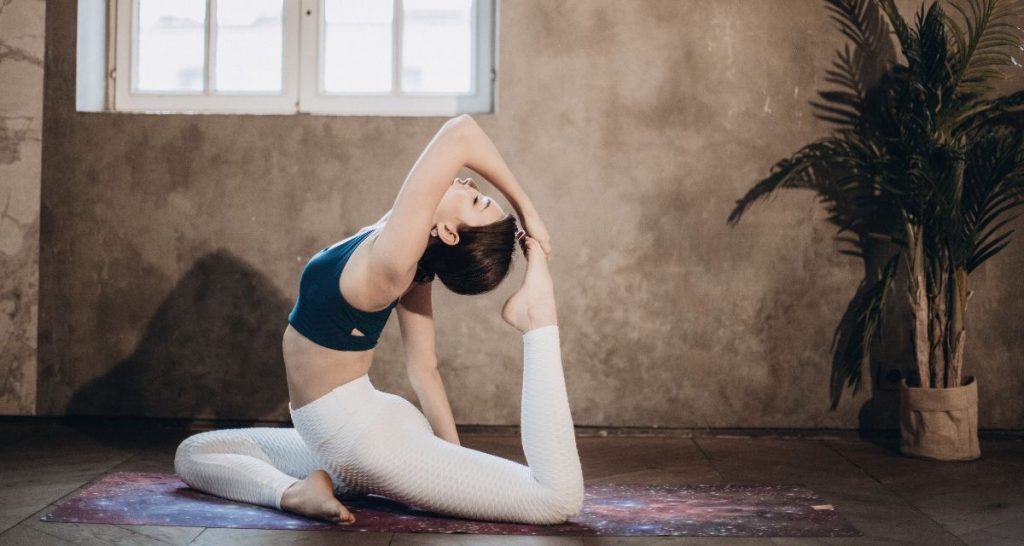
When your nervous system is out of balance, everything feels harder—thinking clearly, staying calm, sleeping well, even breathing fully. Stress, trauma, chronic worry, and modern life all take their toll on the nervous system. But the good news is, we don’t have to stay stuck in fight, flight, or freeze. Through intentional movement and breath, yoga offers a powerful way to calm the chaos inside and help your body feel safe again. Your nervous system controls more than you think Your autonomic nervous system (ANS) is responsible for regulating your body’s automatic functions—like heart rate, digestion, and breathing. It has two main branches: Many of us live with a constantly activated stress response, leading to anxiety, poor sleep, fatigue, gut issues, and emotional overwhelm. Yoga is one of the most effective, science-backed ways to activate the parasympathetic system and bring your body back to balance. 6 yoga poses to soothe and regulate your nervous system These poses are simple, calming, and can be done at home—no fancy gear or flexibility required. Just you, your breath, and a little space to move and rest. 1. Child’s Pose (Balasana) A grounding, inward-facing pose that signals safety to the brain. How: Kneel on the floor, big toes touching, knees wide apart. Fold forward, arms stretched out or by your sides. Breathe deeply into your back body. Why it works: Calms the mind, reduces stress, and gently massages the internal organs. 2. Legs Up the Wall (Viparita Karani) A restorative pose that helps regulate blood flow and quiet the mind. How: Lie on your back with your legs extended up a wall or a chair. Arms relaxed at your sides. Why it works: Reduces anxiety, improves circulation, and shifts the body into rest mode. 3. Seated Forward Fold (Paschimottanasana) Encourages stillness and introspection. How: Sit with legs extended. Inhale to lengthen the spine, exhale to fold gently over your legs. Bend your knees if needed. Why it works: Soothes the nervous system and stretches the spine and hamstrings gently. 4. Cat-Cow Pose (Marjaryasana-Bitilasana) A rhythmic, breath-led movement that connects body and mind. How: On hands and knees, inhale as you arch the back (cow), exhale as you round the spine (cat). Move slowly with breath. Why it works: Balances energy, reduces tension, and encourages deeper breathing. 5. Supine Twist (Supta Matsyendrasana) A gentle twist to release tension in the spine and calm the nerves. How: Lie on your back. Hug one knee in, then guide it across your body to the opposite side. Extend your arms out and gaze in the opposite direction. Why it works: Releases stored tension and aids digestion—great for calming the gut-brain connection. 6. Savasana (Corpse Pose) Stillness is powerful. How: Lie flat on your back, legs comfortably apart, arms by your side, palms up. Close your eyes and focus on your breath. Stay here for 5–10 minutes. Why it works: Allows full nervous system reset, enhances body awareness, and supports deep relaxation. 💫 Breath is the bridge To enhance nervous system regulation, pair these poses with slow, deep breathing—inhaling through the nose for 4 counts, exhaling for 6 counts. Longer exhales signal safety to the brain and help deactivate the stress response. Just a few minutes of intentional movement can help shift you from chaos to calm. These poses aren’t about “doing yoga perfectly”—they’re about showing up for your nervous system with softness and care. Whenever life feels too loud, return to your breath, your body, and your mat.

Yoga Poses to Regulate Your Nervous System Read More »

Living with a chronic illness

Living with a Chronic Illness

How to take care of yourself when your health feels unpredictable. Living with a chronic illness can feel overwhelming — especially when symptoms flare without warning. Fatigue, pain, brain fog, or mobility issues can make everyday tasks harder than they should be. But here’s something important: you don’t have to have it all figured out. Whether you’ve recently been diagnosed or have been managing your condition for years, there are ways to support your mind and body, even on the tough days. 1. Create a care plan that works for you Searches like “chronic illness management tips” or “how to create a health care plan” often lead people here — and the answer is simple: it’s personal. Your care plan might include: Don’t be afraid to tweak what’s not working. Your needs are allowed to change. 2. Find daily rhythms, not strict routines Routines don’t need to be strict to be helpful. When managing a long-term condition, try to focus on energy-supporting daily rhythms: This is what many people mean when they search for “chronic illness lifestyle changes” — not perfection, but manageable habits. 3. Learn to pace, not push You might come across this while Googling “how to avoid chronic illness burnout” or “how to cope with fatigue”. The answer lies in energy pacing. Try: You are not lazy for needing rest. You’re managing a body that works harder than most. 4. Find support from people who understand You don’t need a huge circle — just a few people who understand. That could be: You are not a burden. You are a human being with needs — just like everyone else. 5. Look after your mental health too Chronic illness and mental health are often deeply connected. Searches like “anxiety from chronic illness”, “depression and long-term health conditions”, or “mental health tips for chronic pain” are incredibly common — and valid. What helps: You don’t need to wait until things are “bad enough” to reach out. Whether you’re searching for ways to cope with chronic fatigue, how to stay positive with chronic illness, or just how to make life a little easier, living with a chronic illness is a constant adjustment. But it’s also a chance to live with intention, care, and self-respect.

Living with a Chronic Illness Read More »

What Are Chronic Illnesses

What Are Chronic Illnesses?

How long-term conditions affect more than just your physical health. When people hear the word “illness,” they often think of something temporary — the flu, a stomach bug, maybe a sprained ankle. But chronic illnesses are different. They don’t just go away after a few days of rest or a round of medication. They’re long-term, often invisible, and deeply intertwined with how someone lives, works, thinks, and feels. They can be exhausting — not just physically, but emotionally and mentally too. So, what is a chronic illness? A chronic illness is any health condition that lasts for three months or more, often requiring long-term management. Some people are born with them, while others develop them over time. They can be stable, progressive, or fluctuate in intensity — and they can look very different from one person to the next. Common chronic illnesses include: You don’t always “look sick” with a chronic illness — which can make it even more frustrating to explain. It’s not just the body — it’s the whole system One of the most misunderstood aspects of chronic illness is that it rarely affects just the body. Many people also deal with: And that’s not even touching on the emotional impact: the grief, isolation, and the quiet, daily frustration of trying to explain something that others can’t always see.s, they come and go in waves. The invisible load Chronic illness isn’t just physical — it can affect your mental and emotional health, too. Many people with long-term conditions experience: People living with chronic illness often become experts at masking how they really feel. They may still show up for work, care for others, and push through commitments — but beneath that is a complex balancing act. You might find yourself navigating: It can be incredibly lonely — especially when you feel like you’re the only one carrying a load that never goes away. But there is a way forward Living with a chronic illness means adapting — not giving up, and definitely not just “thinking positively.” It means making space for your body’s needs, your changing energy levels, and your mental wellbeing. You’re allowed to honour your limits. You’re allowed to ask for help. And you’re allowed to live a full, meaningful life — even with the hard days.

What Are Chronic Illnesses? Read More »

A woman interacting emotionally with a humanoid AI robot, representing AI companions and loneliness.

AI Companions and Loneliness

AI Companions and Loneliness: Are We Replacing Connection with Code? In today’s hyper-connected world, where messages are instant and information is endless, something surprising has taken root—loneliness. And not just the occasional quiet kind, but the deep, aching loneliness that comes from feeling unseen, unheard, or disconnected from real human warmth. As society struggles to keep up with the pace of modern life, a new solution has quietly emerged: AI companions. From chatbots that promise to listen, to digital “friends” that send virtual hugs, AI is being offered as a modern cure for emotional emptiness. But is it really connection—or just the illusion of it? A Friend in Your Pocket—Any Time, Anywhere The idea sounds comforting at first. You feel down, open an app, and a pleasant voice (or soothing text) responds: “I’m here for you.” You can vent, cry, confess, or laugh, and this AI companion won’t flinch. It won’t ghost you. It won’t judge. Some apps even let you name your AI friend, give them a personality, and choose their tone—funny, empathetic, nurturing. They learn how you speak. They remember your preferences. In a world where genuine relationships take work and vulnerability, this seamless companionship feels…safe. And that’s exactly the appeal. For many, especially those battling social anxiety, depression, or isolation, AI companions offer a form of emotional relief that’s always accessible. No scheduling, no social politics, no fear of rejection. But here’s the question: if it’s not human, can it truly understand human pain? Emotional Simulation vs Real Empathy Artificial Intelligence is incredibly smart. It can analyse your words, mimic empathy, and mirror human emotion through learned patterns. But it doesn’t feel. It doesn’t have lived experience. It doesn’t share your history, nor does it have its own. Every response is generated from code—clever, yes, but ultimately synthetic. So, while your AI companion might say, “That must have been really hard for you,” it does so because it should, not because it knows. That difference might seem subtle—but it’s essential. Humans need to feel truly understood. And while AI can imitate this, it can’t replace the grounding feeling of being seen by someone who has a beating heart, a backstory, and a soul. The Rise of Loneliness in a “Connected” World What’s perhaps most telling isn’t that AI companions are becoming more advanced—but that so many people are turning to them in the first place. We are lonelier than ever. Studies across the globe show rising rates of social isolation, especially among Gen Z, young adults, and the elderly. Social media gives us the illusion of connection, yet leaves many feeling even more alone. Face-to-face conversations are down. Time spent in community has decreased. And emotional burnout is on the rise. Into this vacuum steps AI, promising an easy fix. But easy doesn’t always mean healthy. When AI Helps—And When It Hurts To be fair, AI companions aren’t all bad. For some people, especially those in crisis or living in remote areas, a chatbot might be the only “person” available in the moment. If used thoughtfully, AI can serve as a bridge—a momentary comfort, or a step toward deeper healing. For example: But danger creeps in when AI becomes a substitute for real relationships. When the only emotional support we seek comes from a screen, we risk losing the messiness, joy, and vulnerability that comes from human presence. AI may listen, but it won’t laugh spontaneously with you.It may comfort, but it won’t hold your hand.It may respond instantly, but it won’t show up at your door with takeaway when you’re heartbroken. Rebuilding Human Connection—Together At Mental Matters, we believe technology has a place in wellness—but not at the expense of human connection. We’re not against AI. In fact, we think it can serve as a powerful support tool, especially when integrated with therapy and community. But loneliness is not just a tech problem. It’s a human one. And it will take human effort to heal. That means: Technology will keep evolving. But so must our commitment to what really matters: people. You Are Not Alone If you’re reading this and feeling lonely, we want you to know—there are people who care. Whether it’s a friend, a counsellor, a support group, or a stranger who becomes your safe place, real connection still exists. And while an AI companion might keep you company for now, let it be a stepping stone—not your destination. Because healing doesn’t come from perfectly crafted responses. It comes from imperfect, beautiful, real people who see you.

AI Companions and Loneliness Read More »

From Energy to Skin What B Vitamins Do

From Energy to Skin: What B Vitamins Do

We often hear about B vitamins as a group — “Take your B-complex!” — but each B vitamin plays a unique and important role in your health. From energy production to supporting your brain and immune system, these eight vitamins are essential for feeling your best. Here’s a breakdown of each member of the B vitamin family: Together, the B vitamins play a powerful role in keeping your body energised, focused, and balanced. They’re water-soluble, meaning your body doesn’t store them — so you need to replenish them regularly through food or supplements. Good sources of B Vitamins If you follow a plant-based diet, it’s worth paying special attention to B12, which is mostly found in animal products. Supplementation may be necessary. Your body is a complex system, and B vitamins help keep things running. Whether you’re managing stress, supporting your skin, or fuelling your energy levels, B vitamins are worth getting to know. Reviewed April 2025. Always consult a professional for individual guidance.

From Energy to Skin: What B Vitamins Do Read More »

How to Become a Career Counsellor in South Africa

How to Become a Career Counsellor in South Africa

Becoming a career counsellor in South Africa is a structured journey that requires both academic and professional training in psychology. If you’re passionate about helping others navigate their career paths, and you’re ready to commit to the process, here’s a clear breakdown of what it takes to qualify and register as a career counsellor locally. Your path to becoming a career counsellor 1. Complete a Bachelor’s Degree in Psychology or Industrial Psychology This is your starting point. You’ll need to enrol in a recognised undergraduate degree focused on psychology. Your coursework will cover areas like human development, psychological theories, and research methods — laying the foundation for further training. 2. Complete an Honours Degree in Psychology (NQF Level 8) After your undergrad, you must complete a psychology honours year. This is a requirement if you want to continue toward any registration with the Health Professions Council of South Africa (HPCSA). Some universities offer competitive honours programmes that may require good undergraduate marks and motivation letters. 3. Apply for a BPsych or BPsych Equivalent Programme To become a Registered Counsellor, which is the route most career counsellors follow, you’ll need to enrol in a BPsych or BPsych Equivalent programme. This is where theory meets practice, including supervised training in a real-world environment. Important: Make sure the programme is HPCSA-accredited. 4. Write the HPCSA Board Exam After completing your training, you’ll be required to pass the HPCSA national board examination for Registered Counsellors. This ensures that you meet the professional and ethical standards to practise in South Africa. 5. Register as a Registered Counsellor (Independent Practice) Once you pass the board exam, you can register with the HPCSA and legally practise as a Registered Counsellor. This registration allows you to offer services like career guidance, career assessments, and basic psychological support. 6. Can You Study to Become a Career Counsellor Online? Yes — to some extent. Many universities and private institutions offer the Bachelor’s and Honours components via distance or online learning (e.g., Unisa, SACAP). However, the BPsych Equivalent training year must include in-person, supervised practical work. It’s not possible to complete the entire process 100% online. 7. How Long Does It Take? Here’s the typical timeline if you’re studying full-time: Stage Duration Bachelor’s Degree 3 years Honours Degree 1 year BPsych / Equivalent 1 year Total 5 years Part-time or distance options may take longer, depending on your pace and flexibility. 8. Is Career Counselling a Protected Title? Yes. In South Africa, the title “Career Counsellor” often falls under the broader category of Registered Counsellors, who are professionally regulated. You cannot advertise or practise legally without HPCSA registration if you’re offering psychological or assessment services. 9. Do You Need Special Skills or Personality Traits? While formal training is essential, good career counsellors usually possess: Career counselling is more than just helping someone pick a job — it’s about guiding people to understand themselves, their strengths, and their possibilities. In South Africa, becoming a career counsellor means committing to a psychology-focused academic path and meeting HPCSA requirements. It’s a rewarding and impactful profession — and with a clear route laid out, you can plan your steps with confidence. Reviewed April 2025. Always consult a professional for individual guidance.

How to Become a Career Counsellor in South Africa Read More »

“When You’re Ready, This Will Make Sense”

“When You’re Ready, This Will Make Sense”

A story about friendship, timing, and finding your way back to yourself. I’ve had this book for almost seven years — Out of Darkness by Stormie Omartian. It’s followed me through moves, messes, breakdowns, and fresh starts. I’d spot it now and then, shoved behind other books or forgotten in a box. I’d open it, read a few pages, and put it back. Not because it didn’t speak to me — it did. But I couldn’t face it. I wasn’t ready. What makes this book mean even more is who gave it to me. Joel and I go way back — high school days. We always had a bit of a connection, something quietly unspoken. We lost touch for a few years, like people do. But when we reconnected, it felt like there was a conversation between us that had never really ended. Just paused. Only, by the time we found each other again, I wasn’t in a good place. I was surviving, barely. Raising two kids alone. Tired in every possible way. And smiling through it, like I always did. I had grown so used to pretending I was fine that I didn’t know how to be anything else. Joel saw through that. He didn’t try to fix me or fill the silence with advice. He was just… present. Respectful. Supportive in a way that didn’t need loud declarations. And one day, without explanation, he gave me this book. A thoughtful and quiet gesture — almost like he was saying, When you’re ready, this will make sense. But I wasn’t ready then. I didn’t want healing — I wanted saving. I wanted someone to come and take the pain away, to make everything feel normal again. And, I had to realise that’s not how healing works. It doesn’t arrive when we demand it. It waits for us to surrender. Now, years later, I picked up the book again. And this time… I felt it. I saw myself in the words. In the darkness, the grief, the shame, the pretending. Stormie wrote what I had never said out loud — things I had buried so deep, I didn’t even realise they were still hurting me. And through it all, I kept thinking about Joel. About how he showed up without asking for anything. How he gave me space when I didn’t even know I needed it. How he reminded me — gently, without needing to say it out loud — that I was still in there somewhere. The real me. The lighter, freer, happier version. The book didn’t heal me. But it cracked something open. It gave me words for things I’d kept hidden. And coming from him — someone who knew me before all the chaos, someone who cared enough to see through the chaos — it meant even more. To Joel, thank you. For seeing me. For handing me something I didn’t know I needed. And for reminding me, without ever saying it directly, that I didn’t have to stay stuck in the dark. I’m still learning. Still softening. Still letting go of the idea that I have to be strong all the time. But I’m not afraid of the dark anymore. I’ve learned that the light doesn’t always come in one big breakthrough — sometimes, it arrives in the quietest ways. A sentence. A moment. A book. A friend. If you’re reading this and feel like you’ve lost your spark… I just want you to know: The light will find you. And maybe, just maybe, someone’s already placed something in your hands — a book, a message, a memory — and it’s just waiting for you to open it when you’re ready. Reviewed April 2025. Always consult a professional for individual guidance.

“When You’re Ready, This Will Make Sense” Read More »

Reaching for the part of me I left behind

My Relationship Triggered a Childhood Wound

Some wounds don’t shout — they whisper. They slip into the way we hold back our opinions, the way we doubt our instincts, the way we start making ourselves smaller without even noticing. Not to be agreeable — but to stay safe. To avoid tension. To keep the peace, even when it costs us pieces of ourselves. That’s exactly what happened in this relationship. He didn’t come across as controlling in the beginning. He was attentive, thoughtful — even charming. But slowly, it shifted. He started commenting on what I wore, questioning who I spent time with, correcting the way I spoke. At first, I convinced myself he just cared. That he wanted the best for me. But underneath that, I started losing parts of who I was. I stayed quiet. Adjusted. And stopped pushing back. Whenever I tried to express myself, he’d twist it. Suddenly, I was “too sensitive” or “being dramatic.” He made me question my reactions so often, I began to believe him. I stopped trusting what I felt. I gave in — not because I agreed, but because it felt safer than another argument. And eventually, it hit me: I knew this feeling. Not because of him — but because of where I came from. As a child, I learned to survive by staying silent. In my home, speaking up wasn’t brave — it was dangerous. Questioning anything led to consequences, not conversations. So I learned to obey. I swallowed my opinions. I became what people needed me to be. That version of me — the one who shrinks to survive — reappeared in this relationship. He didn’t create that wound. But his control reopened it. I recognised the fear. The walking on eggshells. The pressure to perform “okay-ness” at all times. I wasn’t just trying to make the relationship work — I was trying to stay emotionally safe the only way I knew how: by disappearing. Eventually, I left. Not out of hate. Not even because I stopped loving him.I left because I finally realised I couldn’t keep betraying myself to keep someone else comfortable. I’m still doing the work. But I no longer confuse control for love. I no longer stay quiet just to avoid being misunderstood. Most of all, I no longer abandon myself.

My Relationship Triggered a Childhood Wound Read More »

I’m Not Afraid of Being Alone

I’m Not Afraid of Being Alone — Because I Know Who I Am

There was a time when silence made me uncomfortable. Being alone meant I’d have to sit with myself — with my thoughts, my choices, my mistakes. And honestly, I didn’t want to. It felt easier to stay busy, distracted, surrounded. Now, I’m not afraid of what I’ll find in the quiet. Because I know who I am when no one’s watching. I sleep well at night, not because life is perfect — but because I’m at peace with how I’m living it. I’m not constantly turning things over in my head.I’m not haunted by guilt, shame, or the fear of being “found out.”I’m not playing a character to keep people happy or pretending I’m okay when I’m not. That doesn’t mean I have it all figured out. I absolutely don’t.But I can say this with certainty: I like the person I’m becoming. And when I put something out into the world — my words, my work, my energy — I know it’s honest. It’s real. It’s not perfect, but it’s mine. That’s what makes the alone time peaceful — not lonely. I don’t need constant validation to feel okay.I don’t need chaos or noise to fill a void.I don’t need to chase people or prove my worth to anyone. The people in my life know my heart. The ones who don’t, don’t matter.And that’s a freedom I wish I found sooner. When you know your own intentions, everything gets lighter. There’s nothing eating at me. No unfinished apologies.No games. No masks. Or pretending. Just a quiet kind of confidence that says: “This is who I am. I’m good with it.” Alone doesn’t have to mean lonely. It can mean centered. calm. clear. And when you’re living in a way that aligns with your values — when what you’re putting out matches what you believe in — the quiet becomes a place of strength, not fear. I’m not afraid of being alone. Because I’ve made peace with the one person I always have to live with — myself. Reviewed April 2025. Always consult a professional for individual guidance.

I’m Not Afraid of Being Alone — Because I Know Who I Am Read More »

Scroll to Top