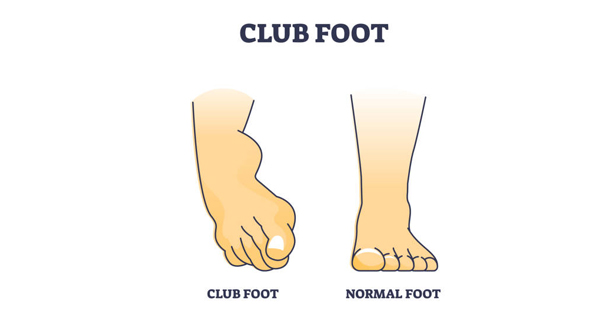
Causes of Club Foot
Causes of club foot are not entirely understood, though several genetic and environmental factors appear to contribute to its development. While club foot often occurs in otherwise healthy infants, some cases are associated with other conditions or syndromes. Understanding the causes of club foot helps guide research and improve early detection strategies.
1. Genetic Factors
Evidence suggests a strong genetic component. If a parent had club foot, there is a significantly increased chance their child may inherit the condition. The risk is also higher if a sibling is affected. Several genes associated with muscle and skeletal development have been implicated, though no single gene has been identified as the sole cause.
2. Position in the Womb | Causes of Club Foot
Limited space in the uterus may affect foetal positioning, especially in the third trimester. Club foot can develop when the foot is compressed or restrained, particularly in cases of multiple births or low amniotic fluid levels.
3. Neuromuscular Conditions
Some babies are born with club foot as part of a wider syndrome involving the nervous or muscular system. Conditions like spina bifida or arthrogryposis are examples where club foot may occur alongside other abnormalities.
4. Environmental Factors
Although harder to pinpoint, maternal smoking, infections during pregnancy, or certain medications may slightly increase the risk of club foot. Poor maternal nutrition and exposure to harmful substances during early foetal development have also been suggested as contributing factors.
5. Idiopathic Cases | Causes of Club Foot
In most cases, club foot appears without any associated health problems or identifiable cause. These are referred to as idiopathic club feet and account for the majority of cases. Despite the unknown cause, these cases usually respond very well to treatment.
The causes are likely multifactorial, involving a combination of genetic predisposition and environmental influence. Ongoing research aims to uncover more precise mechanisms and improve prevention and early intervention strategies.
[Next: Symptoms of Club Foot →]