
Symptoms of Dupuytren’s Contracture
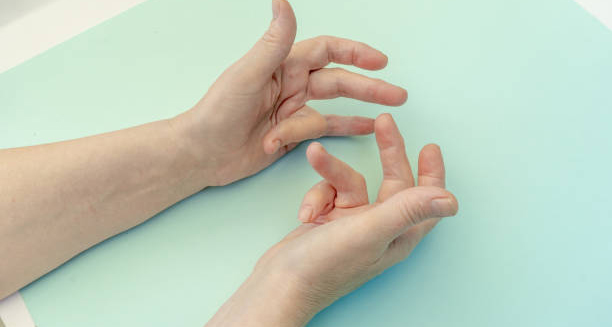
The symptoms of Dupuytren’s contracture often begin subtly and progress over time. Most people first notice a small, firm lump or nodule in the palm of the hand. Usually near the base of the ring or little finger. These early signs are usually painless, but they can feel tender when pressure is applied. As the condition worsens, the cords beneath the skin thicken and contract, pulling the fingers into a permanently bent position.
One of the hallmark symptoms of Dupuytren’s contracture is the gradual loss of finger extension. In the early stages, people may simply feel tightness in the palm. Furthermore, have difficulty placing their hand flat on a table. As the disease advances, the fingers become increasingly curled, making it hard to shake hands, put on gloves, or grip objects.
Typically, the ring and little fingers are affected first, but in more severe cases, the middle finger or even the thumb may become involved. The dominant hand is often affected more severely, and some individuals may develop the condition in both hands. However, the rate of progression varies significantly from one person to another.
The skin over the affected area may become puckered or dimpled, resembling scar tissue. In some cases, small pits may form in the palm. Although the condition is rarely painful, some people do experience discomfort—particularly if the cords press on nerves or interfere with daily activities.
Symptoms of Dupuytren’s contracture can have a significant impact on quality of life. Even simple tasks, like typing, driving, or cooking, may become difficult. The inability to fully straighten the fingers can also lead to secondary issues such as joint stiffness, muscle weakness, and frustration with lost independence.
Symptoms of Dupuytren’s Contracture
In South Africa, patients in remote or under-resourced communities may delay seeking help, believing the symptoms are due to ageing or hard work. This delay can lead to more advanced contractures by the time medical attention is received. Early recognition and referral to a hand specialist or orthopaedic surgeon are essential for preserving hand function.
The condition progresses slowly in most cases, but some people experience rapid worsening within a few years. Monitoring the severity and extent of finger involvement helps guide treatment decisions. If hand function becomes limited, options such as steroid injections, enzyme therapy, or surgery may be considered.
Recognising the early symptoms of Dupuytren’s contracture and acting promptly can slow progression and maintain independence. With proper treatment, many individuals continue to live active, productive lives.
[Next: Diagnosis of Dupuytren’s Contracture →]