
Dupuytren’s Contracture
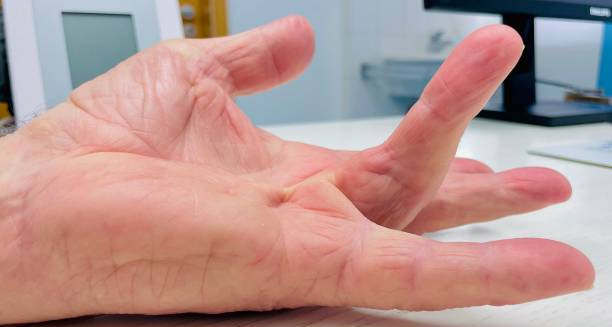
Dupuytren’s contracture is a progressive condition that affects the connective tissue in the palm of the hand. Over time, this condition causes the fingers—most commonly the ring and little fingers—to curl inward towards the palm. Dupuytren’s contracture develops gradually and is not usually painful, but it can significantly reduce hand function and affect a person’s ability to grip or perform everyday tasks.
The condition begins with the thickening of the fascia—a layer of connective tissue under the skin of the palm. As the tissue tightens and shortens, it pulls the fingers into a bent position. People with Dupuytren’s contracture may first notice a firm lump or nodule in their palm. As the disease progresses, fibrous cords form beneath the skin, eventually drawing the fingers into a fixed, bent position.
Although the exact cause is unknown, genetics play a key role. The condition is more common in individuals of Northern European descent and often runs in families. Men over the age of 50 are most frequently affected. While less common in South Africa’s black population, Dupuytren’s contracture is still diagnosed among various demographic groups and should not be overlooked in clinical assessments.
Risk factors include a family history of the condition, diabetes, epilepsy, excessive alcohol use, and smoking. However, many people with no obvious risk factors still develop the condition. Contrary to popular belief, repetitive hand use or injury is not a proven cause, although such factors may worsen symptoms in some people.
Dupuytren’s Contracture
Early stages may not require treatment, but as the contracture worsens, intervention may be needed. If left unmanaged, severe Dupuytren’s contracture can lead to permanent hand disability, making activities like writing, shaking hands, or opening a bottle difficult or impossible.
Recognising the signs early and seeking medical advice can slow progression and preserve hand function. With modern treatments and therapies, many people regain significant mobility and reduce the impact of the condition on daily life.
[Next: Causes of Dupuytren’s Contracture →]