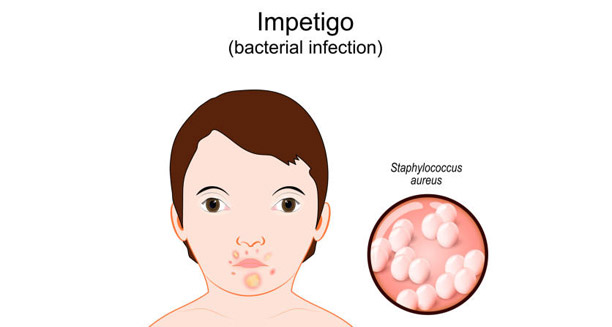
Overview of Impetigo
Impetigo is a highly contagious bacterial skin infection that primarily affects infants and young children, though it can occur at any age.
The infection shows up as red sores, blisters, or golden-yellow crusts. These often appear around the nose, mouth, and hands—areas most often touched or exposed. Two types of bacteria cause impetigo: Staphylococcus aureus and Streptococcus pyogenes. They enter through tiny breaks in the skin, such as cuts, bug bites, or scrapes.
Although this condition is rarely dangerous, it spreads fast. That’s why spotting it early and treating it quickly is so important, especially in group settings like schools or daycare centres. Early care improves the outlook for impetigo and limits its spread.
Types and Symptoms of Impetigo
There are two main types of impetigo: non-bullous and bullous.
Non-bullous impetigo is more common. It starts as small red spots that turn into pus-filled bumps. These burst and leave a crust. Bullous impetigo causes larger blisters filled with clear fluid. When they break, they leave behind a yellow crust.
The sores may itch or sting slightly. However, fever and serious symptoms usually do not happen—unless the case is severe or left untreated. Children are more likely to get this condition. Their skin gets injured more often, and their immune systems are still learning how to fight off bacteria.
How Impetigo Spreads and Can Be Prevented
Impetigo spreads easily from person to person. It passes through direct contact with sores or items like towels, toys, or clothes. Scratching the sores and then touching other body parts also spreads it.
Simple hygiene habits can stop this. Regular handwashing, not sharing personal items, and covering wounds all reduce the risk of spreading the bacteria.
Once diagnosed, treatment is usually simple. Doctors often start with antibiotic cream for small areas. If the infection spreads or doesn’t go away, oral antibiotics may be needed. Treating early improves skin healing and the overall outlook for impetigo.
Broader Impact and Risk of Complications
Though impetigo affects only the outer skin, it can still cause problems. This is more likely in places with poor hygiene or among people with weaker immune systems. Without treatment, this condition may lead to deeper skin infections like cellulitis or other issues like swollen lymph vessels or kidney problems.
Sometimes, impetigo keeps coming back. This could mean another problem is at play, such as eczema, scabies, or bug bites. These conditions damage the skin and let bacteria in more easily. Treating the root cause helps stop repeat infections and improve the outlook for impetigo.
In many parts of the world, impetigo remains one of the most common skin infections in children. Because it’s so visible, it can also cause emotional stress. Kids may feel embarrassed, and parents may worry about the infection coming back or others reacting badly. That’s why fast treatment and proper support matter. They help heal both the skin and the child’s confidence.
The Road Ahead
In the next sections, we’ll look closely at what causes impetigo, what symptoms to look for, how doctors diagnose it, and the best ways to treat and prevent it. We’ll also discuss potential complications and the overall outlook for impetigo.
Understanding the condition is the first step in keeping it under control. With awareness and the right care, impetigo is easy to manage—and even easier to prevent.