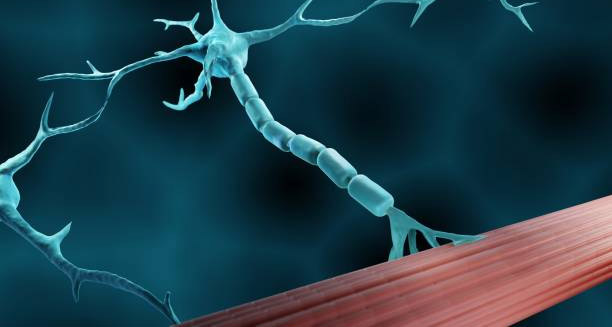
Lambert-Eaton myasthenic syndrome is caused by an autoimmune attack on the nervous system, specifically targeting voltage-gated calcium channels (VGCCs) located at the presynaptic terminals of motor neurons.
This immune system attack blocks the release of acetylcholine. That’s the chemical needed to make muscles move. Without enough of it, muscles become weak. This weakness usually starts in the arms or legs and gets worse over time.
Doctors group Lambert-Eaton myasthenic syndrome into two types based on the root cause: paraneoplastic and non-paraneoplastic. The paraneoplastic type shows up in around 50 to 60% of people. It usually links to small-cell lung cancer (SCLC). In these cases, the immune system reacts to proteins in the cancer but also attacks nerve cells by mistake. So while the body tries to fight the cancer, it also harms the nervous system.
The strong link between cancer and LEMS
In small-cell lung cancer, the tumour produces proteins that look like VGCCs. This similarity tricks the immune system. It begins to fight both the tumour and the calcium channels. As a result, nerve signals don’t reach muscles. This is how the cancer ends up causing weakness.
Smoking makes things worse. Since it’s the top cause of small-cell lung cancer, it indirectly raises the risk of getting Lambert-Eaton myasthenic syndrome.
On the other hand, non-paraneoplastic Lambert-Eaton myasthenic syndrome happens with no cancer. Doctors don’t always know what starts it. But even in this form, the body still makes harmful antibodies that target VGCCs. Many of these patients also have other autoimmune diseases, like type 1 diabetes, hypothyroidism, or rheumatoid arthritis. This pattern shows that the immune system is off balance in more than one way.
Genetic and environmental causes of Lambert-Eaton myasthenic syndrome
Family history may play a role too. Certain genes, especially human leukocyte antigen (HLA) types, may raise the risk. These same genes appear in other autoimmune diseases. Though we don’t have strong proof yet, the idea of inherited risk is gaining ground.
Besides genes, the environment might also trigger Lambert-Eaton myasthenic syndrome. Some infections confuse the immune system. For example, a virus or bacteria may look like a body cell. The immune system then makes a mistake and attacks the body instead. While we’re not sure infections cause LEMS directly, they might help start the problem in people who already have the wrong genes.
Other possible causes of Lambert-Eaton myasthenic syndrome
Another theory points to chemicals or toxins. People exposed to certain harmful agents—like heavy metals, solvents, or cancer-causing chemicals at work—might face higher risk. These toxins may damage the immune system or increase cancer risk, both of which link back to Lambert-Eaton myasthenic syndrome.
A key feature of the condition is that it targets the presynaptic side of the nerve-muscle connection. That’s different from conditions like myasthenia gravis, which affects the postsynaptic side. Knowing this helps doctors run the right tests and choose better treatments.
In the end, the causes of Lambert-Eaton myasthenic syndrome fall into two main groups. One relates to cancer, mostly small-cell lung cancer. The other involves the immune system going wrong without any cancer. Finding the exact cause helps shape the right treatment. For cancer-linked cases, spotting the tumour early improves both survival and nerve recovery. For the idiopathic type, calming the immune system becomes the main goal.
Understanding the causes of Lambert-Eaton myasthenic syndrome guides care
By knowing more about the causes of Lambert-Eaton myasthenic syndrome, doctors can respond faster and choose treatments that work best. Whether it starts from cancer, genes, infections, or unknown reasons, early diagnosis and action make a big difference.