Mental Matters

Mental Matters

  • Health & Wellness
  • Mental Health
  • Live Better
  • Directory
  • Articles & Guides
  • Advertise
  • Blog
  • Fields
  • Health & Wellness
  • Mental Health
  • Live Better
  • Directory
  • Articles & Guides
  • Advertise
  • Blog
  • Fields
  • Health & Wellness
  • Mental Health
  • Live Better
  • Directory
  • Articles & Guides
  • Advertise
  • Blog
  • Fields
  • Health & Wellness
  • Mental Health
  • Live Better
  • Directory
  • Articles & Guides
  • Advertise
  • Blog
  • Fields

Broken Leg

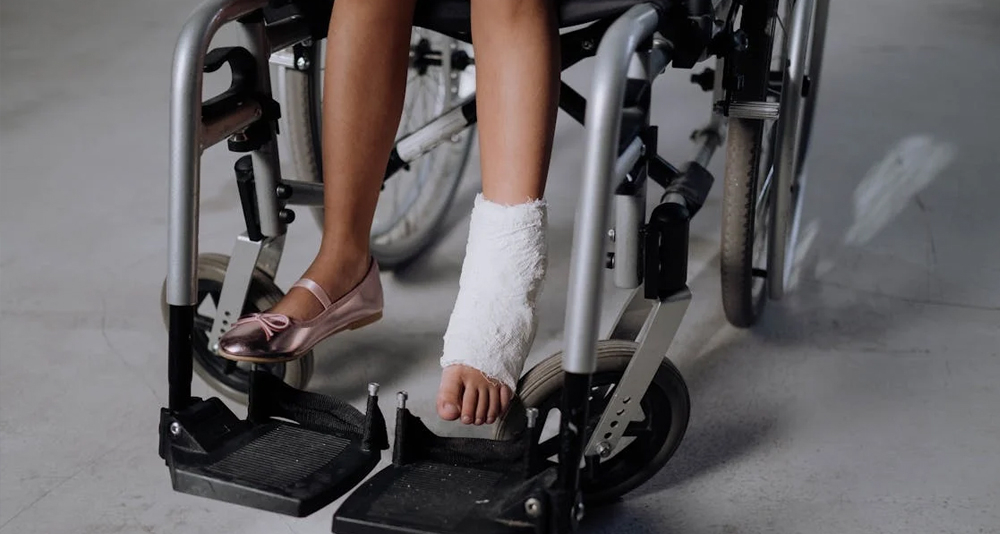
Child in wheelchair with leg cast

A young patient with a broken leg sits in a wheelchair, highlighting the need for proper fracture care and mobility support.

Broken Leg – Overview

A broken leg refers to a fracture in one or more of the bones that make up the leg — the femur, tibia, or fibula. A broken leg is a serious and often painful injury that typically results from high-impact trauma. Such as car accidents, falls from height, or direct blows during sports. It requires prompt medical evaluation and often weeks or months of recovery and rehabilitation.

The femur is the strongest bone in the body and usually only breaks under extreme force. Tibia and fibula fractures, particularly in the lower leg, are more common and may result from twisting injuries or sudden impact. Breaks can be simple and clean, or complex and displaced. In some cases, the bone may pierce the skin. This is known as a compound or open fracture and carries a higher risk of infection and complications.

Symptoms typically include severe pain, visible swelling, bruising, inability to walk or bear weight. Additionally, deformity or misalignment of the leg. Diagnosis involves a physical exam followed by imaging — most commonly an X-ray. For more complex injuries, a CT or MRI may be required.

Broken Leg

Treatment depends on the type and severity of the fracture. Minor fractures may be treated with immobilisation in a cast or brace, while complex or unstable fractures often require surgical intervention. Surgical treatment may involve inserting rods, screws, or plates to stabilise the bones during healing.

Recovery from a broken leg varies. While minor fractures may heal in six to eight weeks, more serious breaks can take several months. Physical therapy is crucial to restore strength, mobility, and coordination, especially after long periods of immobilisation.

[Next: Causes of a Broken Leg →]



Treatment of a Broken Leg
Foot and Leg Pain Podiatrist Centre Sydney
Diagnosis of a Broken Leg
Complications and Recovery from a Broken Leg

Related Posts

Medical illustration of gallstones inside the gallbladder
Gallstones

Gallstones

July 5, 2025

Gallstones These Gallstones are small, solid deposits that form in the gallbladder...

Newborn baby wearing a soft knitted bonnet, gently touched by a caregiver, illustrating care for conditions like cradle cap.
Cradle Cap

Causes of Cradle Cap

June 17, 2025

Causes of Cradle Cap Causes of cradle cap are not fully understood,...

Mental Matters

Facebook Instagram

Your Weekly Dose of Mental Health Support
– Straight to Your Inbox

  • Your journey to better mental health starts here—with expert insights and helpful resources delivered weekly.


© 2025 Mental Matters. All rights reserved. The content on this website is intended for informational purposes only and does not constitute medical advice, diagnosis, or treatment. Please consult a qualified health professional for any medical concerns.

Quick Links

  • Directory

  • Advertise

  • Conditions

  • Real Talk

  • Eating Disorders

  • Depressed

  • Autism

  • Community

  • Resources

About

  • Get In Touch

  • Home

  • Privacy Policy

  • Suicide Prevention Support

  • Terms & Conditions

© 2025 Mental Matters. All rights reserved.

No Result
View All Result
  • Health & Wellness
  • Mental Health
  • Live Better
  • Directory
  • Articles & Guides
  • Advertise
  • Blog
  • Fields

© MENTAL MATTERS 2024