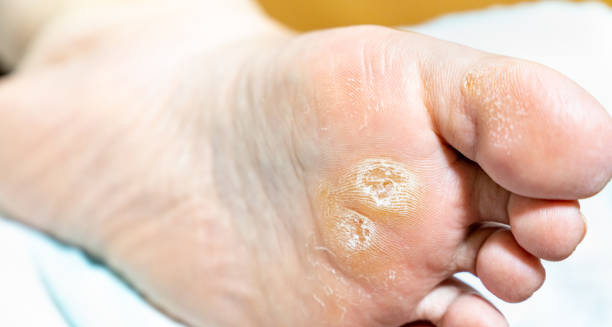

Calluses – Overview
Calluses are areas of thickened, hardened skin that develop in response to repeated friction, pressure, or irritation. Commonly found on the feet, hands, or areas of the body subjected to frequent rubbing, calluses serve as a natural protective mechanism. While often painless and harmless, they can become uncomfortable or unsightly, particularly when they grow large or crack.
Calluses develop when the outer layer of skin (epidermis) produces excess keratin, a protein that strengthens and thickens the skin. This process is triggered by continuous pressure or mechanical stress, such as walking in tight shoes, manual labour, or playing instruments. The result is a broad, flattened area of thick skin that may feel rough or waxy to the touch.
Unlike corns, which are small, circular, and often painful, these are generally larger and less defined in shape. They tend to form on the soles of the feet, especially the heel or ball, and on the palms or fingers. Though not dangerous, large or untreated calluses can cause discomfort when walking or gripping objects.
Calluses
People who are physically active, wear ill-fitting shoes, or frequently use tools are more likely to develop these sores. Medical conditions such as bunions or gait abnormalities can also contribute to their formation.
In summary, calluses are thickened patches of skin that develop as a response to ongoing pressure or friction. While usually benign, proper care is essential to avoid discomfort, cracking, or secondary issues.