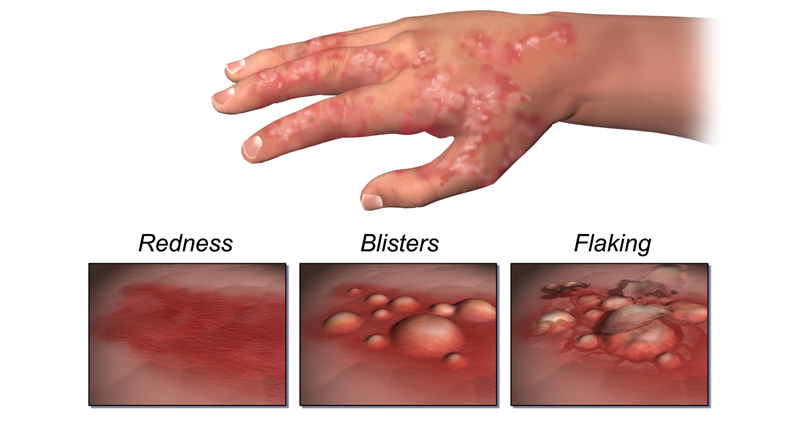

Causes and Types of Blisters
Understanding the cause and type of a blister helps determine how best to treat it and prevent recurrence. While friction is the most common trigger, a wide range of other factors — including burns, infections, and medical conditions — can also cause blisters. Learn about the causes and types of blisters below.
1. Friction blisters
- Occur when repeated rubbing or pressure separates the top layers of skin.
- Common on the feet (due to tight shoes or long walks) and hands (manual labour, sports).
- The fluid cushions the area and protects the tissue beneath.
2. Heat or burn blisters
- Caused by thermal burns (touching something hot), chemical burns, or sunburn.
- The skin reacts by forming a fluid-filled sac as part of the healing process.
- Blisters from second-degree burns can be large and painful.
3. Blood blisters
- Form when deeper tissue and blood vessels are damaged, such as from pinching skin in a door or tool.
- Appear dark red or purple and may be more painful than standard blisters.
4. Viral infections
- Herpes simplex virus (HSV-1 and HSV-2) causes small, painful clusters of blisters, often on the lips or genitals.
- Chickenpox and shingles also present with blister-like lesions that follow a pattern.
- These blisters are often accompanied by fever or fatigue.
5. Allergic and irritant reactions
- Contact with allergens like poison ivy, nickel, latex, or chemicals can trigger blistering rashes.
- Known as contact dermatitis, these blisters often itch and are surrounded by red, inflamed skin.
6. Skin infections
- Impetigo, a contagious bacterial infection, can cause pus-filled blisters, especially in children.
- Fungal infections like athlete’s foot may also produce blisters in severe cases.
7. Autoimmune and chronic diseases
- Conditions like pemphigus, bullous pemphigoid, or dermatitis herpetiformis cause spontaneous blistering without trauma.
- Often seen in older adults or people with coexisting systemic illnesses.
Causes and Types of Blisters
Environmental and occupational factors such as heat, excessive walking, or working with chemicals increase the risk of blisters, especially where protective footwear or gloves are not worn.
👉 [Next: Diagnosis and When to See a Doctor]