Causes of Down’s Syndrome
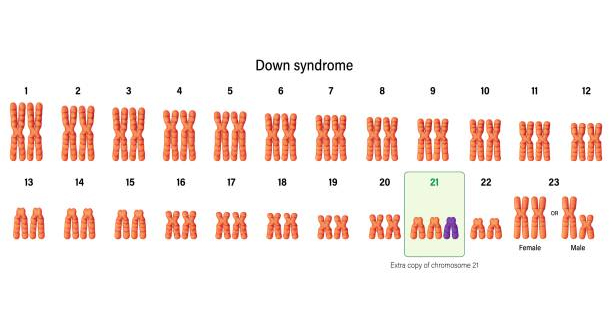
The causes of Down’s syndrome lie in an abnormal cell division that results in extra genetic material from chromosome 21. Normally, each person has 46 chromosomes, arranged in 23 pairs. People with Down’s syndrome have three copies of chromosome 21 instead of the usual two. This genetic difference occurs by chance and alters the way the body and brain develop.
There are three recognised types of Down’s syndrome. The most common, accounting for about 95% of cases, is trisomy 21. This occurs when every cell in the body has three copies of chromosome 21. Mosaic Down’s syndrome, a rarer form, involves only some cells having the extra chromosome, while others are typical. Translocation Down’s syndrome happens when a portion of chromosome 21 attaches to another chromosome, often chromosome 14. This is the only type that can sometimes be inherited from a parent.
While anyone can have a child with Down’s syndrome, the risk increases with maternal age. For example, a 25-year-old mother has a lower chance of having a baby with the condition than a 40-year-old mother. That said, younger women give birth to more babies overall, which is why most children with Down’s syndrome are born to mothers under 35.
In most cases, the genetic error occurs during the formation of reproductive cells and is not linked to any behaviour, health condition, or environmental exposure. It is a random event, and parents typically cannot prevent it. However, in cases of translocation Down’s syndrome, one parent may carry a balanced translocation without symptoms but still pass on the condition.
Genetic counselling can help families understand the causes of Down’s syndrome and assess future risks. This is especially important for parents who have already had a child with the condition or have a family history of chromosomal abnormalities.
Causes of Down’s Syndrome
In South Africa, genetic services are more readily available in urban areas through tertiary hospitals, but rural access remains limited. This creates disparities in prenatal care and genetic counselling, often leaving families unprepared for the diagnosis.
Understanding the causes of Down’s syndrome can reduce stigma and misinformation. It emphasises that the condition is no one’s fault and that every child—regardless of their genetic makeup—deserves care, support, and opportunity.
[Next: Symptoms of Down’s Syndrome →]