Mental Matters

Mental Matters

  • Health & Wellness
  • Mental Health
  • Live Better
  • Directory
  • Articles & Guides
  • Advertise
  • Blog
  • Fields
  • Health & Wellness
  • Mental Health
  • Live Better
  • Directory
  • Articles & Guides
  • Advertise
  • Blog
  • Fields
  • Health & Wellness
  • Mental Health
  • Live Better
  • Directory
  • Articles & Guides
  • Advertise
  • Blog
  • Fields
  • Health & Wellness
  • Mental Health
  • Live Better
  • Directory
  • Articles & Guides
  • Advertise
  • Blog
  • Fields

Causes of Frozen Shoulder

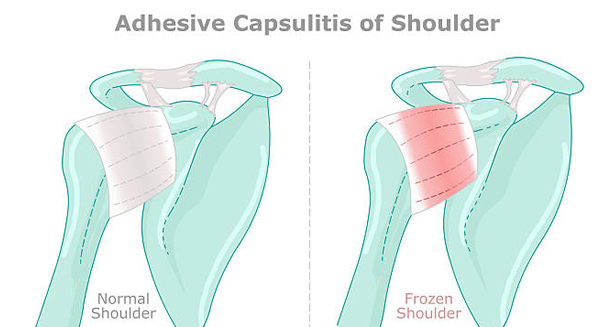
Medical diagram comparing a normal shoulder to a frozen shoulder showing adhesive capsulitis

Illustration comparing normal and frozen shoulders to highlight thickening of the joint capsule, a key cause of adhesive capsulitis

Causes of Frozen Shoulder

The causes of frozen shoulder involve inflammation and thickening of the shoulder joint capsule, which restricts movement. Frozen shoulder can develop without an obvious reason (primary) or as a result of injury or medical conditions (secondary).

Primary Frozen Shoulder

In many cases, frozen shoulder occurs without any clear cause. This is known as idiopathic or primary frozen shoulder. It’s believed that:

Inflammation causes the joint capsule to thicken and contract

Adhesions (bands of scar-like tissue) form inside the joint

Synovial fluid (which lubricates the joint) may be reduced

Why this happens in otherwise healthy people remains unclear, but certain risk factors increase susceptibility.

Secondary Frozen Shoulder

This type develops following another condition or event that affects the shoulder:

Shoulder injury or surgery – dislocations, fractures, or operations can lead to immobilisation

Rotator cuff problems – such as tears or tendonitis

Stroke – paralysis or reduced use of the arm may trigger stiffness

Heart surgery – some people develop frozen shoulder after open-heart procedures

Any situation that limits arm movement for a prolonged period can increase the risk of adhesive capsulitis.

Medical Risk Factors

Certain health conditions are strongly linked to frozen shoulder:

Diabetes – one of the most significant risk factors; affects 10–20% of diabetics

Thyroid disorders – both overactive and underactive thyroid conditions

Parkinson’s disease – due to muscle stiffness and reduced mobility

Cardiovascular disease

People with autoimmune disorders or metabolic syndrome may also have an increased risk.

Age and Gender

Most common between ages 40 and 60

Women are affected more than men

The non-dominant shoulder is often involved, though either side can be affected

Causes of Frozen Shoulder

Understanding the causes of frozen shoulder is essential for prevention, especially in people with diabetes or those recovering from upper body injuries or surgery.


[Next: Symptoms of Frozen Shoulder →]

Related Posts

Ingrown Hairs
Health Conditions

Overview of Ingrown Hairs

July 30, 2025

Overview of Ingrown Hairs Ingrown hairs are a common and often irritating...

Woman holding lower back with coccyx area highlighted in red
Coccyx Pain

Coccyx Pain

June 13, 2025

Coccyx Pain – Overview Coccyx pain, also known as coccydynia, refers to...

Mental Matters

Facebook Instagram

Your Weekly Dose of Mental Health Support
– Straight to Your Inbox

  • Your journey to better mental health starts here—with expert insights and helpful resources delivered weekly.


© 2025 Mental Matters. All rights reserved. The content on this website is intended for informational purposes only and does not constitute medical advice, diagnosis, or treatment. Please consult a qualified health professional for any medical concerns.

Quick Links

  • Directory

  • Advertise

  • Conditions

  • Real Talk

  • Eating Disorders

  • Depressed

  • Autism

  • Community

  • Resources

About

  • Get In Touch

  • Home

  • Privacy Policy

  • Suicide Prevention Support

  • Terms & Conditions

© 2025 Mental Matters. All rights reserved.

No Result
View All Result
  • Health & Wellness
  • Mental Health
  • Live Better
  • Directory
  • Articles & Guides
  • Advertise
  • Blog
  • Fields

© MENTAL MATTERS 2024