
Causes of Gout
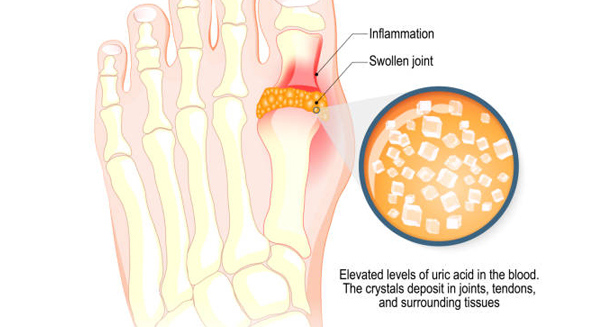
The causes of gout are primarily linked to elevated levels of uric acid in the blood, a condition known as hyperuricaemia. When uric acid builds up, it can form sharp crystals that deposit in the joints, triggering inflammation and pain. While the biological mechanism behind gout is well understood, the causes of gout are complex and multifactorial, involving genetics, diet, kidney function, and other health conditions.
Understanding the diverse causes can help individuals reduce their risk and support healthcare professionals in designing tailored treatment strategies.
1. Overproduction of Uric Acid
In some individuals, the body naturally produces more uric acid than it can efficiently eliminate. This may be due to:
Genetic predisposition: Some people inherit a tendency to produce more purines or less effective enzymes for uric acid breakdown
High cell turnover conditions, such as psoriasis or certain cancers
Crash diets or starvation, which can increase uric acid generation
Excessive alcohol use, which raises purine metabolism and uric acid production
People who overproduce uric acid may develop gout even with normal kidney function.
2. Reduced Excretion of Uric Acid
More commonly, gout results from the kidneys failing to eliminate uric acid efficiently. This can be caused by:
Chronic kidney disease, which reduces filtration efficiency
Dehydration, limiting uric acid clearance
Certain medications, including:
Diuretics (e.g. thiazides, loop diuretics)
Low-dose aspirin
Cyclosporine and other immunosuppressants
In such cases, even moderate uric acid production can result in crystal accumulation.
3. Dietary Triggers
While diet alone rarely causes gout, it can significantly influence uric acid levels, particularly in susceptible individuals. Foods high in purines include:
Red meat and organ meats (e.g. liver, kidneys)
Seafood, especially shellfish and oily fish like sardines
Alcohol, especially beer and spirits
Sugary drinks and foods high in fructose, which increase uric acid synthesis
Frequent consumption of these foods can precipitate acute attacks in those with underlying hyperuricaemia.
4. Obesity and Metabolic Syndrome
Obesity is a significant risk factor for gout. It contributes by:
Increasing uric acid production
Decreasing renal excretion efficiency
Promoting insulin resistance, which is linked to elevated uric acid levels
People with metabolic syndrome—characterised by central obesity, hypertension, high triglycerides, and insulin resistance—are at particularly high risk of developing gout.
5. Medical Conditions
Several health conditions are known to increase gout risk:
Hypertension
Diabetes mellitus
Hypothyroidism
Sleep apnoea
Organ transplants, especially those requiring immunosuppressive drugs
These conditions often overlap, amplifying the risk and complexity of gout management.
6. Family History
Gout tends to run in families. Individuals with a close relative (parent or sibling) who has gout are more likely to develop the condition themselves. This is due to:
Shared genetic traits
Common lifestyle habits
Similar metabolic profiles
Family history should be considered a strong risk indicator and used to guide early screening and prevention strategies.
7. Trauma or Surgery
Physical stress, such as joint injury or recent surgery, can trigger an acute gout attack. The reason is not fully understood, but stress on a joint may mobilise uric acid or create conditions favourable to crystal deposition.
Postoperative patients with known hyperuricaemia are often monitored closely to prevent flare-ups during recovery.
8. Age and Hormonal Changes
Men over 40 are more likely to develop gout due to naturally higher uric acid levels
Women are largely protected until menopause, after which oestrogen levels drop and uric acid levels may rise
Hormonal shifts, including from medications like testosterone therapy, can also impact uric acid metabolism
Summary of Major Causes
| Category | Examples |
| Overproduction | Genetics, high purine turnover, alcohol |
| Underexcretion | Kidney disease, diuretics, dehydration |
| Dietary factors | Red meat, seafood, alcohol, sugary drinks |
| Medical conditions | Obesity, diabetes, hypertension, hypothyroidism |
| Genetics | Family history of gout |
| Physical triggers | Trauma, surgery |
| Hormonal influence | Menopause, testosterone therapy |
Conclusion | Causes of Gout
The causes of gout are diverse and often interrelated, combining genetic, metabolic, dietary, and lifestyle factors. While some risk factors like age or genetics are unchangeable, others—such as diet, hydration, and medication use—can be addressed to reduce uric acid levels. By understanding the causes of gout, patients and healthcare providers can work together to prevent flare-ups and manage long-term health effectively.