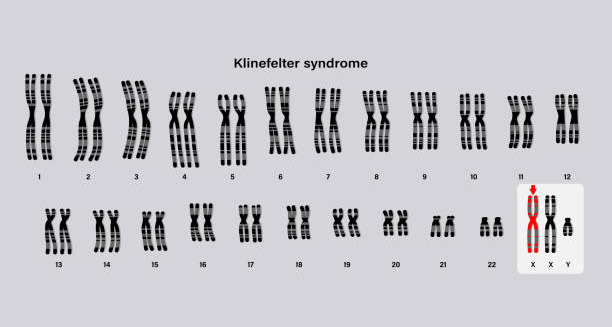

The causes of Klinefelter syndrome lie in a genetic error that results in an extra X chromosome being present in a male’s cells.
Most males have a 46,XY chromosome pattern. Individuals with Klinefelter syndrome typically have 47,XXY. This extra X chromosome happens randomly during the formation of sperm or egg cells. The causes of Klinefelter syndrome are not inherited. They do not come from anything the parents did before or during pregnancy. Instead, they are spontaneous errors in cell division that happen by chance.
One key cause is called nondisjunction. This means chromosomes fail to separate properly during meiosis, the process that forms sperm and eggs. Nondisjunction can happen in the mother or the father. This results in a sperm or egg with an extra X chromosome. When this abnormal cell combines with a normal cell from the other parent, the embryo ends up with an XXY pattern. This disrupts normal male sexual development and other body processes.
Genetic factors behind causes of Klinefelter syndrome
It is important to stress that Klinefelter syndrome is not inherited. The genetic changes happen randomly and do not pass from parent to child. This means couples with one affected child do not have a much higher chance of having another. This unpredictability can make it hard for families to prepare, especially since the condition often stays hidden until adulthood.
Some factors might slightly raise the risk. Advanced maternal age is one. Studies show older women may have a slightly higher chance of chromosomal abnormalities like Klinefelter syndrome. However, most cases happen in pregnancies of women under 35. The impact of advanced paternal age is less clear and needs more study.
Besides the common 47,XXY pattern, there are more complex types. These include 48,XXXY; 48,XXYY; and 49,XXXXY syndromes. These forms involve extra X and/or Y chromosomes. They are rarer and usually cause more severe symptoms. Their cause is similar—nondisjunction during meiosis—but the greater chromosome number leads to stronger effects.
Mosaicism and biological impact in causes of Klinefelter syndrome
Mosaic Klinefelter syndrome is another form. Here, some body cells have the normal 46,XY pattern, while others have 47,XXY. This happens due to cell division errors after fertilisation, early in embryo growth. People with mosaicism usually show milder symptoms. They may keep fertility and normal testosterone. This variation shows how symptoms can differ, even though the causes come from random chromosome errors.
The extra X chromosome affects the testes’ development and male hormone production like testosterone. Both males and females have X chromosomes, but in Klinefelter syndrome, the extra X changes how genes work. These genes control sexual development, growth, and brain function. The altered gene expression causes the diverse symptoms in affected males.
Scientists continue to study causes of Klinefelter syndrome to better understand how these genetic differences affect body and mind development. They look at gene activity, epigenetics (how genes turn on or off without DNA changes), and chromosome interactions. These studies help improve diagnosis, treatment, and personalised care.
Prevention, screening, and understanding causes of Klinefelter syndrome
Despite genetic progress, it is impossible to prevent the random chromosome errors that cause Klinefelter syndrome. But knowing about the condition and detecting it early can improve outcomes. Early treatment like hormone therapy, learning support, and fertility help can make a big difference.
Prenatal screening tests, such as non-invasive prenatal testing (NIPT) and chorionic villus sampling (CVS), can detect chromosome abnormalities including Klinefelter syndrome during pregnancy. These tests are not routine but offered when there is a specific reason.
In summary, the causes of Klinefelter syndrome come from random errors in chromosome separation during sperm or egg formation. This leads to a male child with an extra X chromosome. The errors are not inherited and have no clear warning. While factors like older maternal age may raise risk slightly, most cases happen spontaneously. Understanding these genetic causes helps doctors support patients better and helps families understand the diagnosis.