Mental Matters

Mental Matters

  • Health & Wellness
  • Mental Health
  • Live Better
  • Directory
  • Articles & Guides
  • Advertise
  • Blog
  • Fields
  • Health & Wellness
  • Mental Health
  • Live Better
  • Directory
  • Articles & Guides
  • Advertise
  • Blog
  • Fields
  • Health & Wellness
  • Mental Health
  • Live Better
  • Directory
  • Articles & Guides
  • Advertise
  • Blog
  • Fields
  • Health & Wellness
  • Mental Health
  • Live Better
  • Directory
  • Articles & Guides
  • Advertise
  • Blog
  • Fields

Diagnosis and Staging of Bladder Cancer

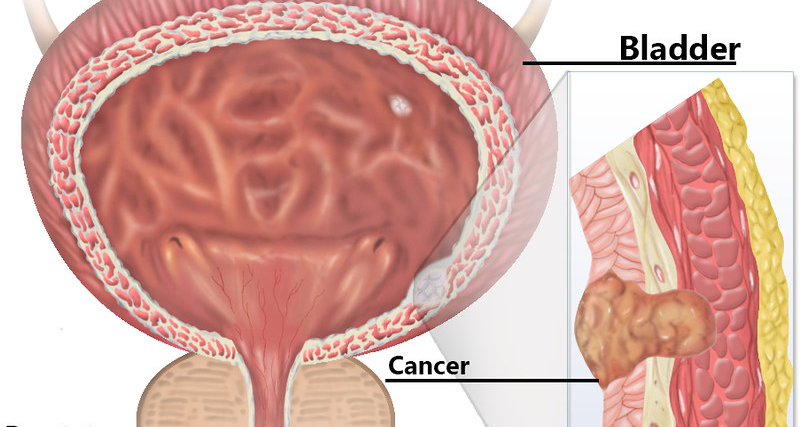
Medical illustration of bladder cancer showing tumour growth and bladder wall cross-section used in diagnosis and staging.

An anatomical illustration showing a cross-section of the bladder with visible tumour growth, used to explain bladder cancer diagnosis and staging.

Diagnosis and Staging of Bladder Cancer

Early detection is crucial in bladder cancer because timely treatment significantly improves outcomes. Diagnosis and staging of bladder cancer involves a combination of clinical assessment, urine tests, imaging, and biopsy procedures.

1. Medical history and physical exam

  • A doctor will assess urinary symptoms, smoking status, occupational exposure, and family history.
  • A physical exam may include a pelvic or rectal examination to detect abnormalities.

2. Urinalysis and urine cytology

  • Doctors test the urine for blood, infection, or abnormal cells
  • Urine cytology involves examining urine under a microscope to look for cancerous cells.

3. Cystoscopy

  • Doctors insert a thin, flexible tube with a camera through the urethra to view the inside of the bladder
  • If doctors find a suspicious area, they take a biopsy and send it for laboratory testing.

4. Imaging tests

  • Ultrasound: Often used as a first-line test.
  • CT urogram or MRI: Provides detailed images of the bladder, kidneys, and surrounding structures.
  • Intravenous pyelogram (IVP): An older method using X-rays and dye to examine the urinary tract.

5. Biopsy and pathology

  • Tissue samples are analysed to determine:
    • Cancer type
    • Grade (how abnormal the cells are)
    • Depth of invasion (superficial vs. muscle-invasive)

Staging bladder cancer:

  • Stage 0: Cancer cells found only on the bladder surface (non-invasive).
  • Stage I: Cancer has invaded the bladder lining.
  • Stage II: Cancer has spread into the muscle layer.
  • Stage III: Cancer has reached surrounding tissue or reproductive organs.
  • Stage IV: Cancer has spread to distant organs (metastatic).

Grading system:

  • Low-grade (well-differentiated): Less aggressive, lower risk of spread.
  • High-grade (poorly differentiated): More likely to invade deeper and recur.

In South Africa, government hospitals and urology units offer cystoscopy and biopsy services, though wait times may vary. Private hospitals usually provide faster access.

Diagnosis and Staging of Bladder Cancer

Proper staging guides treatment decisions and prognosis. Doctors often treat early-stage bladder cancer with local therapies, while advanced cases typically require systemic treatment.

👉 [Next: Treatment Options for Bladder Cancer]



Diagnosis and Testing for Bladder Stones
Causes and Risk Factors of Bladder Stones
Sherwood Children’s Centre Durban
Bladder Stones
Bladder Cancer

Related Posts

Human Papillomavirus
Health Conditions

Human Papillomavirus

July 25, 2025

Human papillomavirus is one of the most common sexually transmitted infections in...

Doctor checking blood sugar of pregnant woman
Diabetes in Pregnancy

Diabetes in Pregnancy

June 18, 2025

Diabetes in Pregnancy – Overview The condition Diabetes in pregnancy refers to...

Mental Matters

Facebook Instagram

Your Weekly Dose of Mental Health Support
– Straight to Your Inbox

  • Your journey to better mental health starts here—with expert insights and helpful resources delivered weekly.


© 2025 Mental Matters. All rights reserved. The content on this website is intended for informational purposes only and does not constitute medical advice, diagnosis, or treatment. Please consult a qualified health professional for any medical concerns.

Quick Links

  • Directory

  • Advertise

  • Conditions

  • Real Talk

  • Eating Disorders

  • Depressed

  • Autism

  • Community

  • Resources

About

  • Get In Touch

  • Home

  • Privacy Policy

  • Suicide Prevention Support

  • Terms & Conditions

© 2025 Mental Matters. All rights reserved.

No Result
View All Result
  • Health & Wellness
  • Mental Health
  • Live Better
  • Directory
  • Articles & Guides
  • Advertise
  • Blog
  • Fields

© MENTAL MATTERS 2024