
Diagnosis of Food Allergy
The diagnosis of food allergy involves a detailed medical history, physical examination, and allergy testing. Because food allergy symptoms can resemble other conditions—like food intolerances or gastrointestinal disorders—accurate diagnosis is essential to avoid unnecessary food restrictions and to prevent life-threatening reactions in true allergy sufferers.
Medical History and Symptom Review
A doctor or allergy specialist will ask:
What foods were eaten before symptoms appeared
How quickly symptoms developed
What type of symptoms occurred (e.g., rash, swelling, breathing issues)
Whether reactions have worsened over time
If there is a family history of allergies, asthma, or eczema
This helps determine if the reaction is consistent with an IgE-mediated allergy (fast onset and potentially severe) or a non-IgE-mediated allergy (delayed and typically digestive or skin-related).
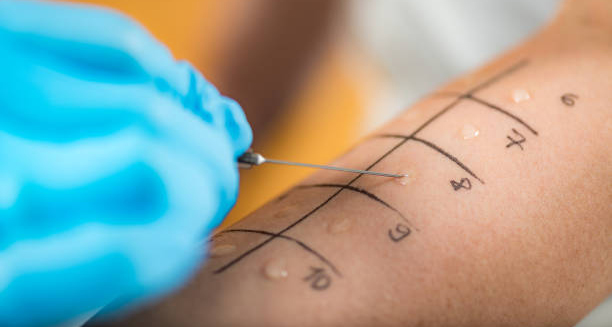
Skin Prick Testing
A small amount of the suspected allergen is placed on the skin
The skin is pricked, and the area is observed for swelling or redness
Results are available within 15–20 minutes
A positive result suggests sensitisation but does not confirm clinical allergy alone
This test is safe and commonly used in children and adults.
Blood Tests (Specific IgE)
Measures the level of allergy antibodies (IgE) to specific foods
Useful for guiding diagnosis when skin testing is not possible
May be less specific than skin testing
Helps rule in or out foods when there’s uncertainty
High IgE levels suggest a stronger reaction risk, but levels do not always correlate with severity.
Oral Food Challenge
Considered the gold standard for diagnosis
The suspected food is given in small, increasing amounts under medical supervision
Monitored closely for any reaction
Helps confirm or rule out allergy in borderline or unclear cases
This must only be performed in clinics with emergency facilities, especially for high-risk allergens like peanuts or shellfish.
Elimination Diets (For Non-IgE Allergies)
Used to diagnose delayed or digestive-type allergies
The suspected food is removed from the diet for 2–4 weeks
Reintroduced under supervision to see if symptoms return
Often used for milk, soy, or wheat in infants and toddlers
Diagnosis of Food Allergy
The diagnosis of food allergy should never be based on self-testing or guesswork. Proper medical evaluation ensures safe, effective management and reduces the risk of unnecessary dietary restrictions.
[Next: Treatment of Food Allergy →]