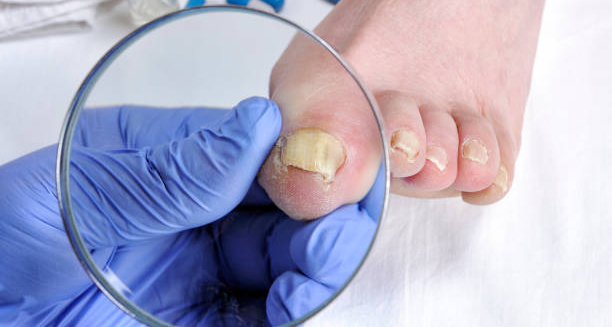

Diagnosis of Fungal Nail Infection
The diagnosis of fungal nail infection is primarily clinical, based on how the nail looks and changes over time. However, because fungal nail infection can resemble other nail disorders, confirmation through testing is often recommended—especially before starting long-term antifungal treatment.
Clinical Examination
A healthcare provider will begin by:
Examining the appearance and texture of the affected nail
Asking about the duration and progression of symptoms
Checking for signs of athlete’s foot or fungal skin infection elsewhere on the body
Reviewing medical history, including any chronic conditions (like diabetes or vascular disease)
The doctor may also examine other nails to check for early signs in unaffected areas.
Laboratory Testing
To confirm the diagnosis and identify the specific type of fungus, the following tests may be done:
1. Nail Clipping or Scraping
A sample of the nail or debris underneath is collected
Sent to a lab for microscopy and fungal culture
This helps determine whether dermatophytes, yeasts, or moulds are involved
2. KOH Preparation
A potassium hydroxide (KOH) test dissolves nail keratin and allows fungal elements to be seen under a microscope
Results are quick, often available within 1–2 days
3. PCR Testing (if available)
More advanced clinics may use polymerase chain reaction (PCR) to detect fungal DNA
This method is faster and more accurate but not widely available
Testing helps guide the choice of treatment and avoid unnecessary medication use, particularly in people with coexisting nail disorders like psoriasis.
Differential Diagnosis
Conditions that may resemble fungal nail infection include:
Psoriasis – may cause pitting, discolouration, and thickened nails
Trauma – can lead to bruising or detachment of the nail
Eczema – may cause nail ridging or brittleness
Bacterial infections – especially around the nail fold
Diagnosis of Fungal Nail Infection
Getting the right diagnosis of fungal nail infection ensures targeted treatment, avoids mismanagement, and improves long-term outcomes.