
The diagnosis of hookworm is essential for timely treatment and the prevention of long-term complications such as chronic anaemia and malnutrition. Because the symptoms often mimic those of other gastrointestinal or nutritional disorders, accurate diagnosis relies on a combination of clinical evaluation, laboratory confirmation, and sometimes advanced testing. Early detection not only improves patient outcomes but also plays a critical role in reducing transmission within communities.
Clinical Assessment and History
In endemic regions, clinical suspicion is the starting point. Physicians typically consider hookworm in patients presenting with:
- Unexplained anaemia
- Persistent fatigue
- Abdominal discomfort
A detailed medical history strengthens the diagnostic process. Key questions often include:
- Does the patient frequently walk barefoot?
- Do they work in agriculture or construction?
- What is their access to sanitation and clean water?
Children, pregnant women, and manual labourers in low-resource settings are particularly at risk.
Physical Examination Indicators
Physical signs that may point toward hookworm include:
- Pallor, reflecting anaemia
- Ground itch, a localized rash at the site of larval skin penetration
- Stunted growth in children
Although these clues support suspicion, they are not definitive and must be confirmed through testing.
Stool Microscopy: The Gold Standard
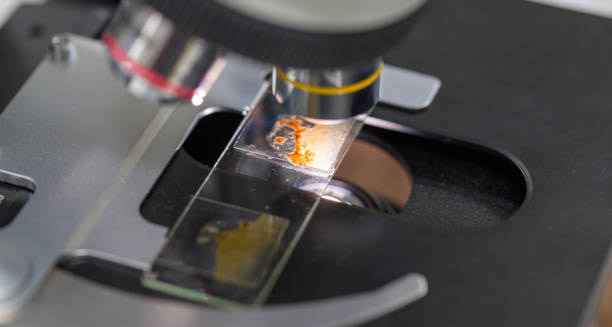
The primary diagnostic method for hookworm is microscopic examination of stool samples. This involves identifying hookworm eggs under a microscope, typically using the Kato-Katz technique, a simple and cost-effective tool widely used in endemic regions. Hookworm eggs usually appear in stool 5–7 weeks after infection, once adult worms begin laying eggs.
However, stool microscopy has limitations in low-intensity infections, as egg counts may fluctuate and intermittent shedding can lead to false negatives. To improve accuracy, clinicians often:
- Collect multiple stool samples over several days
- Use concentration techniques like the formalin-ether method for enhanced egg detection
Molecular and Advanced Diagnostic Techniques
In research and specialized settings, PCR (Polymerase Chain Reaction) assays are increasingly used. PCR can detect hookworm DNA in stool samples with high sensitivity and species-level specificity, distinguishing between Necator americanus and Ancylostoma duodenale. However, these tests are costly and not widely accessible in low-resource areas.
Blood Tests and Indirect Indicators
A complete blood count (CBC) can provide supportive evidence, though it is not diagnostic on its own. Common findings include:
- Microcytic, hypochromic anaemia (low haemoglobin and low mean corpuscular volume)
- Eosinophilia, which often accompanies parasitic infections
While not definitive, these results combined with clinical suspicion can prompt further investigation.
Serology and Endoscopy
Serological tests, which detect antibodies against hookworm antigens, have limited practical use due to cross-reactivity with other helminths and inability to distinguish active from past infections.
In rare cases, endoscopy may incidentally reveal adult worms attached to the intestinal mucosa, but this approach is neither practical nor standard for diagnosis in most settings.
Emerging Point-of-Care Tools
Rapid diagnostic tests for hookworm are under development, aiming to deliver affordable, easy-to-use solutions for rural health facilities. These innovations could transform diagnosis in resource-limited regions by allowing on-the-spot detection without advanced labs.
Public Health and Screening Implications
Accurate diagnosis also plays a vital role in public health planning, particularly in mapping infection prevalence and implementing mass deworming campaigns. In high-burden areas, presumptive treatment of school-aged children and pregnant women during the second and third trimesters is often recommended, even without individual stool testing, as the benefits outweigh the risks.
Overcoming Diagnostic Challenges
One of the greatest challenges is that many hookworm infections remain asymptomatic, or symptoms such as fatigue are normalized in endemic communities. This makes active surveillance, routine screening, and integrated control programs essential for reducing disease burden.
Summary
To summarise, the diagnosis of hookworm relies on a tiered approach:
- Clinical suspicion based on symptoms and risk factors
- Stool microscopy as the gold standard
- Supportive tests such as CBC and, where available, molecular diagnostics
Early and accurate diagnosis not only guides effective treatment but also breaks the cycle of reinfection that perpetuates poor health in affected communities.