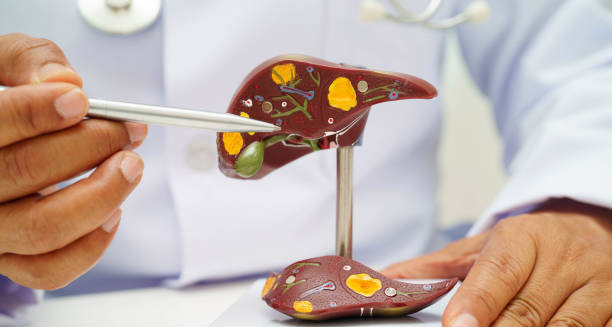
This educational photo shows a doctor holding a detailed anatomical model of the liver while pointing to key structures involved in jaundice diagnosis. Diagnosing jaundice typically includes a thorough clinical evaluation, blood tests to assess bilirubin levels, liver function tests (LFTs), and imaging like ultrasound or CT scans to detect bile duct blockages or liver abnormalities. This visual underscores how understanding liver and bile system anatomy is crucial for identifying the underlying cause of jaundice—whether due to liver disease, hemolysis, or bile duct obstruction—and guiding effective treatment.