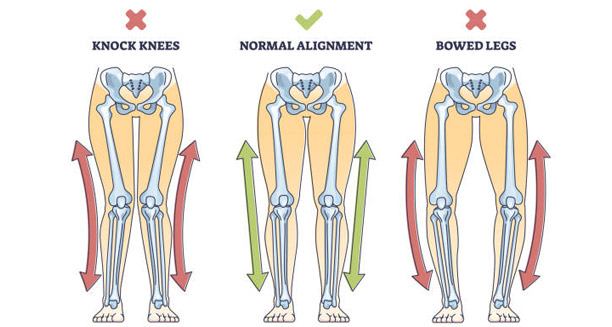

Diagnosis of knock knees involves a comprehensive evaluation that takes into account the individual’s medical history, physical appearance, gait pattern, and any underlying conditions contributing to the alignment issue.
A doctor starts by talking through the person’s symptoms and past health problems. They then look at the body’s structure and how the person walks. Each case is different, especially in children and adults. That’s why a personal approach helps make the diagnosis clear and guides the right treatment plan.
Diagnosis of Knock Knees in Young Children
In babies and toddlers, slightly bent or knock-kneed legs often form part of normal growth. Paediatricians usually spot this during regular check-ups. If the leg position seems typical for the child’s age and the child shows no signs of pain or walking problems, doctors usually just keep an eye on things. At this stage, they mainly rely on what they see and how the child grows over time. No advanced scans or tests are needed unless something seems off.
As children grow older, especially after age seven, or if teenagers or adults show signs of knock knees, doctors dig deeper. They want to know if the condition is caused by illness, keeps getting worse, or is linked to something else. A full medical history is taken to look for root causes. These might include poor nutrition, past injuries, bone problems, infections, or family history. For example, if close family members had rickets or Blount’s disease, doctors will take a closer look.
Physical Exam and Gait Analysis for Diagnosis of Knock Knees
Next comes a physical exam. The doctor watches how the person stands and walks. They may ask the person to put their feet together. If the knees touch but the ankles stay far apart—more than 8 to 10 centimetres—it often points to a strong case of knock knees. The doctor also checks if one leg is longer, whether the hips move well, and if there’s any swelling, pain, or muscle weakness.
Sometimes a gait test is done to see how the person walks. This is helpful when knock knees change how someone moves. In special clinics, labs use motion sensors to track walking. These results help doctors decide if braces, therapy, or even surgery might be needed.
Imaging and Lab Tests in the Diagnosis of Knock Knees
To confirm the diagnosis of knock knees, X-rays are usually the first choice. These scans show how the bones line up. Doctors often take the X-rays while the person is standing to see how their legs carry their weight. They measure the angle between the thigh bone and the shin to see how severe the bend is.
If the case looks more complicated, doctors may order extra tests like MRIs or CT scans. These give a better look at the soft parts inside the knee, like cartilage and ligaments. They’re especially helpful if the person feels pain or has swelling. An MRI can show early signs of joint wear, damaged cartilage, or fluid inside the knee.
Blood tests usually aren’t needed. But if a doctor suspects the knock knees are caused by another illness, they might check blood levels of calcium, vitamin D, or signs of infection or inflammation. In rare cases, a genetic test might be done if doctors think the problem runs in the family.
Monitoring and Special Tools for Diagnosis of Knock Knees
For kids and teens, tracking growth over time is important. Regular check-ups help spot if the knees are getting better, staying the same, or getting worse. If the angle gets worse, doctors may act early to avoid future problems. Growth charts and bone age scans from hand X-rays can help measure changes during childhood.
Photos can also be useful. Parents might be asked to take pictures of their child standing in the same way over time. These pictures help doctors spot changes without needing repeated X-rays.
In adults, especially those with knee pain or joint wear, the focus shifts. The doctor still checks for knock knees but also looks at how the problem affects walking, balance, and joint health. Movement tests, squats, and balance checks give clues about what’s going on.
Classifying Severity in the Diagnosis of Knock Knees
Once doctors are sure about the diagnosis of knock knees, they decide how serious it is—mild, moderate, or severe. This step helps guide treatment. Mild cases might only need regular checks or exercise. Severe ones could require braces or surgery.
In short, the diagnosis of knock knees needs a full check—talking to the patient, watching how they move, taking X-rays, and sometimes doing lab tests. Finding the problem early makes it easier to treat. Whether the goal is to help a child grow properly or ease pain in adults, a clear diagnosis leads to better care and less chance of long-term joint damage.