
Diagnosis of lung disease requires a thorough, multi-step approach that considers the patient’s medical history, lifestyle, symptoms, physical examination findings, and a series of targeted investigations. Since lung diseases can range from mild and reversible conditions like asthma to life-threatening illnesses such as lung cancer or pulmonary fibrosis, accurate and timely diagnosis is essential for guiding appropriate treatment and preventing irreversible damage.
Taking Medical History
The first and most critical step in diagnosing lung disease is a detailed medical history. Healthcare providers ask about the nature, length, and severity of symptoms like coughing, breathlessness, chest pain, and tiredness. They also ask about smoking habits, work exposures, past infections, family history of lung illnesses, and if the patient lives in an area with high pollution. This information helps doctors narrow down possible causes.
Physical Examination
Next, doctors perform a physical exam focusing on the lungs and breathing. They watch how the patient breathes, check the chest for deformities or distress signs, and listen to lung sounds with a stethoscope. Abnormal sounds—such as wheezing, crackles, low breath sounds, or dullness to tapping—can give early clues about lung problems and where they are.
Imaging Tests for Lung Disease
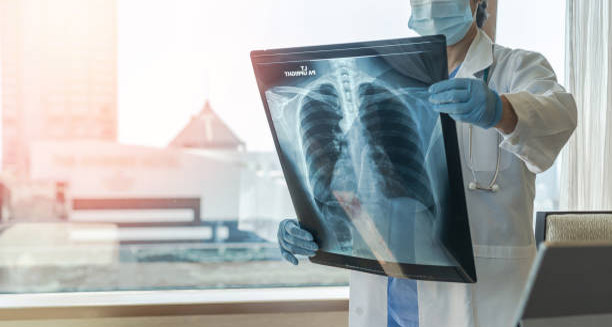
Doctors use imaging tests to confirm the diagnosis of lung disease. The most common is a chest X-ray. It shows infections like pneumonia, tumors, fluid build-up (pleural effusion), or chronic diseases like emphysema. For more detail, doctors use a high-resolution computed tomography (HRCT) scan. HRCT finds early lung scarring, widened airways (bronchiectasis), nodules, and blood vessel changes more clearly than a standard X-ray.
Pulmonary Function Tests
Pulmonary function tests (PFTs) check how well the lungs work. These tests include spirometry, which measures airflow and lung volume, and diffusion tests, which show how well gases move from lungs to blood. PFTs help tell obstructive diseases (like asthma or COPD) apart from restrictive diseases (such as pulmonary fibrosis or sarcoidosis). They also help track disease progress or response to treatment.
Oxygen Measurement Tests
Pulse oximetry is a simple, non-invasive test that measures blood oxygen levels. It gives quick info about how well oxygen moves through the body. For more precise results, especially during sleep or exercise, doctors use an arterial blood gas (ABG) test. ABG measures oxygen, carbon dioxide, and blood acidity directly. It is useful for very sick patients or those with suspected breathing failure.
Testing for Infections
When infection is suspected, doctors order sputum analysis. They collect mucus coughed up from the lungs and test it for bacteria, viruses, or fungi. Sputum tests can also find cancer cells in patients suspected of lung cancer. If tuberculosis is suspected, special cultures or fast molecular tests like GeneXpert are done.
Bronchoscopy
Bronchoscopy is a key test when other imaging is unclear. Doctors insert a thin, flexible tube with a camera into the airways to look inside the lungs. They can take tissue samples (biopsies), wash out the lungs (lavage), or remove blockages. Bronchoscopy helps diagnose infections, cancers, or interstitial lung diseases.
Lung Biopsy
Sometimes doctors need a lung biopsy for a clear diagnosis. They get tissue during bronchoscopy, use a needle guided by CT scans, or do surgery like video-assisted thoracoscopic surgery (VATS). They examine the samples under a microscope for inflammation, scarring, infection, or cancer cells. Biopsy confirms diseases like pulmonary fibrosis, sarcoidosis, or rare cancers.
Allergy and Autoimmune Testing
Allergy testing happens if asthma or allergic bronchopulmonary aspergillosis (ABPA) is suspected. Tests include skin prick tests and blood tests for specific antibodies (IgE). If doctors suspect autoimmune lung disease from conditions like lupus or rheumatoid arthritis, they check blood markers like ANA, RF, or ANCA.
Diagnosing Lung Disease in Children
Diagnosing lung disease in children is harder. Young kids often cannot do spirometry or clearly explain symptoms. Doctors rely on clinical judgement, family history, and easier tests like pulse oximetry, chest X-rays, or overnight oxygen studies. Parents’ reports of noisy breathing, poor feeding, or slow growth are very important.
Genetic Testing
Genetic testing is a new tool in lung disease diagnosis. For inherited conditions like cystic fibrosis or alpha-1 antitrypsin deficiency, genetic tests confirm diagnosis. This helps guide treatment early and supports family planning with personalised care.
AI and Computer Tools
Artificial intelligence (AI) and computer tools help read images and lung function data. AI spots small problems that doctors might miss. This helps diagnose lung disease earlier and assess risk better.
Challenges and Ongoing Monitoring
Doctors sometimes misdiagnose or delay lung disease diagnosis, especially early on when symptoms are mild or look like heart problems or anxiety. Therefore, doctors often need to monitor patients over time and repeat tests if symptoms change or do not improve.
Summary
The diagnosis of lung disease needs a full, team-based approach. From medical history and physical exams to advanced imaging, lung tests, and biopsies, each step adds to the full picture. Timely and correct diagnosis improves patient outcomes, allows early treatment, and lowers the risk of problems from missed or untreated lung disease.