
Diagnosis of Measles
Diagnosis of measles relies on both clinical checks and lab tests. In many cases, trained healthcare workers can make a quick diagnosis based on the typical signs and symptoms. This is especially true during an outbreak or in unvaccinated groups. Still, lab testing is important to confirm the illness, rule out other diseases, and guide public health actions. Because measles spreads so easily, fast and accurate diagnosis of measles is key to stopping outbreaks and protecting vulnerable people.
Clinical Diagnosis
The first step in the diagnosis of measles is a full check-up and history. The illness usually follows a clear pattern, which helps doctors recognise it.
Doctors often ask about:
• Exposure history – recent contact with a measles case, being at large gatherings, or travel to outbreak areas.
• Vaccination history – people without full MMR vaccination are at higher risk.
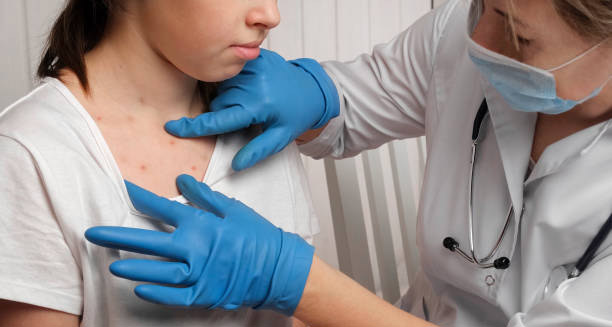
• Classic symptoms – the triad of fever, cough, and red eyes raises suspicion. Koplik spots and the spreading rash make the diagnosis more certain.
In areas where measles is common or during an outbreak, doctors may rely on a clinical diagnosis of measles without waiting for test results if the patient shows clear signs.
Koplik Spots: A Key Clinical Indicator
One of the strongest clues in the diagnosis of measles is the presence of Koplik spots. These small white spots appear in the mouth one to two days before the rash. Their presence is unique to measles, but they vanish quickly. If a doctor checks too late, the spots may no longer be visible.
Laboratory Confirmation
Clinical signs are often enough for skilled doctors, but lab tests give the final proof. They are also vital for public health tracking.
- Serology (Antibody Testing)
• Measles IgM antibodies show up within 3 days of rash and last 4–8 weeks.
• A positive IgM test confirms recent infection.
• IgG antibodies can also be tested in two samples weeks apart. A rise in IgG proves a new infection. - PCR Testing (Polymerase Chain Reaction)
• Samples from the throat, nose, or urine can be tested by PCR.
• PCR is very accurate and can detect measles early, even before IgM appears. - Virus Culture
• Rare in clinical care because it takes too long.
• Still used in research or outbreak investigations to study the virus.
Differential Diagnosis
Other illnesses can look like measles. Doctors use lab tests and their clinical judgment to separate them. Possible look-alikes include:
• Rubella – milder, without Koplik spots.
• Roseola – rash appears after fever ends.
• Scarlet fever – linked to sore throat and a rough rash.
• Dengue fever – rash and fever but no cough or Koplik spots.
• Drug reactions – fever and rash but different overall pattern.
Public Health and Reporting
In many countries, measles is a notifiable disease. This means all suspected or confirmed cases must be reported to health authorities. Quick reporting allows for:
• Tracing of contacts and vaccination of exposed people
• Quarantine to stop further spread
• Outbreak control plans to begin at once
Close teamwork between doctors and public health officials is essential.
Importance of Timely Diagnosis of Measles
When diagnosis of measles is delayed, problems rise quickly. Delays can cause:
• Worsening illness and more complications
• More spread to babies, pregnant women, and people with weak immunity
• Wrong treatment due to misdiagnosis
Doctors are encouraged to stay alert, especially with unvaccinated patients or during outbreaks. Acting early saves lives and prevents further spread.