
Erythromelalgia
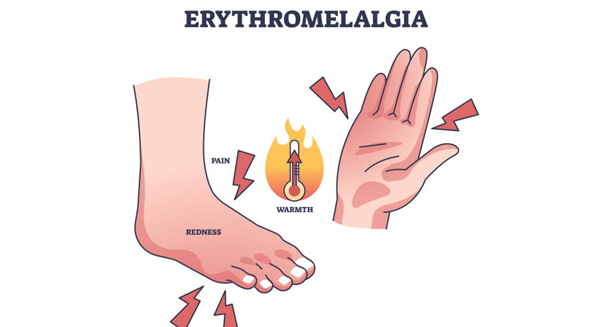
Doctors define erythromelalgia as a rare condition that causes episodes of burning pain, redness, and increased temperature in the hands, feet, or sometimes the face or ears. Erythromelalgia symptoms are typically triggered by heat, exercise, or stress, and they improve with cooling or rest. The name comes from Greek words meaning “red limb pain”.
This condition can range from mildly irritating to severely disabling. Attacks can last from minutes to hours and may occur several times a day or only occasionally. For some people, the symptoms become chronic and interfere with sleep, mobility, or everyday activities.
There are two main types:
Primary erythromelalgia, which occurs without another underlying condition and may be inherited in some families
Secondary erythromelalgia, which develops due to another health issue such as blood disorders, autoimmune diseases, or nerve damage
Although rare, this condition can significantly impact quality of life if not managed properly. It is more common in women than men and often begins in middle age, though children and adolescents can also be affected.
Erythromelalgia
In South Africa, awareness of erythromelalgia is low, and many cases may go misdiagnosed. People living in hot climates or rural areas may struggle to manage symptoms without access to supportive treatments.
Recognising erythromelalgia early helps patients take control of triggers, seek medical care, and avoid unnecessary suffering.
Understanding the Impact of Erythromelalgia
Erythromelalgia, while rare, is a condition that can greatly affect those who suffer from it. The intense burning pain, redness, and heat in the limbs can range from an occasional nuisance to a debilitating chronic issue. Because symptoms often mimic other disorders, erythromelalgia is frequently misdiagnosed or dismissed, especially in healthcare systems with limited resources or low awareness. Early recognition is key to improving patient outcomes and helping individuals regain control over their quality of life.
Differentiating Between Primary and Secondary Forms
Distinguishing between primary and secondary erythromelalgia is crucial for appropriate treatment. Primary cases may be genetic and require symptom-focused care, while secondary erythromelalgia needs investigation into underlying causes such as blood disorders or nerve damage. A proper diagnosis not only ensures that serious root conditions are not missed but also allows for a more tailored and effective management plan, especially when symptoms are severe or persistent.
Raising Awareness and Improving Access to Care
In South Africa and similar regions, increasing awareness of erythromelalgia among both healthcare providers and the public is essential. Hot climates and limited access to specialised care can make symptom management more difficult, particularly in rural communities. With improved recognition, education, and support, patients can learn to identify triggers, make lifestyle adjustments, and access the care they need to manage this challenging condition more effectively.
[Next: Causes of Erythromelalgia →]