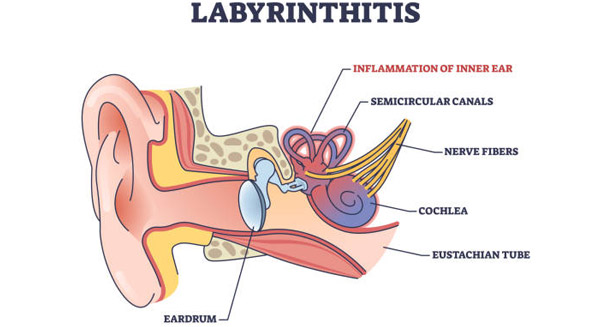

Overview of labyrinthitis describes an inflammation of the inner ear’s labyrinth, a delicate structure responsible for hearing and balance. This condition often appears suddenly and causes dizziness, vertigo, hearing loss, and other symptoms that disrupt daily life. The labyrinth includes the cochlea (hearing) and the vestibular system (balance). When inflamed, it sends confusing signals to the brain, impairing balance and hearing.
Labyrinthitis usually follows a viral infection, such as a cold, flu, or respiratory illness. Symptoms often appear suddenly without warning. People experience spinning sensations (vertigo), balance problems, and partial hearing loss in one ear. Nausea and vomiting may also occur, increasing discomfort. Though often self-limiting and resolving in weeks, proper medical care is essential to rule out serious conditions and prevent complications.
This overview of labyrinthitis places it within vestibular disorders—a group of conditions affecting the inner ear and balance. These include benign paroxysmal positional vertigo (BPPV), vestibular neuritis, and Ménière’s disease. Labyrinthitis differs because it affects both hearing and balance nerves, causing a mix of symptoms. This makes it more disabling than some related conditions and often calls for targeted treatment and rehabilitation.
The main cause of labyrinthitis is viral infection. Viruses like influenza and herpes simplex cause inflammation that disrupts nerve signals from the inner ear to the brain. Less commonly, bacterial labyrinthitis arises from chronic middle ear infections or meningitis, especially in children. Bacterial cases are more severe and require urgent antibiotics to avoid lasting damage.
Labyrinthitis can be acute or chronic. Acute labyrinthitis starts suddenly and peaks quickly, then improves over a few weeks. Chronic labyrinthitis is rare but causes ongoing balance problems, motion sensitivity, or hearing difficulties. This form often needs vestibular rehabilitation therapy (VRT) to help the brain adjust to altered inner ear signals.
Diagnosis of labyrinthitis is mainly clinical, relying on patient history and symptoms. No single test confirms it, so doctors rule out other causes like stroke, Ménière’s disease, or tumors. Hearing tests, balance assessments, and imaging like MRI or CT scans may support diagnosis or exclude serious issues.
Treatment depends on the cause. Viral labyrinthitis often clears up on its own, with medicines to ease symptoms such as anti-nausea drugs, corticosteroids, and vestibular suppressants. Bacterial labyrinthitis needs antibiotics and close monitoring due to risks of permanent hearing loss or neurological problems. Rest, hydration, and gradual activity help recovery and prevent complications like weakness or anxiety.
Rehabilitation plays a key role in recovery. Some patients feel unsteady or dizzy after the acute phase. Vestibular rehabilitation therapy uses exercises to improve balance, eye stability, and movement. It helps the brain compensate for damaged inner ear signals and supports those with prolonged or chronic labyrinthitis.
Prevention options are limited but include reducing viral infections by practising good hygiene, getting vaccinated (e.g., flu shots), and treating respiratory illnesses early. Avoiding loud noises and managing chronic ear infections may reduce bacterial labyrinthitis risk.
The prognosis is mostly good. Most people recover fully within weeks, especially with viral labyrinthitis. However, older adults or those with neurological issues may have lasting symptoms such as chronic dizziness, hearing loss, or psychological effects like anxiety and depression due to unpredictable balance problems.
In summary, this overview of labyrinthitis highlights a condition that, while often temporary, can greatly affect daily life and wellbeing. Knowing its causes, symptoms, diagnosis, and treatment helps manage it effectively. With timely care and support, most patients regain full health, though some need ongoing attention for lasting effects.