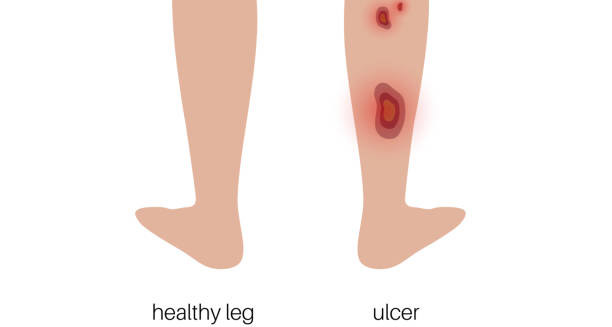

Leg ulcer is a chronic condition that refers to an open sore or break in the skin of the lower leg that fails to heal within a typical timeframe, usually around two weeks.
A leg ulcer often forms because of poor blood flow, vein problems, or pressure on certain parts of the leg. These sores can be small and shallow or deep and painful. Sometimes they even reach muscle or bone. No matter how deep they are, leg ulcers always show that something is wrong with the body’s natural healing ability.
Leg ulcers are more than just skin problems. They usually signal a bigger issue with blood circulation. The lower legs are especially at risk because they are far from the heart. They rely on strong veins and arteries to keep blood moving. When blood flow slows down—due to weak veins, blocked arteries, or illnesses like diabetes—the skin does not get enough oxygen or nutrients. This slows healing and raises the chance of injury or infection.
Types of Leg Ulcers and Their Root Causes
There are different kinds of leg ulcers. Each one has a specific cause and unique features. The most common is the venous leg ulcer. It makes up around 70% of all leg ulcer cases. This type happens when the veins in the legs do not work well. Blood pools in the lower legs, building pressure and causing swelling. This pressure breaks down the skin and soft tissues.
Arterial ulcers come from poor blood flow in the arteries. They are usually linked to blocked arteries in the legs. These ulcers hurt more and heal slower than venous ones. Other kinds include diabetic ulcers, pressure sores (also called bedsores), and wounds from injuries. Each type needs a different treatment plan.
Most often, a leg ulcer appears as a sore on the lower leg that won’t go away. Even with normal wound care, it stays open. The area may feel sore, swollen, discoloured, or leak fluid. In severe cases, the sore might smell bad or show signs of infection—like redness, warmth, or pus. Since these wounds last a long time, they can greatly affect a person’s life. They cause pain, reduce movement, and may lead to sadness or even depression.
Diagnosing and Managing a Leg Ulcer
To diagnose a leg ulcer, doctors do more than just look at the wound. They examine the area and try to find out what is causing the problem. This might include checking for weak veins or artery blockages, testing blood sugar levels, or doing a Doppler ultrasound. Knowing the exact type and cause of the ulcer is key. Proper treatment must focus on the root cause, not just cover the sore.
Leg ulcer care often involves a team of experts. Treatment can include wound cleaning, using compression wraps (especially for venous ulcers), improving blood flow, and sometimes surgery. Doctors may give antibiotics to fight infection. They also guide patients on better habits like staying clean, moving more, losing weight, and quitting smoking. For people with diabetes or artery problems, keeping blood sugar in check and boosting blood flow are also vital.
Prevention Tips for Leg Ulcers
Stopping leg ulcers before they start is just as important as treating them. People with risks—such as varicose veins, diabetes, smoking, being overweight, or not moving much—should watch their leg health closely. They can take simple steps to help. For example, they can lift their legs during the day, wear special stockings, use lotion to keep skin soft, and eat balanced meals. These small actions can help stop new ulcers from forming or old ones from returning.
Growing Concern: Overview of Leg Ulcer in the Global Population
All over the world, more people now have leg ulcers. This is mainly because of older age groups and rising cases of obesity and long-term illness. Experts believe that about 1% of people in rich countries will have a leg ulcer during their lives. Older adults are most at risk, especially those over 65. Because of this, it’s more important than ever to catch the problem early and treat it quickly. Doing so helps patients feel better and also eases the pressure on hospitals and clinics.
Summary and Importance of Early Action in Overview of Leg Ulcer
In summary, a leg ulcer is not just a skin wound. It shows deeper health problems, especially with blood flow or sugar levels. Whether it is from vein issues, artery disease, diabetes, or pressure, each ulcer needs the right test and care plan. By learning what a leg ulcer is, spotting it early, and getting the right help, people can heal better and avoid bigger problems. Teaching the public, offering regular checks, and using full care methods are all vital steps in managing this common and serious condition.