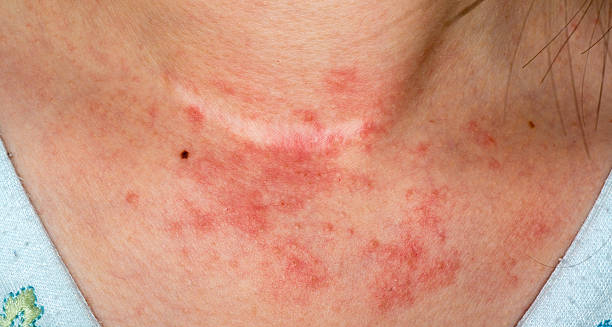

Symptoms of Contact Dermatitis
Symptoms of contact dermatitis can vary in intensity and appearance depending on the severity of the reaction, the area of the body affected, and whether the cause is an irritant or an allergen. Regardless of the trigger, contact dermatitis leads to inflammation of the skin, which can cause significant discomfort and even impact daily activities or sleep in severe cases.
General Symptoms
Redness (erythema): Often the first visible sign, usually limited to the area of contact
Itching (pruritus): Ranges from mild to intense and is especially common in allergic reactions
Dryness and flaking: The skin may become rough and scaly, particularly in chronic or repeated exposure
Swelling: Localised puffiness is a typical response to inflammation
Blistering: In more severe cases, small fluid-filled blisters may form, which can ooze and crust over
Burning or stinging sensation: Especially with irritant contact dermatitis
The symptoms usually appear within minutes to hours of exposure in irritant contact dermatitis and may take 24–72 hours to develop in allergic contact dermatitis. The affected area is typically well-defined and corresponds to the contact site. For example, reactions from jewellery often appear on the neck, ears, or wrists, while hand dermatitis is common among people exposed to soaps or chemicals.
Chronic Symptoms | Symptoms of Contact Dermatitis
If the skin is repeatedly exposed to the triggering substance, the dermatitis can become chronic. Chronic contact dermatitis may result in:
Thickened skin (lichenification)
Cracks or fissures that bleed
Pigment changes, with darkening or lightening of the skin
Chronic symptoms can also become more widespread and difficult to manage if the inflammation persists or spreads through scratching.
Secondary Infections | Symptoms of Contact Dermatitis
Open blisters or broken skin may become infected with bacteria such as Staphylococcus aureus, leading to yellow crusting, pain, and swelling. In such cases, antibiotics may be needed.
In conclusion, symptoms of contact dermatitis range from mild redness and itching to severe blistering and cracking. Early recognition and avoidance of the offending agent help prevent worsening of the condition and improve quality of life.
[Next: Diagnosis of Contact Dermatitis →]