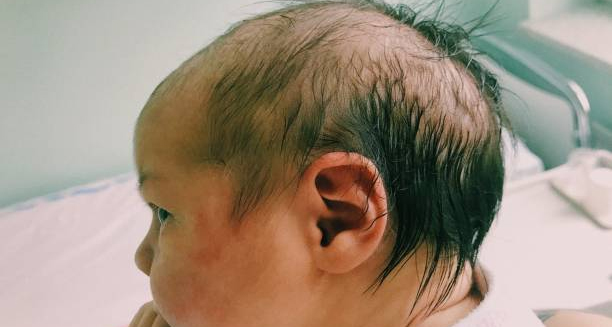

Symptoms of Craniosynostosis
Symptoms of craniosynostosis typically become noticeable within the first few months of life, as the baby’s head begins to grow abnormally due to premature suture fusion. While some cases are immediately obvious, others may be subtler and detected only during routine health checks. Recognising the signs of craniosynostosis early is vital for ensuring timely treatment.
Abnormal Head Shape
The most prominent symptom is an unusual head shape that does not improve or changes asymmetrically over time. The shape depends on which suture is affected:
Sagittal suture fusion causes a long, narrow head (scaphocephaly)
Coronal suture fusion leads to a flat forehead on one side (plagiocephaly)
Metopic suture fusion results in a pointed forehead (trigonocephaly)
Lambdoid suture fusion causes flattening at the back of the head
Unlike positional plagiocephaly (flat head syndrome), the skull in craniosynostosis feels rigid or ridged over the affected suture.
Palpable Ridge | Symptoms of Craniosynostosis
Parents or doctors may feel a raised, firm ridge along the fused suture line. This is caused by the overlapping of bones where the suture has prematurely closed.
Facial Asymmetry
Some children develop visible facial imbalance, such as uneven eye placement, misaligned ears, or a shifted jawline, particularly in more severe or syndromic cases.
Slow or No Head Growth
As the skull cannot expand normally, the baby’s head circumference may not increase at the expected rate. Head growth should be carefully monitored during routine paediatric check-ups.
Neurological Symptoms (in advanced cases)
Increased intracranial pressure
Developmental delays
Irritability, vomiting, or poor feeding
Bulging fontanelle
Seizures (rare)
In summary, symptoms of craniosynostosis include an abnormal head shape, palpable ridges, and possible developmental issues. Identifying these signs early can lead to prompt intervention and better outcomes.
[Next: Diagnosis of Craniosynostosis →]