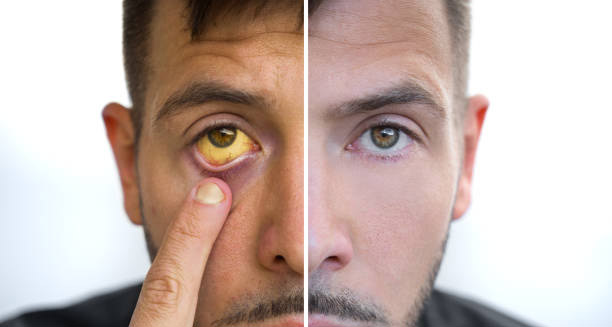

Jaundice presents primarily as a yellowish discolouration of the skin, the sclera (whites of the eyes), and mucous membranes due to the accumulation of bilirubin in the bloodstream. Although this yellowing is the most recognisable sign, jaundice often occurs with a range of other symptoms depending on its underlying cause. These other symptoms give important clues and help doctors tell the types of jaundice apart—pre-hepatic, hepatic, or post-hepatic. They also show how serious the condition is and how quickly it needs treatment.
Jaundice does not happen by itself. Usually, it shows the liver, bile ducts, or blood cells are not working properly. That is why the symptoms that come with jaundice are very important. Knowing them helps doctors spot jaundice early. It also guides the right treatment and can save lives.
Visible Yellowing of the Skin and Eyes
The most clear and common symptom of jaundice is yellowing of the skin and the whites of the eyes. This yellow colour shows up best in natural light. It usually starts on the face and upper body and then moves down. The yellow can be very light or dark orange-yellow, depending on how much bilirubin builds up and how long it stays high.
In newborns, the yellowing often starts at the head and spreads to the chest, belly, and limbs. Doctors use this pattern along with bilirubin tests to decide if treatment is needed.
In adults, the eyes often show yellowing first because the whites have no pigment. This makes the yellow colour easy to see.
Dark-Coloured Urine
One key symptom of conjugated jaundice—common in liver or bile duct problems—is dark urine. Patients describe it as tea-coloured, cola-coloured, or brownish. This happens because conjugated bilirubin dissolves in water and passes into urine when its blood levels rise.
Dark urine often shows before the skin turns yellow. Some people may not notice it if they do not check their urine often. Still, doctors always ask about urine colour during exams.
Pale or Clay-Coloured Stools
Bile pigments give poop its normal brown colour. In obstructive jaundice, bile cannot reach the intestines because of blockages. As a result, stools turn pale, grey, or clay-coloured.
This change is a strong sign of post-hepatic jaundice caused by gallstones, bile duct narrowing, or tumours. Sometimes stools also become greasy or smell bad. This happens if fat absorption drops because bile is missing in the gut.
Generalised Itching (Pruritus)
Itching, called pruritus, is a common and troubling symptom, especially in jaundice with blocked bile flow. Bile salts build up in the skin and cause intense itching. It often gets worse at night.
Itching can affect any part of the body but is usually all over and very strong. This leads to scratching, skin damage, and even infections. People with long-term liver disease or bile duct blockage say itching is one of the worst symptoms. It often does not get better with antihistamines, making it harder to treat.
Fatigue and Weakness
Fatigue is a common symptom in jaundice, especially when caused by liver problems like hepatitis, cirrhosis, or autoimmune disease. The liver is key for energy and clearing toxins. When it gets hurt, energy drops.
Patients often feel very tired, unmotivated, and mentally foggy. This can seriously affect daily life and might be blamed on other causes if jaundice is mild or new.
Abdominal Pain or Discomfort
Pain or discomfort in the belly often comes with jaundice, depending on the cause.
In pre-hepatic jaundice caused by red blood cell breakdown, pain may be slight or missing.
In hepatitis, people feel dull pain or discomfort in the right upper belly where the liver sits.
In obstructive jaundice, sudden, sharp pain may mean gallstones. Slow, worsening pain could mean a tumour pressing on bile ducts.
Belly swelling, fullness, or tenderness when touched can also happen with liver or bile duct problems.
Nausea and Vomiting
Nausea, poor appetite, and vomiting often occur with jaundice from liver illness. These symptoms show the liver’s role in digestion and detox.
People with sudden hepatitis may feel sick and avoid fatty foods. Those with liver cirrhosis might have ongoing nausea that feels like indigestion.
Fever and Chills
Fever with jaundice usually means infection. One dangerous illness is ascending cholangitis, a bile duct infection often caused by gallstones blocking bile flow. Classic signs are:
- Fever
- Right upper belly pain
- Jaundice
Other infections causing fever and jaundice include viral hepatitis, malaria, and leptospirosis. Chills and shaking support infection as the cause and need urgent care.
Weight Loss and Anorexia
Unplanned weight loss with jaundice may point to cancer. Pancreatic cancer, bile duct cancer, and liver cancer are common causes. Older adults or people who smoke, drink heavily, or have liver disease should be checked closely.
Loss of appetite often comes before weight loss. It may happen because of belly discomfort, nausea, or liver problems.
Confusion or Mental Changes (Hepatic Encephalopathy)
In late liver disease, jaundice can come with mental changes like confusion, forgetfulness, mood swings, and less alertness. This is called hepatic encephalopathy. It happens when toxins, like ammonia, build up because the damaged liver can’t remove them.
This is a medical emergency. If untreated, it can lead to coma or death. It mostly occurs in chronic liver failure or sudden liver injury.
Signs in Newborns
Babies with jaundice mainly show yellow skin and eyes. But some signs warn of serious problems:
- Poor feeding
- Sleepiness or hard to wake up
- High-pitched crying
- Arching back (sign of nerve irritation)
- Seizures
These may mean kernicterus, a rare but serious brain injury caused by very high bilirubin.
Conclusion
The symptoms of jaundice range from small changes in skin colour to serious, life-threatening problems. Yellow skin and eyes remain the key signs. Other symptoms like dark urine, pale stools, itching, and belly pain guide doctors to the cause. Early spotting of these signs, especially when combined, helps start the right treatment fast.
Whether jaundice comes from infection, metabolism, blockage, or cancer, checking symptoms is crucial. People who notice yellow skin or eyes with other signs should get medical help quickly.