
Kawasaki disease is characterised by a distinct set of symptoms that typically evolve in three phases: acute, subacute, and convalescent.
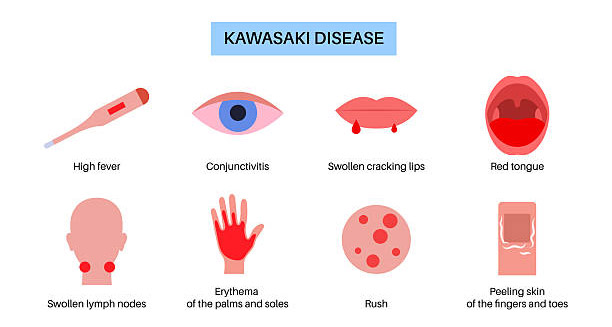
The most common and first symptom is a high fever that doesn’t go away with regular fever medicine. But this illness also causes many other signs. These signs can affect the skin, eyes, mouth, lymph nodes, and heart. Knowing these signs well helps with early treatment, which lowers the risk of serious heart problems.
Children with Kawasaki disease often look very unwell. They may feel tired, upset, and uncomfortable. Since many early signs look like viral infections, the disease can be hard to catch at first. But the mix of specific symptoms helps doctors tell it apart from other illnesses.
1. Persistent High Fever
The first and most clear sign is a fever that lasts more than five days. It usually stays above 38.5°C and can even reach 40°C. Unlike other childhood fevers, this one doesn’t respond to paracetamol or ibuprofen.
The child may also be very cranky and tired. Sleep problems are common. Many parents bring their child to the doctor because of this long, high fever.
2. Red Eyes (Conjunctival Injection)
Another early sign is red eyes without pus. Both eyes look bloodshot, but there’s no sticky discharge like in infections. This often starts a few days after the fever.
The eyes don’t usually hurt. The redness may last for several days. Although it fades on its own, it’s an important clue when seen with other signs.
3. Mouth and Tongue Changes
The mouth and lips change in clear ways. Common signs include:
- Dry, cracked, or bleeding lips
- A red, bumpy tongue (called a “strawberry tongue”)
- Bright red mouth and throat
These changes often make it hard for the child to eat or drink. The strawberry tongue is a strong sign of Kawasaki disease and appears in only a few other illnesses.
4. Rash
Many children get a rash within the first few days. It can look different in each case. Some rashes are flat with raised bumps, while others look like scarlet fever or hives.
It usually starts on the chest or belly and can spread to the arms, legs, or face. It might itch a little, but it doesn’t usually peel or blister at this stage. The rash helps confirm the diagnosis when seen with other signs.
5. Hand and Foot Changes
The hands and feet are often affected too. Look for:
- Swelling and redness of the palms and soles
- Peeling skin on fingers and toes, usually two to three weeks after the fever starts
These changes may cause pain. Some kids may even stop walking due to discomfort.
6. Swollen Neck Glands
Swollen lymph nodes in the neck are another common sign. Usually, just one large node is involved, more than 1.5 cm wide. It’s often on one side and may hurt to touch.
Though neck swelling is seen in many infections, it’s more telling when combined with other symptoms of Kawasaki disease.
7. Stomach and Gut Symptoms
Some children also have stomach issues early on. These may include:
- Vomiting
- Loose stools
- Belly pain
- Poor appetite
These signs are not specific, which can make early diagnosis harder. Sometimes, the pain may look like appendicitis and lead to surgery by mistake.
8. Heart-Related Symptoms of Kawasaki Disease
Even if heart problems don’t show at first, they often appear in the second phase of the illness. These may include:
- Swollen heart muscle (myocarditis)
- Swelling around the heart (pericarditis)
- Enlarged heart arteries
- Heart murmurs
- Irregular heartbeats
While most kids don’t show early heart symptoms, some may have chest pain, tiredness, or shortness of breath later on. These signs mean the child needs urgent heart tests.
9. Other Possible Signs
Kawasaki disease can also cause:
- Joint pain or swelling
- Trouble sleeping
- Peeling skin around the private parts
- Mood changes or low energy
Doctors look at the full picture of symptoms. No one sign can confirm it alone. But the group of signs makes the diagnosis much clearer.
10. Phases of Symptom Progression
The symptoms of Kawasaki disease appear in three main phases:
a) Acute Phase (Days 1–14)
High fever, red eyes, rash, mouth changes, and swollen glands are present.
b) Subacute Phase (Days 15–30)
Fever fades, but peeling skin, crankiness, and heart problems may begin.
c) Convalescent Phase (Weeks 4–8)
All visible symptoms go away. Blood test results also return to normal. However, heart monitoring is still important.
Final Thoughts
Spotting the symptoms of Kawasaki disease early is the key to getting treatment in time. Though each sign might look like other childhood illnesses, the full group of signs—especially if they don’t respond to usual medicine—points clearly to Kawasaki disease.
The mix of long-lasting fever, red eyes, mouth changes, rash, swollen neck glands, and hand or foot symptoms should lead to urgent testing and care. Doctors, parents, and emergency teams should all stay alert—especially for children under five.