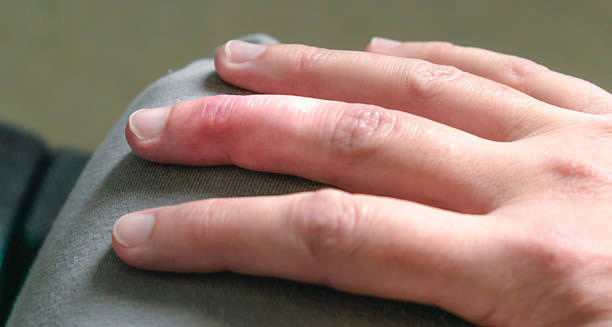

Symptoms of Mallet Finger
The symptoms of mallet finger are usually easy to spot once you know how the injury looks. This condition happens when the extensor tendon on the back of the finger is torn or pulled off the bone. Since this tendon normally straightens the tip, the finger droops and cannot be lifted actively.
Mallet finger may not always hurt, but the signs are often clear when compared with a healthy finger. Recognising the symptoms of mallet finger early is critical. Quick treatment often prevents long-term deformity, stiffness, or loss of function. Let’s look at these symptoms in detail to see how mallet finger affects comfort, dexterity, and daily tasks.
Drooping Fingertip
The most obvious sign is a drooping fingertip, also called an “extensor lag.” This happens because the tendon can no longer lift the tip. The joint near the nail stays bent and will not straighten on its own.
This droop is:
- Most obvious when the hand is upright.
- Usually affects one finger, often the middle, ring, or little finger.
- Persistent, even when the person tries to extend the finger.
This “mallet-like” appearance is what gives the injury its name.
Inability to Straighten the Fingertip
Another key symptom of mallet finger is the loss of active extension. The fingertip stays curled down while the middle and base joints move normally. This stands out when making a fist, releasing a grip, or trying to point.
Although drooping is a visual clue, the inability to extend the fingertip clearly separates mallet finger from other finger injuries.
Swelling and Redness
Soon after the injury, swelling and redness often appear around the top joint. This results from tissue damage or, sometimes, a small fracture. Common features include:
- Puffiness near the nail bed.
- Redness or warmth from inflammation.
- Tenderness when touched.
The swelling may develop quickly or slowly, depending on the type of injury.
Pain or Discomfort
Pain is not always severe. For many people, it feels like a dull ache or mild tenderness. Some, however, feel sharper discomfort when pressure is applied. Pain may:
- Stay localised to the top joint.
- Get worse with movement or accidental knocks.
- Be mild enough to ignore, which delays treatment.
The pain often fades within days, but the tendon damage remains unless treated.
Bruising and Discolouration
In some cases, bruising also appears around the injured joint. This is more common after sports accidents, crush injuries, or when the tendon pulls off a piece of bone. The bruising may look bluish, purple, or yellow as it heals. Interestingly, the amount of bruising does not always match the severity of the tendon injury.
Nail Bed or Skin Changes
Because the injury is close to the nail, small changes may appear. These can include nail lifting, redness around the cuticle, or minor cuts from the impact. Rarely, the nail grows abnormally if the nail matrix is injured. This usually happens when the skin is also cut.
Sensory Symptoms
Some patients notice tingling, numbness, or reduced sensation near the fingertip. This usually comes from swelling pressing on nerves or irritation of nearby tissues. If numbness does not go away, it may signal a more serious problem and needs medical attention.
Functional Limitations
Even with little pain, mallet finger limits daily tasks. People may struggle with:
- Holding objects firmly.
- Typing or using a mouse.
- Fastening buttons or tying shoelaces.
- Playing music or using tools.
If untreated, the finger can stiffen in a bent position. This makes fine motor skills even harder over time.
Symptom Differences: Tendon vs Bony Mallet Finger
Both tendon-only and bony mallet injuries share similar signs. However, bony mallet finger often shows more swelling, sharper tenderness, and more obvious deformity. X-rays usually confirm this type. Distinguishing the two matters, since treatment can differ.
When to Seek Medical Help for Symptoms of Mallet Finger
Anyone with fingertip droop and loss of extension should see a doctor right away. Early splinting restores function in most cases. Waiting too long raises the risk of deformity, stiffness, or arthritis.
Emergency care is especially important if the injury has open wounds, a lifted nail, or visible joint misalignment.
Misdiagnosed or Overlooked Symptoms
Sometimes mallet finger is mistaken for a minor sprain because pain is not intense. Athletes may ignore it, thinking it’s just a jammed finger. Older adults with stiff joints or people with nerve problems may also miss the signs. Public awareness of the classic symptoms of mallet finger is essential to prevent lasting disability.
Summary
The symptoms of mallet finger include fingertip droop, loss of extension, swelling, redness, mild pain, bruising, nail changes, and functional problems. Some are subtle, but the inability to straighten the fingertip should never be ignored. Quick medical care prevents long-term deformity and keeps hand function intact.