
Treatment of Cholesteatoma
Treatment of cholesteatoma involves surgical removal, as medication alone cannot eliminate the condition. Although non-cancerous, a cholesteatoma behaves aggressively — expanding and destroying delicate middle ear structures. Prompt surgery is therefore critical to remove the lesion, prevent complications, and restore or preserve hearing.
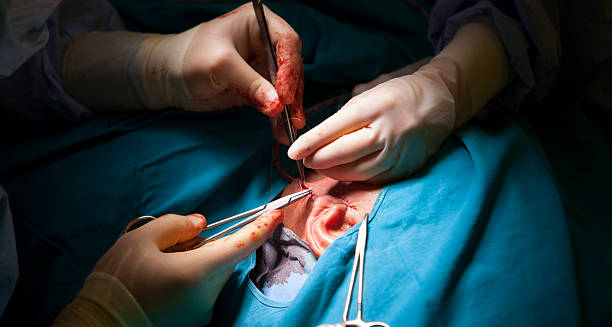
The most common procedure is a mastoidectomy, performed under general anaesthesia. This involves removing the cholesteatoma and any infected or eroded tissue from the mastoid bone and middle ear. The surgery may be done in one of two approaches:
- Canal wall-up mastoidectomy: preserves the posterior ear canal wall, resulting in a more natural ear canal shape. Suitable for smaller cholesteatomas with minimal spread.
- Canal wall-down mastoidectomy: removes the canal wall for wider access and easier surveillance. Used in larger or more aggressive cases.
Often, the surgery is combined with tympanoplasty, where the eardrum is reconstructed using graft material, usually taken from the patient’s own tissue (e.g., temporalis fascia or cartilage). If the ossicles have been damaged, ossiculoplasty may also be performed, using prosthetic implants or reshaped natural bone to reconnect the hearing chain.
Treatment of Cholesteatoma
In severe cases or when total removal is uncertain, a second-look procedure is scheduled six to twelve months later. This allows the surgeon to inspect the ear for any residual cholesteatoma and perform further reconstruction if necessary.
Pre-surgical preparation may involve treating infections with antibiotics or ear drops to reduce inflammation. Patients are also advised to avoid getting water into the ear and to cease smoking, which can impair healing and Eustachian tube function.
Post-operatively, the ear is packed and bandaged. Recovery is typically smooth, with most patients discharged within 24–48 hours. Regular follow-up is essential to monitor healing, ensure no recurrence, and assess hearing improvement.
Hearing outcomes vary. Some patients experience full restoration, especially when ossicles are preserved or reconstructed. Others may need a hearing aid post-surgery. If the inner ear was affected, partial or complete hearing loss may be permanent.
Treatment of Cholesteatoma
Rehabilitation includes keeping the ear dry, avoiding flights or diving during recovery, and attending all follow-up appointments. In canal wall-down procedures, patients may require periodic ear cleaning to maintain hygiene in the surgically created cavity.
Because cholesteatomas can recur — even years later — long-term surveillance with otoendoscopy or MRI is important, especially in children or high-risk adults.
In summary, treatment of cholesteatoma is a surgical priority. With skilled care and regular monitoring, most patients recover well, regain hearing, and avoid long-term complications.
[Next: Complications and Recovery from Cholesteatoma →]