
Treatment of Dislocated Kneecap
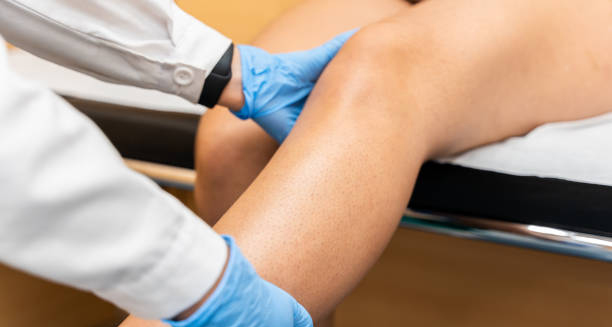
The treatment of dislocated kneecap starts with reducing the dislocation—repositioning the kneecap back into its proper place. A trained medical professional typically performs this, often in an emergency or orthopaedic setting. Once the kneecap is back in place, the focus shifts to managing pain, reducing swelling, and preventing future dislocations.
Initially, the RICE protocol—Rest, Ice, Compression, and Elevation—is recommended. Applying ice to the knee for 15–20 minutes every few hours helps reduce swelling. A medical professional usually immobilises the knee with a brace or splint for a short period to allow the soft tissue around the joint to begin healing. Crutches may be provided to keep weight off the injured leg.
Pain relief is an important part of the treatment of dislocated kneecap. Non-steroidal anti-inflammatory drugs (NSAIDs) such as ibuprofen help manage both pain and inflammation. Once swelling subsides, physiotherapy becomes the cornerstone of recovery. Rehabilitation exercises focus on strengthening the quadriceps, especially the vastus medialis oblique (VMO) muscle, which plays a key role in stabilising the patella.
Physical therapy also includes range-of-motion exercises, balance training, and gradual return-to-sport drills. Strengthening the muscles around the hip and thigh is just as important as focusing on the knee. These efforts help prevent future dislocations by improving joint stability.
In some cases, especially with recurrent dislocations or structural abnormalities, a surgeon may recommend surgery. Surgical options include tightening or realigning the tissues around the kneecap, reconstructing torn ligaments, or deepening the groove in which the kneecap sits (trochleoplasty). Arthroscopy may also be used to remove loose fragments or repair cartilage.
Treatment of Dislocated Kneecap
In South Africa, surgical treatment of dislocated kneecap is available through both public and private healthcare systems, though waiting times and access to post-operative rehabilitation may differ significantly between the two sectors. Urban hospitals often have quicker access to orthopaedic care, while rural areas may face delays in specialist treatment.
Education is a key part of recovery. Patients are advised on proper movement patterns, footwear, and activity modification. Athletes may need to modify training routines temporarily and use supportive braces during high-risk movements.
With the right treatment of dislocated kneecap, most people regain full function and return to their normal activities. However, ignoring rehabilitation or returning to sport too early increases the risk of repeat injuries and long-term knee instability.
[Next: Complications of Dislocated Kneecap →]