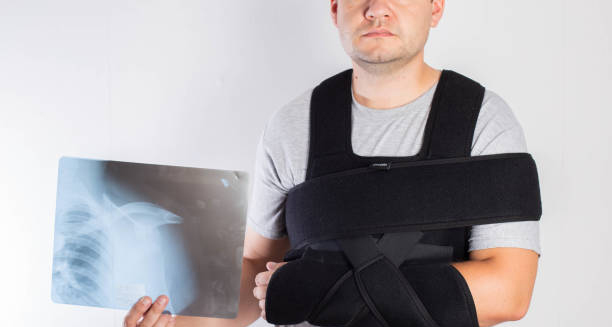
Treatment of Dislocated Shoulder
The treatment of dislocated shoulder focuses first on reducing the dislocation, followed by pain management, rehabilitation, and in some cases, surgical intervention. Reducing the dislocation means guiding the humeral head back into its socket. A trained medical professional performs this procedure, often using sedation or muscle relaxants to ease the process and reduce discomfort.
Once the shoulder is back in place, doctors immobilise the arm with a sling or brace to allow the ligaments and soft tissues to heal. The immobilisation period usually lasts one to three weeks, depending on the severity of the injury and the patient’s overall health. During this time, doctors advise patients to rest the shoulder and avoid overhead movements.
Doctors manage pain and inflammation with non-steroidal anti-inflammatory drugs (NSAIDs) like ibuprofen. Apply ice packs several times a day during the first 48 to 72 hours to reduce swelling. After the initial phase, the focus of treatment of dislocated shoulder shifts towards physiotherapy.
Rehabilitation is crucial to restoring strength and mobility. Physiotherapists guide patients through exercises designed to strengthen the rotator cuff and shoulder stabilisers. Range-of-motion work helps prevent stiffness, while resistance training improves muscle balance. A comprehensive rehab programme can also address any muscular imbalances that contributed to the dislocation.
Surgeons may recommend surgery for recurrent dislocations or associated structural damage. Surgical treatment of dislocated shoulder may involve tightening stretched ligaments, repairing torn labral tissue, or even bone grafting to deepen the shoulder socket. Surgeons often use arthroscopic procedures because they offer quicker recovery and less post-operative discomfort.
Treatment of Dislocated Shoulder
In South Africa, surgical options are available through both public and private healthcare systems. However, public hospitals may have longer waiting lists, especially for elective procedures like shoulder stabilisation surgery. Rural communities often face challenges accessing follow-up physiotherapy because ongoing rehab services may be limited.
Doctors may recommend bracing during sports or high-risk activities, especially for individuals with a history of dislocation. Long-term treatment focuses on preventing recurrence, and athletes are often encouraged to work with trainers or physiotherapists to adjust their techniques and strengthen vulnerable areas.
With the right treatment of dislocated shoulder, most patients regain full function within a few months. However, ignoring rehabilitation or returning to activity too early increases the risk of repeat injuries and long-term joint instability.
[Next: Complications of Dislocated Shoulder →]