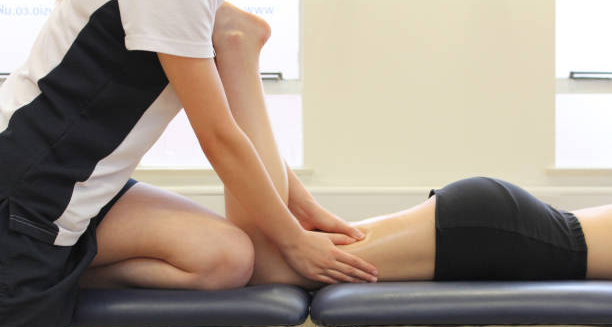

Treatment of Hamstring Injury
Effective treatment of hamstring injury requires a comprehensive and phased approach that considers the injury’s severity, the individual’s functional goals, and risk factors for recurrence. The overarching goal of the treatment of hamstring injury is to restore strength, flexibility, neuromuscular control, and confidence while minimising the risk of re-injury.
Initial treatment typically begins with the RICE protocol—rest, ice, compression, and elevation. This conservative approach is most effective within the first 48–72 hours after injury. Ice should be applied for 15–20 minutes every 2–3 hours to reduce inflammation and relieve pain. Compression wraps and gentle elevation assist in minimising swelling. In moderate to severe cases, crutches may be needed to reduce weight-bearing stress on the injured limb.
Doctors often recommend anti-inflammatory medicines, like NSAIDs, during the first stage of injury. These medicines help reduce pain and swelling. However, people should use NSAIDs carefully because using them too much might slow down healing. Therefore, it’s important to manage pain while still encouraging gentle movement and tissue repair.
Physiotherapy forms the cornerstone of hamstring rehabilitation. Initially, therapy focuses on pain reduction, restoring range of motion, and reactivating the muscle with gentle isometric exercises. As healing moves forward, patients start a planned strengthening program. This program focuses on eccentric hamstring exercises, which studies show help lower the chance of getting hurt again. Activities such as Nordic hamstring curls and single-leg Romanian deadlifts are highly effective for rebuilding strength and resilience.
Treatment of Hamstring Injury
Flexibility training is gradually introduced to prevent stiffness and restore muscle length. Careful dynamic and static stretching under professional supervision ensures the tissue heals in an elongated and functional state. Balance and proprioception exercises are also integrated to retrain neuromuscular control, which is often impaired post-injury.
Sport-specific rehabilitation becomes critical in the final stages of recovery. Athletes undergo progressive drills that replicate movements used in their sport—sprinting, cutting, jumping, and deceleration. You need to start these activities slowly and watch closely for any pain or uneven movement. Then, doctors may use tests like strength checks or hop tests to see how well the person is doing. Only after passing these tests can they return fully to play.
For Grade III injuries involving complete muscle rupture or tendon avulsion, surgical intervention may be necessary. Doctors reattach the torn muscle or tendon to its original spot. After that, patients must keep the area still for a long time and slowly start rehabilitation. Then, post-surgery physiotherapy becomes very important. This therapy can last for several months before normal movement returns.
Along with regular rehab, doctors sometimes add extra treatments like dry needling, massage, laser therapy, or platelet-rich plasma (PRP) injections. These can help support healing. While evidence on their efficacy varies, these modalities may help in managing scar tissue, promoting healing, and enhancing recovery in selected individuals.
Psychological readiness is also considered during the final phases of treatment. Fear of re-injury can hinder performance and delay return to activity. Cognitive behavioural strategies and mental skills training can improve confidence and support full reintegration into sport.
Treatment of Hamstring Injury
Ultimately, a personalised rehabilitation plan, guided by an experienced physiotherapist or sports medicine team, offers the best outcomes. The treatment of hamstring injury must be comprehensive, multidisciplinary, and tailored to individual needs to ensure long-term success and injury prevention.