
Treatment of lazy eye focuses on strengthening the weaker eye and encouraging the brain to use it more effectively.
Because the condition starts early in life, starting treatment in childhood gives the best results—ideally before age seven. Still, new research in brain flexibility shows that treatment of lazy eye can help older children, teens, and even adults. It just takes more time and effort.
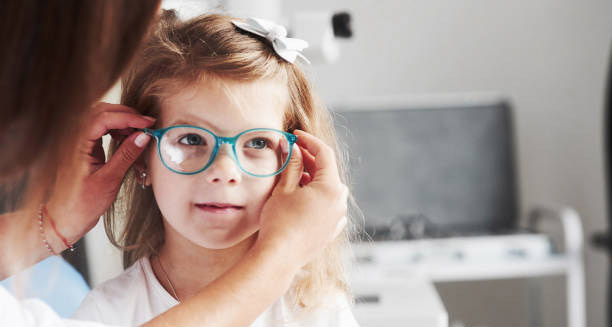
The first step is to fix any vision problems. Eye doctors usually prescribe glasses or contact lenses. These help both eyes to focus well. In some mild cases, glasses alone improve the weak eye, especially when worn early. Children should wear them all the time to help the brain adjust.
After correcting vision, doctors often use occlusion therapy, also called patching. This means placing a patch over the strong eye for a few hours each day. It forces the brain to use the weak eye. The patching time depends on age, how bad the lazy eye is, and how well the child responds. For mild cases, doctors recommend patching for two to six hours daily. Severe cases may need longer.
Patching can be tough for young kids. It may feel strange or annoying. Parents can help by adding fun activities like watching cartoons, reading, puzzles, or drawing. These help the weaker eye work harder. Reward charts or fun apps can also make patching easier.
Atropine Drops and Vision Therapy in the Treatment of Lazy Eye
Another option is atropine eye drops. These blur the stronger eye by making the pupil large and stopping it from focusing. Drops are usually used once a day. They are a good choice for kids who don’t like patches. Many studies show that atropine works just as well as patching and can be easier to use.
Some treatment plans mix patching or atropine with vision therapy. This therapy uses special eye exercises to build visual skills. These activities improve eye movement, focusing, depth vision, and working both eyes together. Kids can do these exercises at home or in a clinic, using games or digital tools. Treatment of lazy eye in this way is very helpful for older children or adults who need more support.
If crossed or misaligned eyes cause the lazy eye, eye surgery may be needed. Surgery helps the eyes point in the same direction. While surgery doesn’t fix vision in the weak eye, it helps both eyes work better as a team. After surgery, patching or therapy becomes more effective. Some patients may need more than one surgery to get the best results.
Early Surgery for Deprivation-Related Lazy Eye
When something blocks vision—like cataracts or droopy eyelids—early surgery is a must. For example, cataracts must be removed in the first few months of life. This allows the eye to start developing properly. After surgery, doctors might place an artificial lens or prescribe glasses. Then patching helps the eye start seeing well again.
People once thought that treatment of lazy eye doesn’t work in adults. But recent tools and studies now show some progress is possible. Therapies using computer programs, virtual reality, or even video games try to retrain the brain. These treatments may not bring full recovery, but they offer new hope to adults.
Monitoring Progress and Supporting Children Emotionally
Regular checkups are key during treatment. The eye doctor will track how well the weak eye sees and whether the eyes are working together. If progress slows down, they will change the plan. This might mean more patching time, starting therapy, or fixing problems like discomfort or poor cooperation.
Parents play a huge role in helping the treatment work. Kids need help understanding why they must wear glasses or use a patch. Encouragement during therapy can boost results. Families should know that vision gets better slowly, and staying consistent makes a big difference.
Treatment of lazy eye can also affect a child’s feelings. Wearing a patch or glasses may make some children feel shy or different. Kind words from parents, help from teachers, or books about patching can make them feel more confident.
In short, treatment of lazy eye aims to fix the weaker eye by using glasses, patching, eye drops, therapy, or sometimes surgery. Most children recover good vision if treated early and regularly. Even older patients now have more choices thanks to new treatments.