Study on Teenage Pregnancy in South Africa: What the Report Reveals and Recommends
South Africa’s Department of Social Development (DSD) evaluated how current policies and programmes address teenage pregnancy.
The study uncovered key challenges, highlighted regional differences, and outlined clear recommendations to reduce teenage pregnancy and better support young people
Regional differences and causes
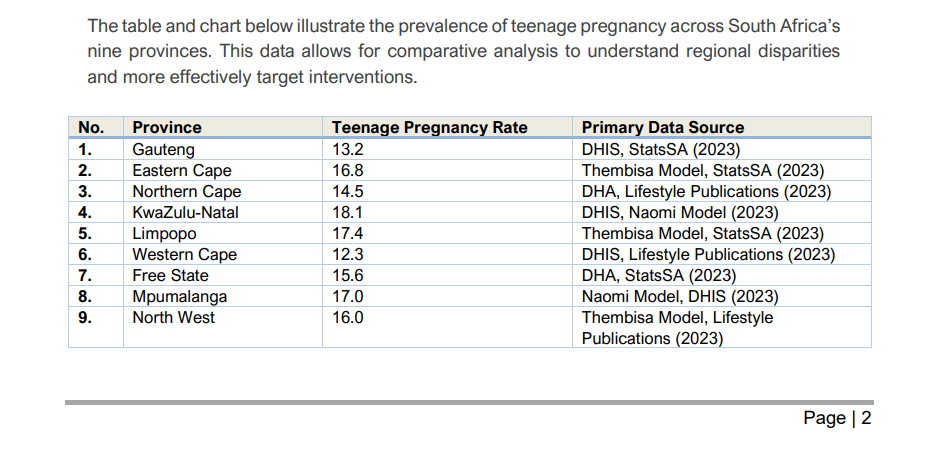
The study revealed that teenage pregnancy rates are highest in KwaZulu-Natal (18.1%) and Limpopo (17.4%). Mpumalanga (17.0%), Eastern Cape (16.8%), and North-West (16.0%) also show significantly high rates. Several factors contribute to these numbers:
- Socio-economic vulnerability
- Cultural norms
- Limited access to contraceptives and sexual and reproductive health services
- High school dropout rates
- Ineffective sex education
Key recommendations from the study
- Strengthen Leadership and Coordination
National and provincial departments—including the Department of Social Development (DSD), Department of Health (DOH), and Department of Basic Education (DBE)—must clearly define their roles.
Provincial governments and municipalities need to activate coordination forums within the next 6 to 12 months.
- Improve Data Systems
DSD, DOH, DBE, and Statistics South Africa (Stats SA) must integrate information systems and start reporting regularly on teenage pregnancy indicators within 12 to 18 months to ensure better tracking and informed planning.
- Engage Youth Meaningfully
DSD, the National Youth Development Agency (NYDA), and youth-focused civil society organisations (CSOs) must lead regular youth consultations to ensure programmes align with the actual needs of young people.
- Expand Behaviour Change Programmes
DBE, DSD, and NGOs must scale up prevention programmes in schools and communities within the next 6 to 12 months to encourage healthier choices.
- Enforce Statutory Rape Laws
SAPS, the Department of Justice (DOJ), DSD, and community structures must step up the enforcement of laws protecting girls aged 10 to 14.
- Use GIS Mapping for Planning
DSD, DOH, DBE, and local governments must adopt GIS tools within 12 months to plan services and allocate resources more effectively.
Sector-specific actions
- Social Development: DSD must roll out an integrated teenage pregnancy strategy within 6 to 12 months, assigning clear accountability.
They should recruit more social workers and prioritise the review and update of the Adolescent Sexual and Reproductive Health and Rights (ASRH&R) Framework within 6 months. - Health: DOH and NGOs must expand youth-friendly health services and outreach within 12 months.
They should also work with Stats SA to clearly track and report on sexual and reproductive health indicators within 6 to 12 months. - Education: DBE and its partners must improve tracking of learner attendance and reach out to out-of-school youth within 12 months.
They also need to replace donor-dependent projects with sustainable prevention programmes integrated into school curricula within 12 to 24 months.
This study outlines a clear, actionable roadmap for addressing South Africa’s teenage pregnancy challenge.
By focusing on coordination, data, youth involvement, and improved services, the country can create real change. And, support a healthier, brighter future for its young people.
Study: Diagnostic Evaluation of the Government’s Response to Teenage Pregnancy in South Africa (Final Report 2025)
Reviewed April 2025. Always consult a professional for individual guidance.