Mental Matters

Author name: Staff Writer

Which Attachment Style Are You?

Which Attachment Style Are You?

4 Free Tests to Help You Understand Yourself Better Have you ever wondered why you react a certain way in relationships—why you pull away when things get too close, or feel anxious when someone doesn’t text back? That could be your attachment style talking. Which Attachment Style Are You? Understanding your attachment style can be a real turning point when it comes to relationships, communication habits, and emotional well-being. It gives you a lens through which to understand your patterns—not to label or limit yourself, but to grow from them. What Is an Attachment Style? Attachment styles are the ways we emotionally bond and relate to others, shaped largely by early experiences with caregivers. Most people fall into one of these categories: These styles don’t just influence romantic relationships—they show up in friendships, work dynamics, and even parenting. If you’re curious about which one resonates with you, here are four free and credible attachment style tests to help you explore further: 1. The Attachment Style Quiz by Dr. Diane Poole Heller This quiz is short, insightful, and ideal if you’re new to attachment theory. It helps you quickly identify whether you lean toward secure, avoidant, anxious, or disorganised patterns. Website: dianepooleheller.com 2. The Attachment Project Test More in-depth than most, this test offers a detailed breakdown of your attachment style and how it might show up in your adult relationships. It’s a favourite for those seeking clarity and insight. Website: attachmentproject.com 3. YourPersonality.net Attachment Style Test If you’re a fan of data and research-backed tools, this one’s for you. It’s longer but offers a more nuanced picture of your attachment behaviours, with scores across multiple dimensions. Website: yourpersonality.net 4. Simply Psychology Attachment Style Quiz This quiz is concise and easy to digest, offering a straightforward introduction to the topic. Great for those who want a fast overview without diving too deep—yet. Website: simplypsychology.org Why Understanding Your Attachment Style Matters This isn’t about boxing yourself in—it’s about understanding yourself better. Maybe you’ve always thought your emotional reactions were “just the way you are.” Learning about attachment styles can show you that those responses often have roots in past experiences. Once you understand where your patterns come from, you can start shifting them. It might take time, and it definitely takes effort—but things can change. Whether that’s through therapy, self-reflection, or just being more aware in your day-to-day interactions, it all adds up. Think of your attachment style as a starting point, not a life sentence. Want to Dig a Little Deeper? If avoidant attachment sounds like it might be your thing—or someone close to you—you might want to explore it a bit more. We’ve put together a piece that breaks it down in a simple, relatable way. Check it out: What Does It Mean to Be Avoidant? Mental Matters is a resource and information platform. We do not provide medical advice, diagnosis, or treatment. While the information on our website is for general awareness and support, it should not replace professional advice. For any mental health concerns, please consult a qualified healthcare or mental health professional. Lisa Smith Therapeutic Social Worker & Therapist Lincoln Hall & Co Eyewear Optician Belfast Privacy Policy Terms & Conditions


Which Attachment Style Are You? Read More »

What Does It Mean to Be Avoidant?

Understanding Avoidant Behaviour and What Lies Beneath It We often hear the term “avoidant” tossed around—especially in the context of relationships. But what does it actually mean to be avoidant? And how can you tell the difference between someone who is struggling to connect and someone who is simply emotionally unavailable—or even narcissistic? Let’s unpack it. What Is an Avoidant? Being avoidant typically refers to someone who falls under the umbrella of an avoidant attachment style, one of the four main attachment styles in psychology. It usually develops early in life, often as a result of emotionally distant, inconsistent, or dismissive caregiving. People with this attachment style often struggle with emotional closeness. Vulnerability can feel unsafe. They may avoid deep conversations, appear emotionally distant, and pull away when relationships begin to feel intense or overwhelming. In more clinical terms, avoidance can sometimes overlap with Avoidant Personality Disorder (AvPD), which is much rarer and more severe. However, when most people refer to themselves—or someone else—as “avoidant,” they’re usually talking about an attachment style, not a personality disorder. What Causes Someone to Be This Way? Avoidant behaviour is often a learned coping mechanism rooted in childhood experiences. If a child grows up in an environment where emotional needs were dismissed, mocked, or met with inconsistency, they may learn that self-reliance is the safest option. As adults, this pattern can continue: So, they retreat—emotionally and sometimes physically—when things get too close or too intense. What Can Help Avoidants? Healing from an avoidant attachment style is not a quick fix, but it is absolutely possible. Some helpful steps include: This isn’t about “fixing” yourself—it’s about slowly unlearning patterns that once felt necessary for survival. How Is This Different from Narcissistic Personality Disorder (NPD)? It’s a common and important question. While both avoidants and narcissists can appear emotionally unavailable, their internal drivers are different: Put simply:→ Avoidants fear getting too close.→ Narcissists fear feeling too small. What Do Avoidants Wish Others Knew? — “I’m not cold. I’m scared.” — “I want closeness, but I don’t always know how to handle it.” — “Please don’t take my need for space personally.” — “I’m trying to unlearn what I thought love looked like.” — “Be patient. I’m working on it.” Avoidants are not broken. They’re doing their best to protect themselves in the way they’ve learned to survive. With compassion, support, and the right tools, trust can be rebuilt—and emotional safety can be learned. Resources Worth Exploring If you’ve been thinking about your attachment style and want to dig a little deeper, here are some valuable resources to check out: Mental Matters is a resource and information platform. We do not provide medical advice, diagnosis, or treatment. While the information on our website is for general awareness and support, it should not replace professional advice. For any mental health concerns, please consult a qualified healthcare or mental health professional. Lisa Smith Therapeutic Social Worker & Therapist Lincoln Brain Aneurysm Bone Cyst Bladder Stones Which Attachment Style Are You?

What Does It Mean to Be Avoidant? Read More »

This Is Where the Work Begins

Healing, heartbreak, and rebuilding from the inside out. Avoidance comes in many forms. For some, it’s dodging conflict or skipping hard conversations. For me, it was much deeper. I had a way of steering clear of the things that required real vulnerability—opening up, trusting others, showing the raw parts of myself. It wasn’t that I didn’t want to. I did—so badly. But when trust has been broken repeatedly, letting people in feels less like an invitation and more like a risk. I’ve been hurt. Betrayed. Neglected. Life has hardened me in ways I didn’t expect. And I’m not claiming innocence either—I’ve hurt people too. I’ve made mistakes, said the wrong things, stayed too long, left too late. The weight of those downfalls can be just as heavy. The past year and a half has been the most transformative period of my life. At 31, I made the decision to start facing it all: the pain, the patterns, the trauma, the shame. No more burying, no more avoiding. It hasn’t been easy—it still isn’t. But I’m slowly learning that healing doesn’t always look like peace and quiet. Sometimes it looks like sitting in discomfort, crying over things I thought I’d moved past, or forgiving myself for choices I made when I didn’t know better. My first real mountain was my first marriage. It took me six years to even begin healing from a ten-year situation that was never what I thought it was—a union built on lies, manipulation, and control. For the longest time, I blamed myself for not seeing it sooner. I questioned my worth, my intuition, my sanity. It wasn’t just a breakup—it was an unravelling of everything I believed to be true. The hardest part wasn’t losing the person—it was realising how much of myself I lost in the process. But healing can sometimes make no sense (at first). And the truth is, we don’t wake up one day and suddenly feel whole. It’s slow. It’s layered. Some days I feel strong; other days, I fall apart. But both are part of the journey. I’m sharing this not because I have all the answers, but because I know I’m not the only one. If you’ve ever felt like your pain disqualified you from peace, or your past made you unworthy of something better—know this: you’re not alone. And you are not beyond healing. This is just the beginning of my story—a story I once felt too ashamed to share, but now see as part of my becoming. To anyone climbing their own mountain right now: KEEP GOING. It’s okay to rest, to feel, to start over as many times as you need to. There is no timeline for healing—only your own. Mental Matters is a resource and information platform. We do not provide medical advice, diagnosis, or treatment. While the information on our website is for general awareness and support, it should not replace professional advice. For any mental health concerns, please consult a qualified healthcare or mental health professional. Couples Help Relationship Counsellor Randburg Live Inside Out Counselling Brackenfell Is a “Normal Life” Possible After Trauma? The Physio Crew Inside JD Gyms Bristol INSIDE EDGE PHYSIOTHERAPY Birmingham

This Is Where the Work Begins Read More »

Let your emotions breathe

Let Your Emotions Breathe

Because you’re not a robot, and you’re allowed to feel. “Our emotions need time to breathe.” It’s a phrase that hits rather deep. In a world that moves so fast — where productivity is praised, and vulnerability is often hidden behind closed doors — we forget that emotions aren’t meant to be rushed. We’re told to “just get over it” or “stay strong,” as if feeling deeply is something to be ashamed of. But here’s the truth: emotions aren’t machines we can switch off. They’re more like waves. They come, they build, they crash — and if we let them — they eventually settle. Giving your emotions time to breathe is an act of self-respect. It means slowing down, even just for a moment, and saying, “I see you. I feel this. And that’s okay.” It might look like: But what if you struggle with your emotions? What if they feel too big, too heavy — even too loud? You’re not alone. For many, emotions can feel like a flood — one that overwhelms the body and mind. But feeling deeply doesn’t mean you’re broken. It means you’re human. Here’s what might help when it all feels like too much: You don’t need to be okay all the time. Let your emotions breathe — you deserve that much. Mental Matters is a resource and information platform. We do not provide medical advice, diagnosis, or treatment. While the information on our website is for general awareness and support, it should not replace professional advice. For any mental health concerns, please consult a qualified healthcare or mental health professional. Hitting Your Limit? It Might Be Time for a Break Why Do I Feel Like This? Breathe Out Now: Ascension Counselling & Guidance Bath I Had the Dream Again Breathe Play Heal Johannesbur

Let Your Emotions Breathe Read More »

working with not against my depression

Working With – Not Against – My Depression

For the longest time, I thought I had two options: fight my depression or let it consume me. I spent years forcing myself to just push through, pretending I was fine, and convincing myself that if I just tried harder, I could shake it off. That never worked. What I’ve realised is that fighting my depression like an enemy only makes things worse. The only way forward—the only way to survive it—is to work with it, to stop resisting the reality of how I feel. And figure out how to exist alongside it. Some days, that means barely getting by. Other days, it means making room for things that help. It’s never easy, but here’s what has helped me: Letting Myself Feel What I Need to Feel For years, I was the master of pretending that I felt fine. I could plaster on a smile and fake my way through any situation. But every time I ignored my emotions, I was just setting myself up for the inevitable crash. Now, I let myself feel what I need to feel—without guilt, without shame. Some days, that means crying in the shower. Other days, it means taking the time to sit with those uncomfortable thoughts and feelings, instead of running from it. It’s messy, but it’s real. Not Beating Myself Up for Struggling I tend to be too hard on myself. I’ve spent so much time telling myself I should be doing better, that I shouldn’t feel this way, that I should just get over it. But none of that has ever helped. If anything, it’s made things worse. I’m learning—slowly—that I don’t have to be so hard on myself. I’m allowed to struggle. I don’t have to be perfect. Stepping Back When It Gets Too Much There are days when my thoughts spiral so fast I feel like I can’t breathe. The pressure, feeling overstimulated, and exhausted all pile up. Instead of forcing myself to push through, I step back. That might mean cancelling plans, turning my phone off, or spending the day in bed. And while my brain still tells me I’m being “lazy” or “weak,” I remind myself: I’m just trying to survive today. Leaning on the People Who Actually Get It I used to think asking for help made me a burden. That if I let people in on how bad things were, they’d run. Some did. But the right people—the ones who truly care—stayed. I’ve learned to lean on them, even when it’s uncomfortable. Even when it feels easier to isolate. Because no matter how much depression tries to convince me otherwise, I don’t have to do this alone. Taking Breaks Without the Guilt Depression drains the life out of me. Some days, the thought of doing anything feels unbearable. I used to force myself to push through, to keep going even when I was barely holding on. Now, I let myself take breaks. I rest when I need to. And I remind myself that doing nothing isn’t failing—it’s survival. Doing the Absolute Bare Minimum—and That Being Enough Some days, life feels impossible. Cooking is just not happening today. And the chances of me leaving the house? Forget it. I used to beat myself up over it, but now I work with my depression instead of against it. If all I can manage is microwaving food instead of cooking, that’s fine. If all I can do is crack a window instead of going outside, that’s still something. Survival mode means adjusting the bar—and that’s okay. Finding Ways to Connect (That Actually Feel Doable) Depression makes me want to disappear. And while sometimes I do need space, total isolation only makes it worse. I’ve realised that connection doesn’t have to mean seeing or checking in on people daily. Sometimes, it’s sending a short message. Sometimes, it’s just existing around people, like sitting in a coffee shop with my headphones on. Whatever feels manageable—that’s enough. Accepting That Healing Will Happen in Waves Some days, I feel like I’m making progress. Other days, I feel like I’m drowning again. I used to see this as failure, like I was back at square one. But I’ve come to understand that healing isn’t about constantly moving forward—it’s about learning to ride the waves. Some days will be better than others. That doesn’t mean I’m failing. It just means I’m human. Asking for Help—Even When It Feels Impossible I am still working on this one. Asking for help makes me feel uncomfortable, like I’m admitting I can’t handle life on my own. But the truth is, I can’t—and I don’t have to. Whether it’s therapy, medication, or just telling a friend, “Hey, I’m struggling,” letting people in has been one of the hardest but most necessary things I’ve done. Working with my depression helped a lot—giving myself grace, letting myself feel, asking for help, and taking things one step at a time. Some days are better, some are worse. But no matter how hard it gets, I remind myself: I’ve made it through every single bad day before this one. I can make it through this one too. Mental Matters is a resource and information platform. We do not provide medical advice, diagnosis, or treatment. While the information on our website is for general awareness and support, it should not replace professional advice. For any mental health concerns, please consult a qualified healthcare or mental health professional. Clinical Psychologist Centurion Clinical Psychologist Sandton Treatment for Depression What Is the Difference Between Anxiety and Depression? Clinical Depression in Adults

Working With – Not Against – My Depression Read More »

letting go

Learning to Let Go of What I Can’t Control

I’ve always struggled with wanting to help people see things from a different perspective—especially when I truly believed it was what they needed. It’s difficult to watch someone make choices that seem harmful or misguided, knowing that a shift in perspective could change everything for them. But the truth is, we all see the world through our own lens, shaped by our experiences, beliefs, and emotions. And no matter how much I care, I’ve come to understand that I cannot force someone to see what they are not ready to acknowledge. I had to accept people and situations for what they were, realising that any form of change on their part cannot come from me—certainly not from me forcing it. We change if we want to, and when we are ready for that change. And sometimes, it can cost us—we end up losing people. Letting go has been one of the hardest lessons I’ve had to learn. It requires stepping back and allowing people to navigate their own paths, even if that means watching them struggle. It doesn’t mean I don’t care; in fact, it’s quite the opposite. Sometimes, the greatest act of love is to let someone figure things out on their own, to give them space to grow at their own pace. But that doesn’t mean it doesn’t hurt. Watching someone you care about make decisions that you feel are leading them in the wrong direction can be frustrating and painful. The need to step in, to guide, to prevent pain—it’s strong. Yet, I’ve realised that my role isn’t to control or change someone’s journey. My role is to be there if and when they are ready to reach out. It’s a difficult balance to strike. But the more I practice letting go, the more peace I find. I focus on what I can control—my own actions, my own growth, and my own boundaries. And in doing so, I create space for healthier relationships, where understanding and acceptance replace frustration and resistance. Learning to let go doesn’t mean giving up. It means trusting the process, having faith that people will see what they need to see when they are ready. And in the meantime, I choose to focus on my own journey, learning and growing in the ways that I can control. Mental Matters is a resource and information platform. We do not provide medical advice, diagnosis, or treatment. While the information on our website is for general awareness and support, it should not replace professional advice. For any mental health concerns, please consult a qualified healthcare or mental health professional. The Different Kinds of Anxiety Disorders Explained Is a “Normal Life” Possible After Trauma? How to Identify Emotional Triggers Practical Tips for Managing Social Anxiety in Everyday Situations Ready for Life Physio & Rehab Norwich

Learning to Let Go of What I Can’t Control Read More »

social worker benoni

Finding the Right Social Worker in Benoni

Whether you’re facing personal challenges, dealing with family issues, or seeking support for mental health concerns, a social worker can provide guidance and assistance. These professionals play a vital role in helping individuals, families, and communities overcome difficulties and improve their well-being. If you’re looking for a social worker in Benoni, explore our directory to find experienced professionals near you. What Does a Social Worker Do? Social workers are trained to support people facing social, emotional, and psychological challenges. Their work often includes: In Benoni, social workers offer these and other essential services to those in need. The Role of Social Workers in Benoni Like many communities, Benoni faces a range of social challenges. As a result, social workers play a key role in providing much-needed support in areas such as: If you’re looking for a professional to assist with any of these concerns, browse our directory of social workers in Benoni. Social Workers and Services in Benoni In addition to general social work services, Benoni is home to specific professionals and organisations offering specialised support. Benoni Child Welfare Benoni Child Welfare is a non-profit organisation dedicated to protecting children’s rights and promoting their well-being. With a main office in Northmead and a satellite office in Daveyton, the organisation provides essential social services to community members dealing with psychosocial challenges. Their work plays a crucial role in safeguarding vulnerable children and ensuring access to the support they need. Carryn Hennessy – Social Worker in Benoni Carryn Hennessy is a dedicated social worker in private practice with a strong focus on helping vulnerable individuals, particularly children and teenagers. She holds a Master’s in Clinical Social Work and has extensive experience working with schools, child welfare organisations, and in private practice. Her expertise includes: Carryn is also a lecturer for Humanitas Training, where she teaches modules on trauma and adult survivors of childhood sexual abuse. She actively works to support individuals facing anxiety, depression, and other emotional challenges. If you need trauma therapy, family counselling, or mental health support, Carryn’s expertise can guide you on your healing journey. Learn more about her work and services here: Carryn Hennessy – Social Worker. Choosing the Right Social Worker When selecting a social worker, it’s important to consider several factors: By taking these aspects into account, you can find a professional who best meets your needs. Find the right social worker in Benoni, and other professionals in South Africa with our directory. Mental Matters is a resource and information platform. We do not provide medical advice, diagnosis, or treatment. While the information on our website is for general awareness and support, it should not replace professional advice. For any mental health concerns, please consult a qualified healthcare or mental health professional. Counsellor Stellenbosch Social Worker in Paarl Social Workers in South Africa Carryn Hennessy Benoni Choosing the Right Mental Health Professional in South Africa

Finding the Right Social Worker in Benoni Read More »

are we losing something with online therapy?

Are We Losing Something with Online Therapy?

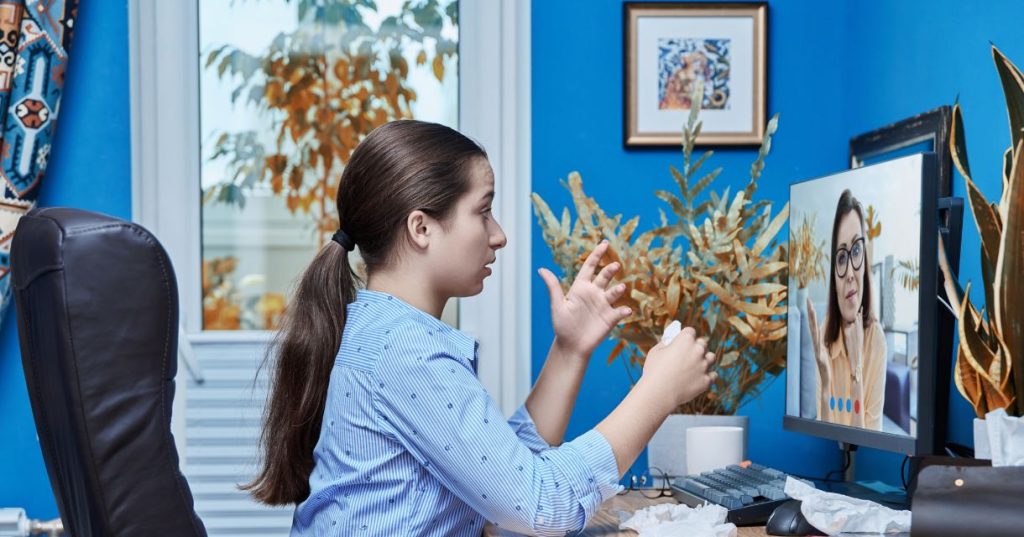
In recent years, online counselling has become the go-to option for many looking for mental health support. The world has shifted towards digital convenience, and therapy is no exception. But is it truly as effective as in-person counselling? Or are we losing something in the process? POV: Having tried both, I’ve found that while online sessions have their perks, there’s something undeniably valuable about sitting across from a therapist in person. Why Are We Gravitating Towards Online Counselling? Convenience is king. When life is overwhelming, the last thing you want to deal with is traffic, find parking, or sit in a waiting room overthinking your problems before a session even begins. Online therapy offers a way to get help without leaving your comfort zone, which can be a real benefit if you’re juggling a busy schedule, have mobility challenges, or feel uneasy about traveling. It’s private, flexible, and often more affordable, making it a practical choice for many. The Benefits of Online Counselling Are We Losing Something in the Process? Despite the many benefits, online counselling isn’t perfect. Therapy is deeply personal, and there’s an unspoken connection that can come from being physically present with someone who is holding space for you. Distractions at Home – It’s easy to get interrupted by pets, kids, or even a notification popping up mid-session. The Missing Human Presence – There’s something about eye contact, body language, and just ‘feeling’ the presence of another person that doesn’t always translate through a screen. Tech Issues – Poor internet connections, audio lags, or dropped calls can disrupt the flow of a session. Easier to Cancel or Disconnect – When you don’t have to physically go anywhere, it’s so much easier to talk yourself out of a session. Less of a ‘Therapy Environment – Therapy rooms are intentionally designed to create a sense of safety and peace. Your bedroom or kitchen table might not offer the same effect. Will This Change in the Long Run? It’s unlikely that online therapy is going anywhere. If anything, it will probably continue to evolve, integrating AI, virtual reality, or more interactive tools to bridge the gap between convenience and connection. However, in-person therapy still holds its place, especially for those who crave that human touch and deeper presence in their sessions. Final Thoughts At the end of the day, the best therapy is the one that works for you. Online counselling might be the perfect fit for some, while others may benefit more from face-to-face interaction. Maybe a hybrid approach—doing online sessions when life gets busy and in-person sessions when deeper connection is needed—is the way forward. Personally? I found online counselling incredibly convenient, but I also recognise the value of pushing through resistance and showing up in person. Because sometimes, the effort of getting there is part of the healing process too. What are your thoughts? Have you tried both? Which do you prefer? Mental Matters is a resource and information platform. We do not provide medical advice, diagnosis, or treatment. While the information on our website is for general awareness and support, it should not replace professional advice. For any mental health concerns, please consult a qualified healthcare or mental health professional. I Lost a Child and They Told Me to Be Grateful You’re Not A Loser, Social Media Just Sucks Perfect Balance Clinic St Albans (Fitness First) St Albans Recognising the Symptoms of Addison’s Disease I Lost Myself Trying to Make Others Happy

Are We Losing Something with Online Therapy? Read More »

social worker paarl

Social Worker in Paarl

An Overview of Social Work in Paarl Social work is a crucial profession dedicated to helping individuals, families, and communities navigate personal and social challenges. A social worker in Paarl plays a key role in providing guidance, advocacy, and practical solutions to improve lives. Their work extends across various sectors, ensuring that people receive the necessary support to cope with mental health concerns, family issues, economic hardship, and more. The Role of Social Workers in Paarl Social workers in Paarl assist in numerous ways, from offering counselling services to advocating for vulnerable groups. They work with children, families, the elderly, and individuals facing hardships, ensuring they have access to the right resources and support systems. Their responsibilities may include: Different Areas of Social Work Social workers in Paarl specialise in various areas, addressing different needs within the community. Some key specialisations include: Child Protection and Family Support Social Workers – Assist with foster care, adoption, child welfare, and family mediation across South Africa.Medical and Healthcare Social Workers – Provide support in hospitals, clinics, and rehabilitation centres, guiding patients through treatment plans and accessing healthcare services. Mental Health and Addiction Social Workers – Offer counselling and intervention for individuals facing depression, anxiety, substance abuse, and trauma-related challenges. School and Educational Social Workers – Support learners, parents, and teachers in addressing behavioural, emotional, and academic concerns within South African schools. Community and Welfare Social Workers – Work with NGOs, government programs, and local communities to promote social justice, poverty relief, and access to essential services. Finding a Social Worker in Paarl If you are looking for a qualified social worker in Paarl, there are several ways to find professional assistance. Social workers are available in government institutions, non-profit organisations, and private practices. Depending on your needs, you can seek support from: Getting the Right Support for Your Needs Whether you need assistance with personal challenges, family conflicts, or community-based issues, social workers in Paarl are equipped to help. By reaching out to a professional, individuals and families can gain the necessary support to navigate difficult situations and work towards positive change. Explore our directory, community centres, and online resources to connect with a qualified social worker in Paarl today.

Social Worker in Paarl Read More »

social worker in south africa

Social Workers in South Africa

Social workers play a crucial role in South Africa by providing support and intervention to individuals, families, and communities facing social challenges. Their work includes addressing poverty, abuse, mental health issues, and family conflicts. They act as advocates for vulnerable populations, ensuring access to social services and guiding clients through difficult circumstances. The Role of Social Workers Social workers assist individuals, families, and communities in overcoming challenges such as poverty, abuse, mental health issues, and family conflict. Their work includes: Types of Social Workers in South Africa Social workers specialise in different areas, with professionals available across all major cities, including Johannesburg, Cape Town, Durban, Pretoria, and Port Elizabeth. The key types of social workers include: Social Workers in Private Practice vs. the Public Sector Social workers in South Africa can work in either the public sector or private practice: Public Sector Social Workers – Employed by government institutions, hospitals, and non-profits, these professionals provide services to disadvantaged communities and individuals. Private Practice Social Workers – Offer specialised counselling and support services in private settings, often working with clients who can afford personalised care. Finding Social Workers in South Africa Qualified social workers are available across South Africa in both urban and rural areas. Whether you need assistance in Johannesburg, Cape Town, Durban, Pretoria, or beyond, professionals are available to provide guidance and support. To find a qualified social worker near you, browse our social worker directory. Our directory includes listings of professionals across all provinces, covering various specialisations. Whether you need child protection services, mental health support, or family counselling, you can find the right social worker to meet your needs. Making a Difference Through Social Work Social workers in South Africa play an essential role in supporting individuals and communities across a range of social challenges. Whether in the public or private sector, these professionals provide valuable assistance in mental health, family welfare, medical support, and more. If you need help, use our directory to connect with a qualified social worker in your area. Mental Matters is a resource and information platform. We do not provide medical advice, diagnosis, or treatment. While the information on our website is for general awareness and support, it should not replace professional advice. For any mental health concerns, please consult a qualified healthcare or mental health professional. Home Finding the Right Social Worker in Benon Lisa Smith Therapeutic Social Worker & Therapist Lincoln Social Worker in Paarl

Social Workers in South Africa Read More »

Scroll to Top