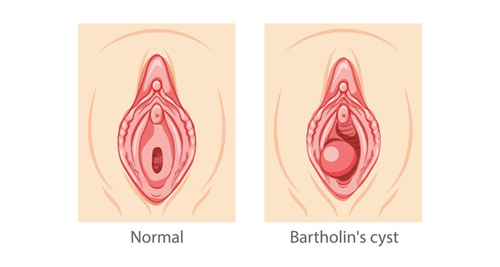

Causes and Risk Factors of Bartholin’s Cyst
A Bartholin’s cyst forms when the duct of the Bartholin’s gland becomes blocked, preventing the mucus it produces from draining. The fluid backs up into the gland, causing it to swell and form a cyst. If this fluid becomes infected, it may develop into an abscess, causing increased pain and swelling. Read more about the causes and risk factors of Bartholin’s cyst below.
Causes of duct blockage include:
- Thickened mucus that clogs the duct
- Swelling or inflammation in the vaginal area due to friction, irritation, or infection
- Trauma to the vaginal opening, often from sexual activity, childbirth, or injury
- Scar tissue from past infections, surgery, or injury
Infections that may lead to abscess formation include:
- Escherichia coli (E. coli), a bacteria normally found in the intestines
- Skin bacteria like Staphylococcus aureus
- Sexually transmitted infections (STIs), such as gonorrhoea or chlamydia
It’s important to remember that while STIs can be involved, Bartholin’s cysts themselves are not considered STIs. However, sexually active women are more prone to developing them due to increased exposure to bacteria and minor trauma to the area.
Risk factors for Bartholin’s cysts include:
- Being sexually active
- A history of recurring cysts or abscesses
- Poor personal hygiene or tight-fitting clothing that traps moisture
- Previous vaginal or vulval infections
- Lack of regular genital check-ups, especially in older women
In South Africa, where cultural taboos may discourage open discussion of vaginal health, many women suffer in silence or delay seeking treatment. This can lead to more severe symptoms or complications that could have been prevented with early care.
Preventing the formation of a Bartholin’s cyst isn’t always possible, but practising good hygiene, wearing breathable underwear, and seeking prompt treatment for infections can reduce the risk.
👉 [Next: Diagnosis of Bartholin’s Cyst]