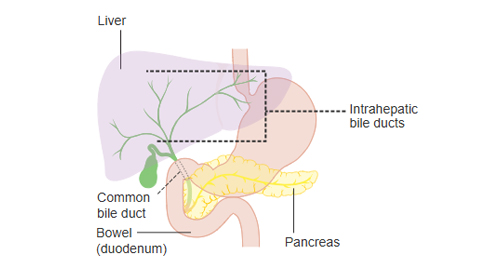

Causes and Risk Factors of Cholangiocarcinoma
The exact causes and risk factors of cholangiocarcinoma are not always clear, but it typically develops when the cells lining the bile ducts undergo genetic mutations, causing them to grow uncontrollably. This abnormal growth forms a tumour that can interfere with bile flow and invade nearby tissues.
Several risk factors have been identified, including underlying liver and bile duct diseases, chronic inflammation, and exposure to certain chemicals or parasites.
Known causes and risk factors:
- Primary sclerosing cholangitis (PSC)
- A chronic liver disease causing inflammation and scarring of the bile ducts.
- Strongly associated with an increased risk of cholangiocarcinoma.
- Chronic liver disease
- Conditions such as hepatitis B and C, cirrhosis, or alcohol-related liver damage may contribute.
- Conditions such as hepatitis B and C, cirrhosis, or alcohol-related liver damage may contribute.
- Bile duct abnormalities
- Congenital issues like choledochal cysts or Caroli disease raise the risk.
- Congenital issues like choledochal cysts or Caroli disease raise the risk.
- Parasitic infections
- In parts of Asia, liver flukes (e.g., Opisthorchis viverrini) have been linked to bile duct cancer.
- Less common in South Africa but may be relevant in immigrants or returning travellers.
- Exposure to toxins
- Industrial chemicals, particularly in rubber and chemical plants, are linked to bile duct cancer in some studies.
- Industrial chemicals, particularly in rubber and chemical plants, are linked to bile duct cancer in some studies.
- Obesity and diabetes
- These may indirectly increase the risk via their association with fatty liver disease.
- These may indirectly increase the risk via their association with fatty liver disease.
- Older age and male gender
- Most cases occur in individuals over 50.
- Most cases occur in individuals over 50.
- Family history and genetic factors
- Rare hereditary conditions like Lynch syndrome may also play a role.
In South Africa, certain viral infections and alcohol-related liver conditions are prevalent, potentially increasing the risk in some populations. Lack of early screening and limited access to liver specialists can contribute to late diagnosis.
Causes and Risk Factors of Cholangiocarcinoma
By understanding these risk factors, individuals and healthcare providers can be more vigilant, particularly in patients presenting with persistent liver or biliary symptoms.
👉 [Next: Diagnosis of Bile Duct Cancer]