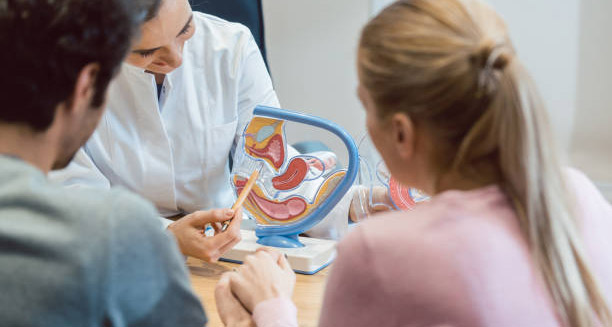

Diagnosis of infertility is a step-by-step process aimed at finding out why a couple or individual cannot conceive. It involves examining both male and female reproductive health. Doctors use physical exams, medical history, lab tests, and imaging to uncover the cause. Because infertility has many possible sources, the diagnosis of infertility must be detailed and tailored to each case.
The first step is taking a complete medical history from both partners. Doctors ask about how long the couple has tried to conceive and how often they have unprotected sex. They also explore past pregnancies, menstrual patterns, birth control use, surgeries, and lifestyle habits. For women, questions focus on cycle regularity, ovulation, pelvic pain, or past infections. For men, the focus is on childhood illnesses, ejaculation, injuries, or testicular problems.
After gathering this information, a physical exam is usually done. For women, this may include a pelvic exam to check for unusual growths or signs of hormone imbalance. Acne, unusual hair growth, or nipple discharge may signal hormonal issues. For men, doctors check the size and shape of the testicles and look for swelling or varicoceles, which may affect fertility.
Tests Used in the Diagnosis of Infertility
Lab tests play a big role in the diagnosis of infertility. Women often start with hormone tests early in their cycle. These include levels of FSH, LH, oestrogen, progesterone, prolactin, thyroid hormones, and AMH (which reflects egg supply). Abnormal levels may point to ovulation problems or conditions like PCOS.
Doctors also track ovulation. Women may monitor their basal body temperature daily or use ovulation kits that detect the LH surge. Blood tests for progesterone during the mid-luteal phase can show if ovulation occurred. Ultrasounds help track follicle growth and egg release. If needed, a clomiphene challenge test can assess how the ovaries respond to hormones.
The uterus and fallopian tubes also need testing. A hysterosalpingogram (HSG) is a key test. It uses X-ray and dye to spot blockages or shape problems. If further detail is needed, a saline ultrasound or hysteroscopy may be used to look inside the uterus.
For men, the main test is semen analysis. This checks sperm count, shape, movement, and volume. A healthy sample has over 15 million sperm per ml, at least 40% motility, and 4% or more normal-shaped sperm. Because sperm levels vary, doctors often repeat the test two or three times.
When Diagnosis of Infertility Needs More Testing
If semen results are abnormal, more tests follow. Hormone levels like testosterone, FSH, LH, and prolactin may be checked. Men with very low sperm counts might need genetic tests. These can reveal conditions like Klinefelter syndrome or Y chromosome microdeletions.
Scrotal ultrasound can detect blockages, varicoceles, or testicular cysts. In cases of azoospermia, doctors may do a vasography or a testicular biopsy to see if sperm are being made but can’t exit the body.
Sometimes, infertility remains unexplained after standard tests. In these cases, advanced methods may help. Laparoscopy lets doctors view the pelvic area directly through a small incision. This can reveal endometriosis or scar tissue missed by other tests.
Other rare tests include checking for antisperm antibodies in either partner. These can stop sperm from moving or fertilising an egg. In couples with repeat miscarriages or a family history of disease, genetic screening may be suggested.
Mental health also affects fertility. While not part of routine testing, stress, anxiety, and relationship strain can harm hormone levels or sex life. Addressing emotional issues often helps improve results or ease the treatment journey.
Key Insights About the Diagnosis of Infertility
Modern clinics often include fertility education and cycle tracking. Sometimes, couples struggle not because of medical issues, but due to poor timing of intercourse or a misunderstanding of the fertile window. Teaching these basics can improve success without invasive treatments.
Diagnosis of infertility also involves checking for compatibility and good timing between partners. Even with no visible medical problems, conception may still require support and guidance.
In conclusion, the diagnosis of infertility is a careful, multi-step approach. It includes health histories, physical exams, hormone checks, imaging, and in some cases, surgery. Both partners should be tested to ensure no factor is missed. A complete and early diagnosis helps guide treatment, reduce stress, and improve the chances of building a family.