
Symptoms of Measles
Symptoms of measles typically begin with a high fever and flu-like signs before progressing to more recognisable features like a rash. The measles virus follows a predictable clinical course, often making diagnosis possible through visual cues. Understanding the timeline and nature of the symptoms of measles is essential for early identification, timely treatment, and preventing transmission—especially in unvaccinated populations. These symptoms unfold over several stages, usually within 7 to 14 days after exposure to the virus.
Prodromal (Early) Stage Symptoms
The first phase of measles, called the prodrome, lasts 2 to 4 days. During this time, the person already spreads the virus.
Early symptoms include:
- High Fever – Often the first sign, rising quickly and peaking around 40°C (104°F).
- Cough – A dry, persistent cough that can be very noticeable.
- Runny Nose – Constant watery discharge.
- Red, Watery Eyes – Eyes become sensitive to light and appear swollen or glassy.
- Fatigue – A strong sense of tiredness and weakness.
These early symptoms of measles look like other respiratory infections. Without a known outbreak or confirmed exposure, doctors may miss the diagnosis at this stage.
Koplik Spots: A Unique Symptom of Measles
One of the most distinctive symptoms of measles during the early stage is the appearance of Koplik spots. These tiny white or bluish spots with a red base show up inside the mouth, usually on the inner cheeks. They often look like grains of salt and appear 2–3 days after the fever begins.
Koplik spots are highly diagnostic of measles and often show up before the rash. However, they disappear quickly, which makes early detection critical.
The Measles Rash (Exanthem)
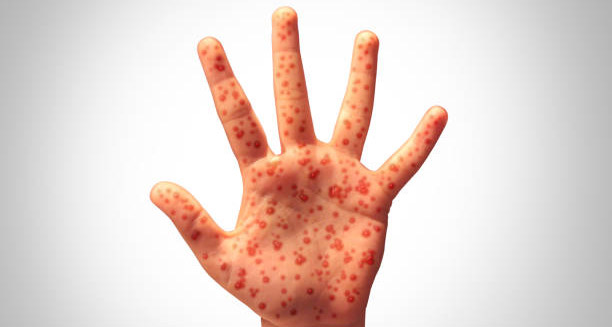
The rash is the hallmark symptom of measles. It appears about 3–5 days after the first signs.
• Appearance: It starts as flat red spots that may later become slightly raised. As it spreads, the spots merge into larger blotches.
• Pattern: The rash usually begins on the face and behind the ears. It then spreads to the neck, trunk, arms, legs, and finally the feet.
• Duration: The rash lasts about 5–6 days before fading in the same order.
• Skin Peeling: As it fades, some patients experience skin peeling, especially on areas exposed to sunlight.
The rash often coincides with the fever reaching its peak. As the rash fades, the fever usually eases as well.
Gastrointestinal and Respiratory Symptoms
Along with fever and rash, measles also affects other parts of the body. Common problems include:
• Diarrhoea, which can cause dehydration in children
• Vomiting, making hydration harder
• Sore throat from throat inflammation
• Hoarseness from swollen vocal cords
In severe cases, pneumonia, bronchitis, or croup may develop. These are more common in children and people with weak immune systems.
Neurological Symptoms
The virus sometimes reaches the nervous system, which can cause more serious symptoms of measles. These include:
• Strong headaches
• Seizures, either from high fever or from brain involvement such as encephalitis
• Confusion or unusual drowsiness, especially in children
Any neurological signs need urgent medical care.
Timeline of Symptom Progression
Here is a simple outline of how the symptoms of measles usually appear:
- Days 1–7: No symptoms (incubation stage)
- Days 8–11: Fever, cough, runny nose, sore throat, red eyes
- Days 10–12: Koplik spots inside the mouth
- Days 12–14: Rash starts on face, spreads downward
- Days 14–20: Rash fades, skin may peel, recovery begins
When to Seek Medical Attention
Because measles spreads so easily, quick medical attention is vital. See a doctor if:
• High fever lasts more than 3 days
• A rash appears after flu-like symptoms
• The patient shows dehydration, breathing trouble, or seizures
• The patient is under one year old or has a weak immune system