Mental Matters

Author name: admin

Illustrated guide showing prevention and treatment methods for dengue fever

Treatment of Dengue

Treatment of Dengue Treatment of dengue is mainly supportive, as there is no specific antiviral medication to cure the infection. Management focuses on relieving symptoms, preventing complications, and maintaining adequate hydration. For most people with dengue, home care and regular monitoring are sufficient, but severe cases may require hospitalisation. Supportive Care for Mild to Moderate Dengue Rest: Essential for recovery and conserving energy Hydration: Oral fluids such as water, electrolyte solutions, and clear soups are recommended to prevent dehydration Paracetamol: Used to manage fever and pain Avoid aspirin, ibuprofen, or other NSAIDs, as they can increase the risk of bleeding Monitoring Regular monitoring is important to catch signs of progression: Daily platelet counts Haematocrit levels Observation for bleeding or changes in blood pressure Family members and caregivers should be vigilant for warning signs like abdominal pain, vomiting, or lethargy, especially when the fever starts to subside. Hospital Management for Severe Dengue Hospital admission is required when: There are signs of shock or severe bleeding Platelet counts drop significantly There is difficulty breathing or persistent vomiting In such cases, treatment includes: Intravenous (IV) fluids to manage plasma leakage Oxygen therapy for breathing difficulties Blood transfusions in the case of significant bleeding Recovery and Rehabilitation Most people recover fully within 7–10 days Gradual reintroduction of normal activities is advised once symptoms resolve Long-term complications are rare but may include fatigue or joint pain lasting several weeks Medical Supervision | Treatment of Dengue Pregnant women, infants, elderly individuals, and those with chronic health conditions require closer monitoring, even if symptoms appear mild Secondary dengue infections pose a higher risk of complications, so a thorough history of previous illness is important In summary, treatment of dengue involves symptom control, hydration, and monitoring. Prompt medical care, especially during the critical phase, greatly reduces the risk of severe complications and improves outcomes. [Next: Complications and Recovery from Dengue →]
Treatment of Dengue Read More »

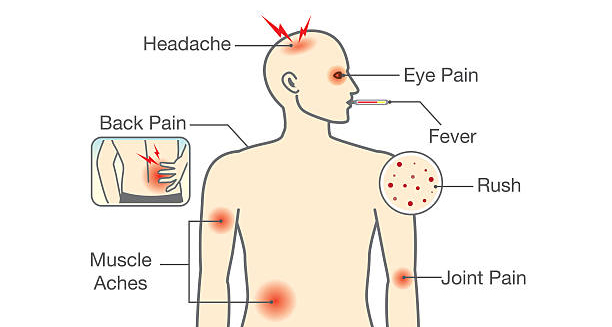
Human body illustration highlighting complications of dengue fever

Complications and Recovery from Dengue

Complications and Recovery from Dengue Complications and recovery from dengue depend on the severity of the infection and how quickly it is diagnosed and treated. While most individuals recover from dengue without lasting effects, a small percentage develop severe complications that can be life-threatening if not managed promptly. Complications of Severe Dengue Severe dengue, also known as dengue haemorrhagic fever or dengue shock syndrome, can cause: Plasma leakage, leading to fluid accumulation in the lungs or abdomen Severe bleeding, both internal and external Low platelet count, which reduces the body’s ability to clot blood Organ damage, including liver failure, myocarditis (inflammation of the heart), or kidney injury These complications typically occur during the critical phase, when the fever begins to subside (days 4–7 of illness). Immediate medical attention is crucial to reduce the risk of mortality. Warning Signs of Complications Sudden drop in blood pressure (shock) Cold extremities Restlessness or altered consciousness Persistent vomiting Bleeding from gums, nose, or under the skin If any of these signs occur, emergency care and hospital admission are necessary. Long-Term Recovery For most patients: Symptoms resolve within one to two weeks A period of post-viral fatigue may follow Appetite, energy levels, and sleep patterns gradually return to normal In some cases, especially in children and the elderly, weakness may persist for several weeks. Nutritional support, hydration, and rest aid in full recovery. Post-Infection Immunity and Risk After recovering from one serotype of the virus, individuals are immune to that type However, they remain at risk for infection by the remaining serotypes Subsequent infections carry a higher risk of severe dengue due to an immune system phenomenon known as antibody-dependent enhancement (ADE) Preventing Complications and Recovery from Dengue Early diagnosis and monitoring Avoiding self-medication with anti-inflammatories Maintaining hydration Seeking prompt care when symptoms worsen In conclusion, complications and recovery from dengue vary but are greatly influenced by the timing of diagnosis and quality of care received. With attentive monitoring and proper medical support, the vast majority of patients make a full recovery and return to normal life. [Next: Back to Overview →]

Complications and Recovery from Dengue Read More »

Dementia with Lewy Bodies

Dementia with Lewy Bodies

Dementia with Lewy Bodies – Overview Dementia with Lewy bodies is a progressive neurodegenerative disorder that combines symptoms of both dementia and Parkinson’s disease. It is the second most common form of degenerative dementia in older adults, after Alzheimer’s disease. This disease is characterised by abnormal protein deposits—known as Lewy bodies—accumulating in the brain, particularly in areas that regulate thinking, movement, behaviour, and mood. These protein deposits interfere with normal brain cell function, causing a decline in mental abilities. What makes this distinct from other forms of dementia is its combination of cognitive decline, visual hallucinations, fluctuating alertness, and motor symptoms such as stiffness or tremors. These features often overlap with those of Alzheimer’s disease and Parkinson’s disease, which can complicate diagnosis. People affected by this condition typically experience changes in their ability to think clearly, visualise space, and regulate bodily movements. Symptoms tend to progress gradually but may vary in intensity from day to day. It is common for individuals to experience vivid dreams, disrupted sleep, mood disturbances, and sensitivity to certain medications, particularly antipsychotics. Dementia with Lewy Bodies Although this condition has no known cure, a combination of treatments, therapies, and support strategies can significantly enhance quality of life. Early recognition and management of symptoms are essential in providing appropriate care and improving outcomes for both individuals and their families. In summary, dementia with Lewy bodies is a complex and multifaceted condition that blends features of dementia and movement disorders. Awareness, timely diagnosis, and compassionate care are key in helping those affected live as fully and independently as possible. [Next: Causes of Dementia with Lewy Bodies →]

Dementia with Lewy Bodies Read More »

Diagram of the human brain showing affected regions by Lewy bodies

Causes of Dementia with Lewy Bodies

Causes of Dementia with Lewy Bodies Causes of dementia with Lewy bodies are still being studied, but current research suggests that the condition arises from the abnormal accumulation of a protein called alpha-synuclein in the brain. These protein deposits, known as Lewy bodies, interfere with communication between nerve cells and eventually lead to cell death. The exact reason why Lewy bodies form in certain individuals and not in others remains unknown, but several risk factors have been identified. Genetic Factors While most cases are sporadic, meaning they occur without a family history, there are rare genetic links: Certain gene mutations have been associated with increased risk A family history of Parkinson’s disease or dementia may also elevate the likelihood of developing the condition However, inherited forms of dementia with Lewy bodies are extremely rare, and genetic testing is not routinely required. Age and Gender The risk increases significantly with age, especially over 60 Men are slightly more likely to develop dementia with Lewy bodies than women Neurological Pathology | Causes of Dementia with Lewy Bodies The disease is associated with a combination of Alzheimer’s-type changes (such as amyloid plaques) and Parkinson’s-type degeneration Lewy bodies affect the cerebral cortex, leading to cognitive impairment, and the substantia nigra, contributing to motor symptoms Environmental and Lifestyle Factors While there is no definitive environmental cause, some researchers suggest that: Prolonged exposure to pesticides or industrial chemicals may increase risk Head trauma has also been proposed as a possible factor However, these links are still being investigated, and no specific lifestyle factor has been proven to directly cause dementia with Lewy bodies. Links with Other Neurodegenerative Disorders The condition shares features with Parkinson’s disease dementia and Alzheimer’s disease, sometimes making it difficult to distinguish among them Some individuals may initially be diagnosed with one condition and later reclassified as having dementia with Lewy bodies as symptoms evolve In conclusion, causes of dementia with Lewy bodies remain largely idiopathic, although genetic predisposition, ageing, and overlapping pathologies with other brain diseases play a significant role. Ongoing research aims to better understand these triggers to improve prevention and treatment. [Next: Symptoms of Dementia with Lewy Bodies →]

Causes of Dementia with Lewy Bodies Read More »

Symptoms of Dementia with Lewy Bodies

Symptoms of Dementia with Lewy Bodies

Symptoms of Dementia with Lewy Bodies Symptoms of dementia with Lewy bodies can vary widely but typically include a combination of cognitive, behavioural, and motor changes. The hallmark of dementia with Lewy bodies is the presence of fluctuating mental alertness, detailed visual hallucinations, and symptoms resembling Parkinson’s disease, such as stiffness and tremors. These symptoms may appear in any order and often overlap, making diagnosis challenging. Cognitive Symptoms Memory problems, especially with recent events or multitasking Fluctuating attention and alertness, with periods of confusion that come and go unexpectedly Difficulty with executive function, such as planning, reasoning, and organising Trouble understanding visual and spatial information, which can lead to falls or difficulty navigating Visual Hallucinations One of the most distinctive symptoms Individuals may see people, animals, or objects that are not there Hallucinations are often vivid and recurring Some people also experience delusions or false beliefs Motor Symptoms Muscle stiffness and rigidity Slow movements (bradykinesia) Shuffling gait and tremors Postural instability, increasing the risk of falls These symptoms resemble Parkinson’s disease and may precede or follow cognitive changes Sleep Disturbances REM sleep behaviour disorder (RBD) is common, where individuals physically act out dreams May involve shouting, kicking, or falling out of bed during sleep Excessive daytime sleepiness and disrupted sleep cycles are also reported Autonomic Dysfunction | Symptoms of Dementia with Lewy Bodies Problems with blood pressure regulation, digestion, and temperature control Symptoms may include fainting spells, constipation, incontinence, and visual disturbances Emotional and Behavioural Changes Depression, anxiety, irritability, and apathy Social withdrawal and reduced interest in usual activities In summary, symptoms of dementia with Lewy bodies are diverse and often fluctuate. Their unique combination, especially the presence of hallucinations and Parkinsonian features, helps distinguish this condition from other types of dementia. [Next: Diagnosis of Dementia with Lewy Bodies →]

Symptoms of Dementia with Lewy Bodies Read More »

Diagnosis of Dementia with Lewy Bodies

Diagnosis of Dementia with Lewy Bodies

Diagnosis of Dementia with Lewy Bodies Diagnosis of dementia with Lewy bodies is complex and often delayed due to the wide range of symptoms that overlap with both Alzheimer’s and Parkinson’s disease. However, recognising the distinct combination of visual hallucinations, Parkinsonian movement issues, and fluctuating cognitive ability helps clinicians distinguish dementia with Lewy bodies from other types of dementia. Medical History and Symptom Assessment The first step involves a detailed discussion of the patient’s medical history and observed symptoms: Family members or carers may help describe changes in memory, movement, sleep, or behaviour Particular attention is paid to hallucinations, episodes of confusion, and motor function A thorough history is crucial since symptoms can appear gradually and fluctuate, making self-reporting unreliable at times. Cognitive Testing Standard memory and thinking tests assess: Short- and long-term memory Language skills Attention span and problem-solving Visual-spatial awareness Tests like the Montreal Cognitive Assessment (MoCA) or Addenbrooke’s Cognitive Examination may be used to capture fluctuations in mental function and visual processing difficulties common in this form of dementia. Neurological Examination A physical exam checks for: Muscle stiffness or tremors Gait disturbances or slowed movement Balance issues These signs, when paired with cognitive decline, support a diagnosis of dementia with Lewy bodies. Imaging Tests | Diagnosis of Dementia with Lewy Bodies Brain imaging can help exclude other conditions and may provide supporting evidence: MRI or CT scans to detect brain shrinkage or strokes DaTscan (dopamine transporter scan) highlights changes in dopamine activity, often reduced in dementia with Lewy bodies PET or SPECT scans may show decreased activity in parts of the brain affected by Lewy body pathology Sleep Studies If REM sleep behaviour disorder is suspected, a polysomnography (sleep study) may confirm abnormal movement or vocalisation during sleep. Differential Diagnosis Because symptoms overlap with Alzheimer’s disease and Parkinson’s, misdiagnosis is common. A neurologist or specialist dementia clinic can provide a more accurate diagnosis using criteria developed by organisations such as the Lewy Body Dementia Association or the National Institute on Aging. In summary, diagnosis of dementia with Lewy bodies requires a holistic approach involving history, clinical examination, cognitive testing, and imaging. Timely and accurate identification allows for tailored care and better outcomes. [Next: Treatment of Dementia with Lewy Bodies →]

Diagnosis of Dementia with Lewy Bodies Read More »

Treatment of Dementia with Lewy Bodies

Treatment of Dementia with Lewy Bodies

Treatment of Dementia with Lewy Bodies Treatment of dementia with Lewy bodies focuses on managing symptoms and improving quality of life, as there is currently no cure. A tailored, multidisciplinary approach is essential because individuals with dementia with Lewy bodies are particularly sensitive to certain medications, and some treatments used in other types of dementia can cause harmful side effects. Medications for Cognitive Symptoms Cholinesterase inhibitors (e.g. rivastigmine, donepezil) may help improve alertness, memory, and cognition These medications may also reduce hallucinations and behavioural symptoms Benefits may be modest but can significantly improve daily functioning for some Medications for Movement Symptoms Levodopa, a drug used for Parkinson’s disease, may help with rigidity and slowness of movement However, it can worsen hallucinations, so it is used cautiously and at the lowest effective dose Avoiding Antipsychotics People with dementia with Lewy bodies are extremely sensitive to antipsychotic drugs, which can trigger severe reactions such as confusion, agitation, worsening motor symptoms, or even life-threatening neuroleptic malignant syndrome If antipsychotics are absolutely necessary, newer drugs like quetiapine may be used under close supervision Non-Pharmacological Therapies Occupational therapy to assist with activities of daily living Physical therapy to improve mobility, reduce falls, and manage stiffness Speech and language therapy for those with voice changes or swallowing difficulties Psychological support and counselling for both the individual and family members Sleep and Mood Management | Treatment of Dementia with Lewy Bodies REM sleep behaviour disorder may respond to melatonin or low-dose clonazepam Antidepressants, such as SSRIs, can help manage depression or anxiety, though they must be prescribed carefully Home and Environmental Support Clear routines, visual cues, and reducing background noise can help reduce confusion Providing safe environments and fall prevention strategies is essential In conclusion, treatment of dementia with Lewy bodies requires a careful, patient-specific approach that addresses both mental and physical symptoms. With the right balance of medication, therapies, and support, many people can maintain a good quality of life for a significant period. [Next: Complications and Recovery from Dementia with Lewy Bodies →]

Treatment of Dementia with Lewy Bodies Read More »

Brain scan with highlighted blood vessels in red indicating neural and vascular pathways

Complications and Recovery from Dementia with Lewy Bodies

Complications and Recovery from Dementia with Lewy Bodies Complications and recovery from dementia with Lewy bodies are shaped by the condition’s progressive nature and the delicate balance required in its treatment. Although dementia with Lewy bodies cannot be cured, individuals can live meaningful lives for many years with the right support, therapies, and medical care. Understanding the complications helps families prepare for the challenges ahead. Progressive Decline Over time, symptoms will worsen: Memory and thinking abilities decline Hallucinations and confusion may become more persistent Mobility deteriorates, leading to increased risk of falls and injury This slow deterioration often requires increasing levels of care and supervision. Medication Sensitivity A significant complication in this condition is extreme sensitivity to antipsychotic medications: Inappropriate use can lead to severe agitation, rigidity, or even death It is vital to use medications cautiously and under specialist supervision Risk of Falls and Injuries Motor symptoms such as: Poor balance Slow reflexes Muscle stiffness All increase the risk of falls, fractures, and head injuries. Ongoing physical therapy and home safety modifications can help reduce this risk. Nutritional and Sleep Challenges Sleep disturbances often worsen over time, causing daytime sleepiness and night-time restlessness Swallowing difficulties and loss of appetite may lead to malnutrition, requiring dietary adjustments or feeding assistance Caregiver Stress | Complications and Recovery from Dementia with Lewy Bodies Caring for someone with dementia with Lewy bodies can be emotionally and physically exhausting The combination of unpredictable symptoms, behavioural issues, and sleep disruption often leads to caregiver burnout Access to respite care, counselling, and support groups is crucial End-of-Life Planning As the disease progresses: Individuals become increasingly dependent Planning for palliative care, advance directives, and legal matters is essential to ensure comfort and dignity Recovery as Adaptation Though recovery in the traditional sense is not possible, many people: Experience improvement in specific symptoms with the right treatments Maintain social connections and purpose with community involvement Achieve a sense of peace and acceptance through emotional support In conclusion, complications and recovery from dementia with Lewy bodies involve managing decline with sensitivity and foresight. While the condition progresses, a multidisciplinary and compassionate approach can help individuals and their families navigate the journey with dignity and resilience. [Next: Back to Overview →]

Complications and Recovery from Dementia with Lewy Bodies Read More »

Elderly man sitting pensively with a cane in a bright room

Dementia

Dementia – Overview The disease Dementia is a broad term used to describe a group of conditions. These conditions may cause progressive decline in cognitive function, impacting memory, thinking, reasoning, behaviour. Additionally, the ability to perform everyday activities. Dementia primarily affects older adults, although it is not considered a normal part of ageing. The condition can be caused by a variety of underlying diseases. Furthermore, it can cause damage to the brain, the most common being Alzheimer’s disease. This is a serious condition that deeply affects not only the individuals living with it, but also their families, carers, and communities. It interferes with daily life, communication, independence, and relationships. Over time, individuals may lose their ability to manage personal care, recognise loved ones, or make decisions. The progression of dementia varies from person to person and depends on the type and stage of the disease. Dementia Globally, dementia is a major health concern. According to the World Health Organization, more than 55 million people live with this condition, with nearly 10 million new cases diagnosed every year. As life expectancy increases, the prevalence of dementia is expected to rise significantly in the coming decades. There is currently no cure for most types, but early diagnosis, supportive care, and appropriate treatment can help manage symptoms, slow progression, and improve quality of life. With increased awareness, research, and community support, we can help people affected by this disease live with dignity and purpose. In summary, dementia is a life-altering neurological condition that affects memory and cognitive ability. Early intervention, compassionate care, and holistic support are crucial in helping people cope with the challenges it brings. [Next: Causes of Dementia →]

Dementia Read More »

Close-up 3D rendering of neurons and synaptic activity in the brain

Causes of Dementia

Causes of Dementia Causes of dementia vary widely and often involve complex changes in the brain. While dementia is more common in older adults, it is not a natural consequence of ageing. Instead, it is caused by damage to brain cells or disruptions in the connections between them. Understanding the different causes of dementia is essential for accurate diagnosis and effective treatment planning. Alzheimer’s Disease The most common cause of dementia, Alzheimer’s disease accounts for approximately 60–70% of all cases. It is marked by the build-up of abnormal proteins in and around brain cells: Amyloid plaques and tau tangles disrupt communication between neurons Over time, these changes lead to memory loss, confusion, and personality changes Vascular Dementia | Causes of Dementia This form of dementia occurs when blood flow to the brain is reduced or blocked: Commonly caused by strokes, mini-strokes, or narrowed blood vessels Symptoms may include poor decision-making, slower thinking, and balance problems Lewy Body Dementia This type involves abnormal protein deposits called Lewy bodies: Affects areas of the brain related to movement and cognition Symptoms can include visual hallucinations, muscle stiffness, and fluctuations in alertness Frontotemporal Dementia (FTD) FTD typically affects younger individuals and targets the frontal and temporal lobes: Associated with changes in personality, behaviour, and language Memory may remain intact in the early stages Mixed Dementia Some people have more than one type of dementia, most commonly Alzheimer’s disease and vascular dementia: Symptoms may overlap or present in a more complex manner Other Contributing Causes | Causes of Dementia Parkinson’s disease and Huntington’s disease can lead to dementia in later stages Infections, such as HIV and Creutzfeldt-Jakob disease Chronic alcohol abuse (alcohol-related brain damage) Head injuries, especially repeated trauma, can lead to conditions like chronic traumatic encephalopathy (CTE) In conclusion, causes of dementia are diverse and multifactorial. Identifying the underlying cause is critical to managing symptoms and improving patient outcomes. [Next: Symptoms of Dementia →]

Causes of Dementia Read More »

Scroll to Top